
This review was originally published on TheTrek.co, and these poles were donated for the purpose of review. If you have any quick questions about gear, please feel free to contact me. And if you want to dive deeper, or talk about other aspects of backpacking, I offer Thru-Hike Coaching. I’d love to contribute to your journey!
I’d barely heard of trekking poles when my mom convinced me to take her discount Komperdell’s on my solo trip around Nepal’s Annapurna Circuit in 2011. I was skeptical, but thought, “yeah, those mountains are pretty high,” and so begrudgingly agreed to bring them. I made some questionable packing choices on that trip, like carrying the first four Game of Thrones paperbacks and 26 Clif Bars, but bringing trekking poles was not one of them. I pulled them out halfway through a brutal climb on day one, and didn’t pack them up until my bus ride to Kathmandu, 23 days later. I came home a trekking pole convert, and have used them ever since.
Trekking poles are now ubiquitous on trails across the globe, and there are many ultralight shelters that rely on them for structure. Carbon fiber is all the rage as the ultralight gods turn their gram-shaving gaze to the humble walking stick. Gossamer Gear has offered some of the lightest trekking poles for years, and their newest, the LT5 Three Piece Carbon Trekking Poles, honor that heritage while cutting the collapsed length significantly. A touch heavier and more complex, but much more portable. Are the LT5s the next step, or a step back?
Gossamer Gear LT5 Carbon Trekking Poles At-a-Glance
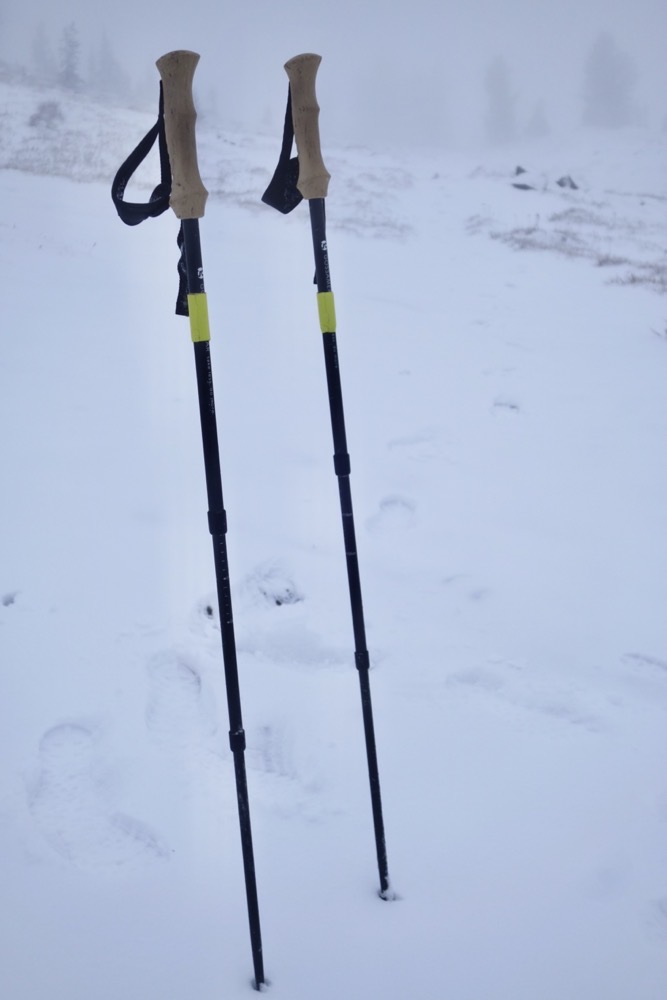
MSRP: $195
Type: Three-piece telescoping
Weight: 5.1 ounces each (using my own scale)
Length Range: 41-51in (105-130cm)
Adjustment System: Twist lock
Shaft Material: Carbon fiber
Minimum Length: 23.5in (60cm)
Intended Use
Trekking poles aren’t for everyone, but if keeping your sticks light is a priority, then the LT5s might be for you. Gossamer Gear strives to offer some of the lightest backpacking gear on the market, and their Lightrek line of poles has followed that ethos since the beginning. While previous iterations sacrificed packability, the LT5s three-piece telescoping design allows them to pack small for transport on or in a backpack. These are light poles that pack small, which is a great combination for just about anything, from thru-hiking with a trekking pole shelter to stashing in your car trunk for impromptu day hikes.
Circumstances of Review
August 2022 Update: These poles rule. I’ve now used these for well over 3,000 miles of hiking, including the rugged Sierra High Route and the rooty, rocky, gorgeous mess of the Appalachian Trail. The tips needed changing once, but other than that, they have handled it all without issue. I’ve seen other carbon poles shatter, yet the LT5s keep on charging. The high price definitely feels justified now.
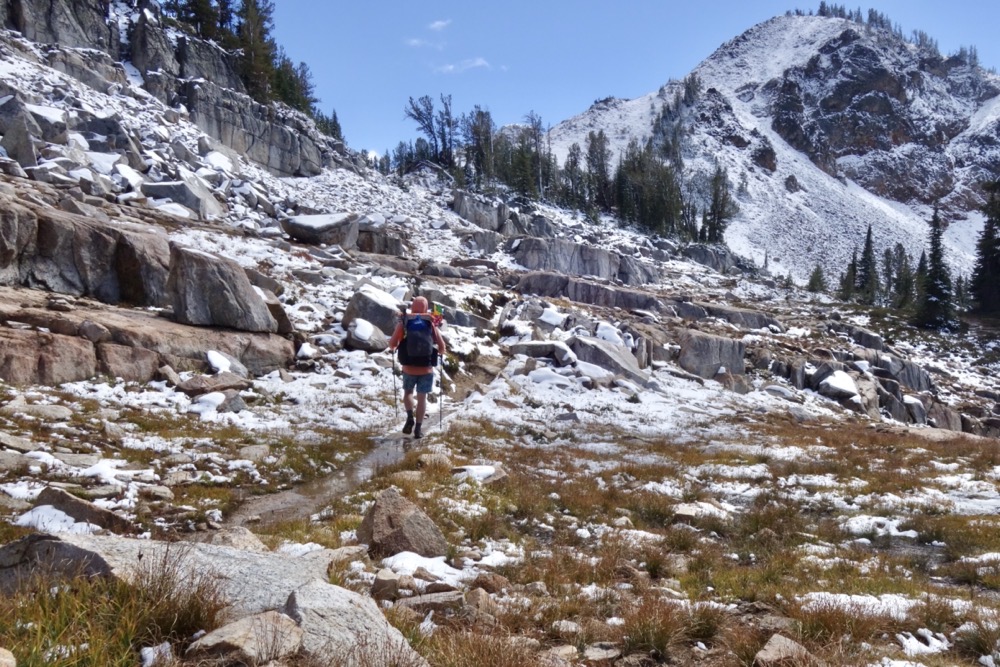
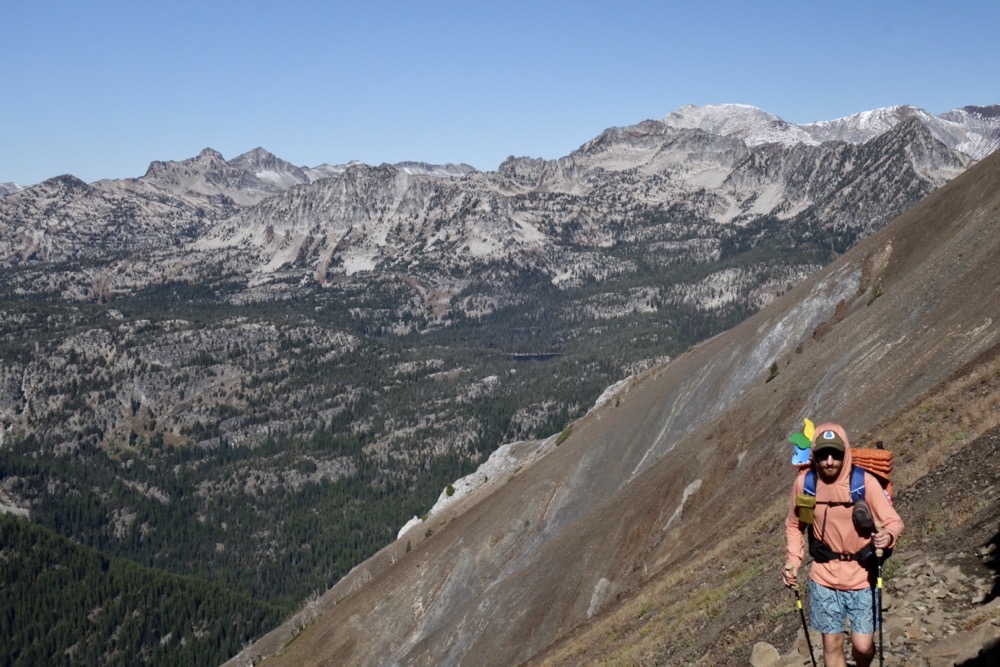
I worked the LT5s hard on a 74-mile loop in the Eagle Cap Wilderness in Eastern Oregon and on a few smaller adventures near Mount Hood. The terrain was tremendously rocky at times, and unmaintained trails kept me off balance in places where balance is important. These poles served me well whether I was hanging off them near the tops of arduous uphills or saving my knees on jarring descents. Additionally, I used them to pitch my tarp and The DCF Two on a handful of nights that ranged from “damn, I really hope I can find the trail after all this snow” to “nice enough to cowboy camp.”
LT5 Carbon Trekking Pole Features
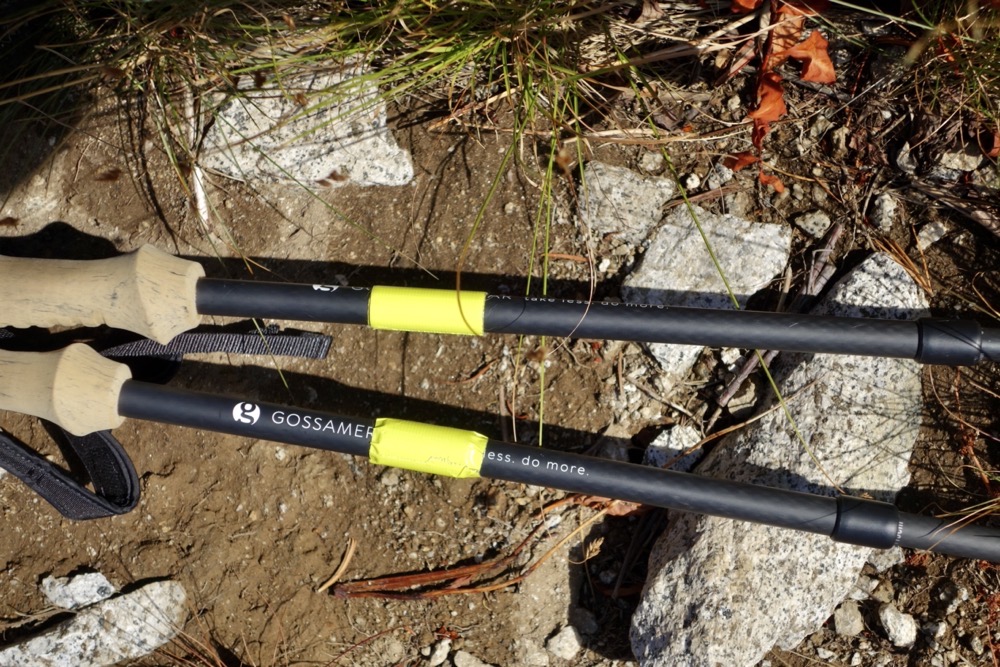
Carbon Construction: The three-piece shaft of the LT5s is made completely of carbon fiber. Carbon is lightweight, strong, and durable when used correctly. It also boasts better-than-aluminum vibration-damping properties. However, it’s not all good news. Carbon poles cost a bunch more than aluminum poles, and when they fail under high stress, they fail catastrophically. Aluminum poles, on the other hand, will bend if forced above their load rating, but will probably still be usable.
Three-piece: The carbon shaft of each pole is divided into three telescoping tubes. Previous versions of Gossamer Gear’s trekking poles used two- or one-piece shafts. The extra division makes these the most packable version yet, with a 23.5in minimum length. The middle section of each pole has printed length marker lines, whereas the bottom section is always adjusted to the same “STOP” line.
Twist Lock: Lock the telescoping sections in place with the intuitive twist locking mechanism. There are two per pole. While some hikers find that twist locks are finicky to get just right (I agree), they are the lightest option. I have used twist lock trekking poles for several thousand miles of backpacking with minimal frustrations, although I have always been envious of the alternative, flick lock designs. There are pros and cons to each mechanism style.
EVA Foam Grips: They look kinda like cork, but the LT5 grips are definitely 100% EVA foam. They are as comfortable as any other grips I’ve used. Again, they are 100% EVA foam. I like the feel and sweat-absorbing qualities of EVA foam a lot, and the LT5 grips are comfy. Real cork grips are usually pricier and heavier, as well.
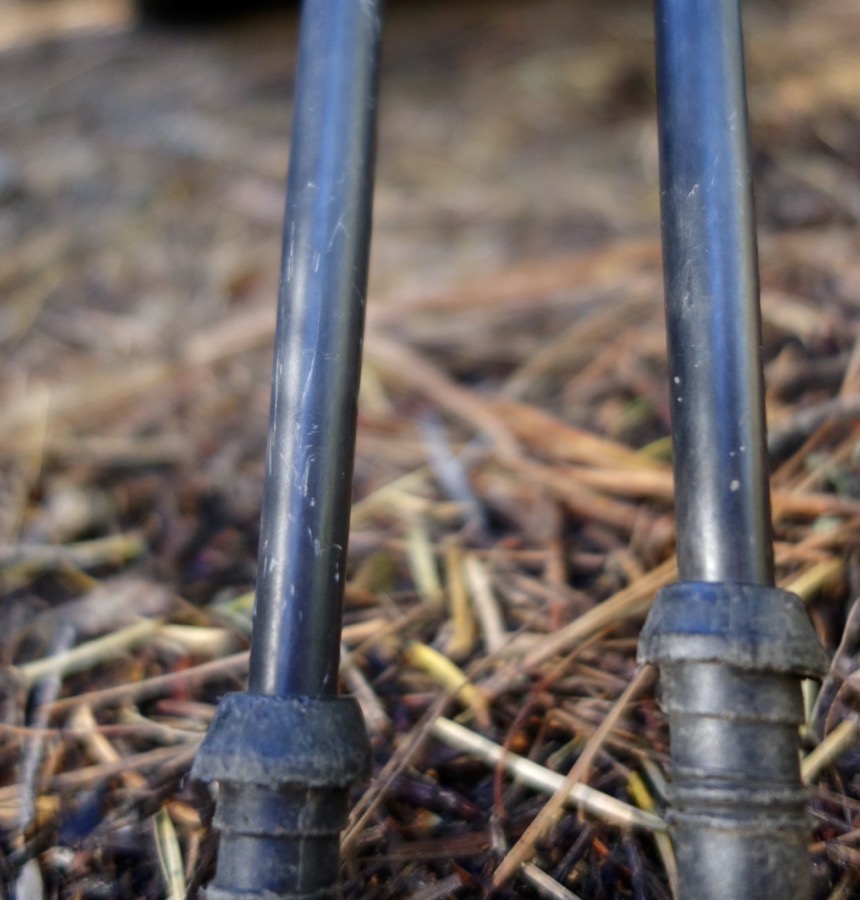
Carbide Tips: This is the standard these days. Carbide is supremely durable and will last for many moons. If the tips wear out (nice work!), they are cheap and easy to replace.
Wrist Straps: The wrist straps are undoubtedly cushy. Easy to adjust, too. Just make sure you’re using them correctly by inserting your hand up through the bottom of the strap. I hiked the entire PCT before I learned how to do it the right way, which is way more comfortable and better looking.
Extras Included: A pair of LT5s includes removable baskets and rubber tips. Gossamer Gear recommends using the small baskets when hiking in rocky terrain, and the rubber provides grip on hard surfaces.
Twist Locks: Elegant, Imperfect
Twist locks are simple, lightweight, and low-profile. Clockwise to tighten, counterclockwise to loosen. My trekking poles have mostly used twist locks, yet I’ve never fallen in love with them. In my experience, twist locks require striking a fine balance between tightening too little and too much. Too little and the poles will shorten unexpectedly under loading, which could be bad news depending on where you are. Too much and it might be nearly impossible to loosen the locking mechanism again.
These issues are exacerbated by large temperature swings, which cause the shafts to expand or contract, thus loosening or tightening their hold on the twist lock. During some extremely cold sections on the CDT, I went days without being able to adjust my old aluminum poles.
The LT5s are my first carbon poles, and I hesitate to twist as tightly as I do with my trusty aluminum poles. Perhaps I’m being paranoid, but the thin carbon doesn’t provide the same reassuring ‘bottoming out’ sensation as metal. Despite this, I’ve never damaged the poles by over-tightening, which is probably impossible.
Ultimately, I’ve learned to accept the minor drawbacks of twist lock poles and appreciate this sleek, low-weight technology. Flick locks are still enticing, but twist vs. flick isn’t a valuable distinction to me any longer.
Packability
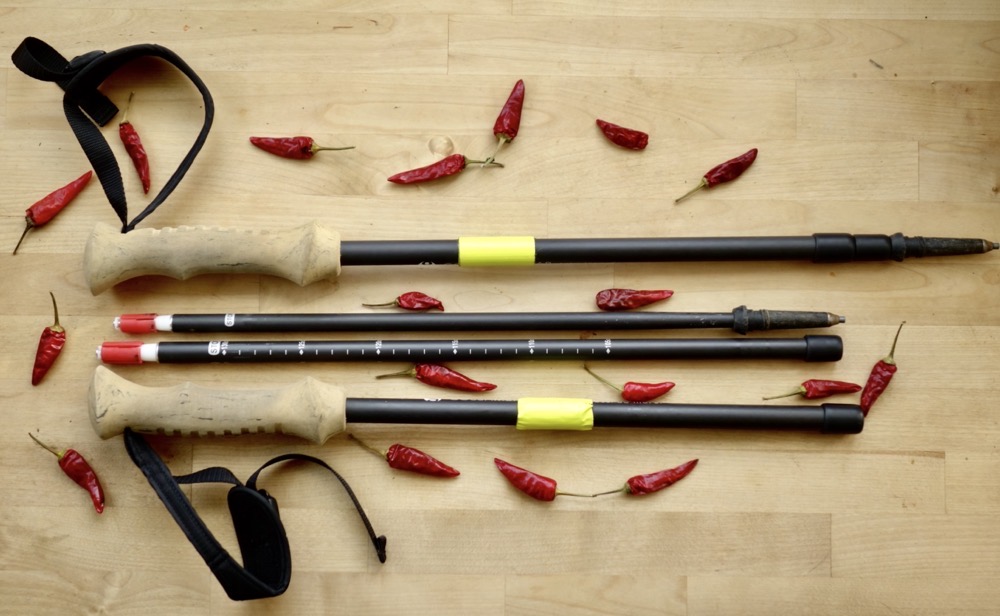
The LT5 trekking poles are Gossamer Gear’s most packable to date. With the addition of a third telescoping section, they collapse down to 23.5 inches. This is a little bit smaller than similar three-piece telescoping trekking poles. Folding poles pack the smallest at around 15 inches, but the LT5s will satisfy most requirements.
As someone who has wrestled two-piece trekking poles into airplane luggage and awkwardly stowed them on my backpack for hitchhiking, I really dig how compact Gossamer Gear made these poles. The extra packability comes at the cost of a few added grams and an extra twist lock to mess with. However, I feel that these tradeoffs are certainly worth it.
A couple lines of paint short of a picnic
I wish that the bottom section of each pole had a few more printed markings to gauge whether the pole is compressing throughout the day. This is a small issue that’s easy to overcome with careful observation, but the single “STOP” line makes it nearly impossible to track whether or not the bottom section is slipping due to inadequate tightening of the lower twist lock. I really wish Gossamer Gear would just paint a few more lines here.
Gossamer Gear LT5 Pros
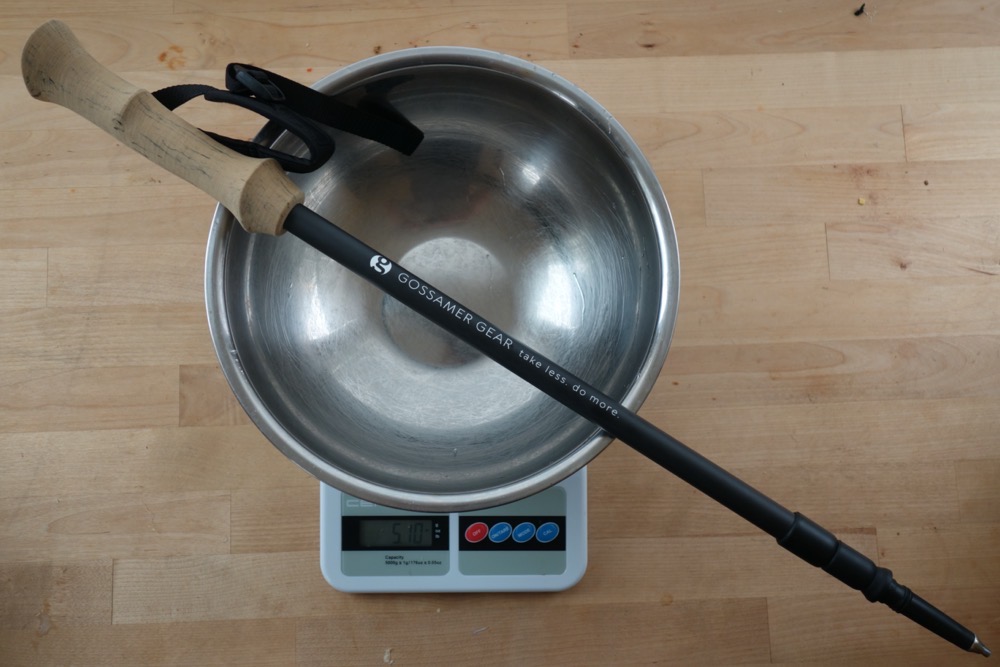
Low weight: At only 5.1 ounces each, these might be the lightest adjustable trekking poles on the market. More than once, I’ve heard a bearded wiseman tell me that “an ounce on your feet is like eight on your back,” when discussing hiking shoes. I’m not sure about the conversion from arm-ounces to back-ounces, but keeping weight in your hands to a minimum makes sense to me. The energy savings might not matter on a day hike, but over the course of a thru-hike, those calories add up. If you use trekking poles for a full-body workout, look elsewhere. Leg day, every day.
Comfortable: The cushy wrist straps and soft foam grips still felt good on my hands after several long days of hiking. My hands sweat a lot, at all times, and the EVA foam never felt slick or chafey.
Replacement sections available: If carbon poles do break, there’s no way to repair them. Fortunately, Gossamer Gear sells LT5 replacement sections, so you don’t need to buy an entirely new pole.
Compact: Poles that pack small are a lot easier to deal with when you’re not on the trail. The collapsed length of the LT5s makes them easy to pack inside or strap to the outside of a backpack for those times when you need to keep your hands free.
Gossamer Gear LT5 Cons
Price: At $195 per pair, the LT5s are some of the most expensive trekking poles on the market. Blame the carbon fiber if you want, but there are other carbon poles to be had for $50 less. Aluminum poles will save you even more, though they will likely weigh more.
Twist Lock: For all the advantages of twist locks (smaller, lighter), they are still tricky to get just right. It can be hard to grip the trekking poles tightly enough while wearing gloves or with cold hands.
Material downside: Carbon fiber is an awesome material that blends high strength with low weight, but it’s far from perfect. While aluminum poles will bend when overloaded, resulting in a misshapen, though still usable tool, carbon poles will splinter and shatter. This is cause for concern in extremely remote locations where replacement poles are unavailable. The strength of aluminum poles also resists nicks and dings better than carbon and is better suited to handle unexpected forces due to its uniform material properties. Trekking poles see a ton of abuse, especially in rocky terrain. Even though I use carbon fiber poles, I trust aluminum to handle it better and last longer.
A tad short: The LT5 maximum length of 51 inches (130cm) might be too short for your trekking pole shelter. Single-pole shelters are most suspect, so make sure to take this into account. Pole extenders do exist, however, so this needn’t be a dealbreaker.
Overall Value
If weight is of the utmost importance, I believe the LT5 Carbon Trekking Poles are a great option. They are certainly some of the lightest poles on the market, and I love how small they pack down. The price feels a bit high to me, though, especially with so many other carbon poles to choose from. My other criticisms, including the finicky twist locks, are all minor and won’t keep me from using the LT5s for many miles to come. And if I do bust a section, it’s nice to know that I can replace it without also busting my burrito budget.
Similar Trekking Poles
Fizan Compact 3 Trekking Poles
MSRP: $70
Weight: 5.6 ounces each
Material: Aluminum 7001
Length range: 22.8-52 in (58-132 cm)
Locking: Twist lock
Read my review of the Fizan Compact Trekking Poles here.
Zpacks Minimalist Trekking Poles
MSRP: $120
Weight: 5.9 ounces each
Material: Carbon
Length range: 24.3-52 in (62-132 cm)
Locking: Flick lock
Durston Iceline Trekking Poles
MSRP: $189
Weight: 5.1 ounces each
Material: Carbon
Length range: 19.5-50 in (49-127cm)
Locking: Hybrid (flick lock upper, non-adjustable bottom)
REI Co-op Trailmade Trekking Poles
MSRP: $80
Weight: 8.5 ounces each
Material: Aluminum
Length range: 25-55 in (64-140 cm)
Locking: Flick lock
Affiliate Disclosure: In my ongoing quest to avoid living comfortably and working in an office, I have incorporated affiliate links on this website where appropriate. If you make a purchase through these links, I might earn a few bucks at no additional cost to you. That's pretty cool, huh? You'll be like a modern-day Robin Hood, taking money from "The Man" and giving it to this hungry dirtbag. Burritos for all!
 Hike For Days