
This review was originally published on TheTrek.co, and this filter was donated for the purpose of review. If you have any quick questions for me about gear, please feel free to contact me. And if you want to dive deeper, or talk about other aspects of backpacking, I offer Thru-Hike Coaching. I’d love to contribute to your journey!
Besides packing up a wet tent, filtering water has always been my least favorite backpacking chore. Ever since my days of using a bulky pump filter in the Boy Scouts, I’ve been searching for a way to turn nasty water into yummy water with as little effort as possible. That journey brought me through chemical drops and UV lights before I found the Sawyer Squeeze ahead of my 2015 PCT thru-hike.
That little filter chugged along for four months, keeping me hydrated and safe from microscopic boogymen. However, at hikes conclusion, I hid my Squeeze away, vowing, “never again.” I was fed up with the leaking pouches, slow flow rate, and Herculean grip required to produce each drop. At the cost of half a pound, I moved to a gravity filter system and looked forward to living the good life.
Aside from a doomed return to squeezing with the Micro Squeeze for part of the CDT, after which I vowed, “never again,” I’ve been gravity all the way. That is, until this summer when Platypus introduced a new contender in the squeeze filter category. Enter the Quickdraw. The allure of dropping 6 ounces from my base weight ahead of the Sierra High Route was too much to push aside. I eagerly snatched up the latest and greatest squeeze-style filter to see if I finally (finally) found the ultimate compact, lightweight water filter. Many gallons later, I think I have my answer.
Platypus Quickdraw At-a-Glance
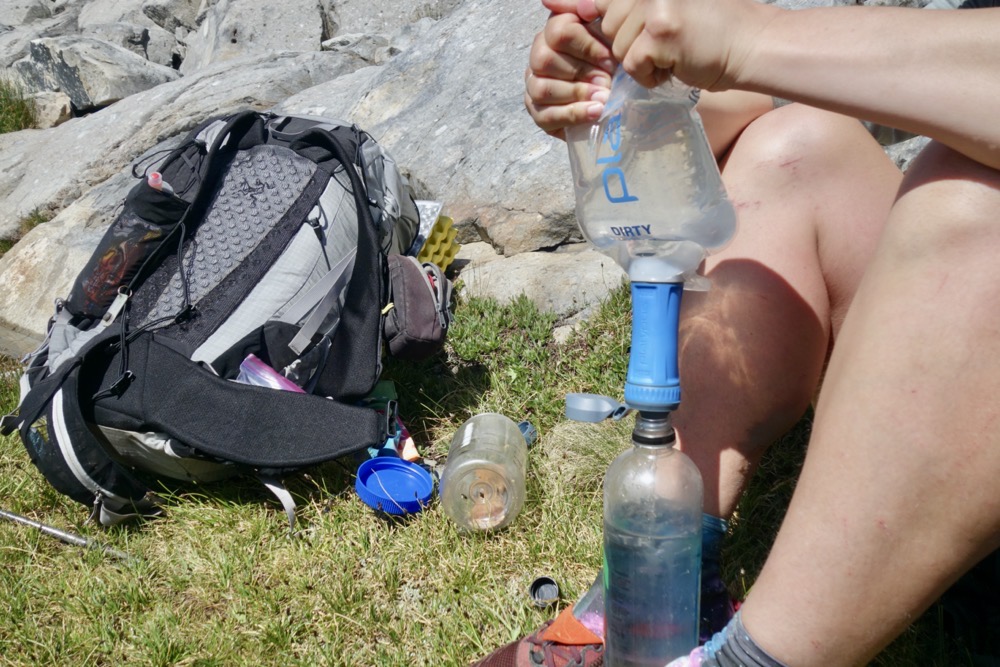
MSRP: $39.95 ($54.95 w/ 1L reservoir)
Weight: 2.3 ounces (filter only, wetted)
Filter Type: Hollow fiber (0.2 micron pore size)
Effective Against: Bacteria, protozoa, particulates
Flow Rate: Up to 3L/min
Compatibility: Quickdraw reservoir, Platypus reservoirs, standard threaded bottles (i.e. Smartwater)
Country of Origin: Made in U.S.A. of U.S. and imported materials
Intended Use
Already known for their superior soft bottles, hydration reservoirs, and excellent GravityWorks filter, the Quickdraw is Platypus’s entry into the ever-popular squeeze-style water filter category. While there are categorical drawbacks to these systems, defined and dominated by Sawyer’s Squeeze, they are an attractive option for anyone who prioritizes low weight and compactness.
In the Quickdraw, Platypus brings a direct competitor to the Squeeze. The marketing language makes it clear that this filter was designed with long thru-hikes in mind: “6 months northbound on the Pacific Crest Trail? No problem.” Durable, lightweight, compact — the Quickdraw is intended for solo hikers who prefer to carry less, regardless of mileage.
Circumstances of Review
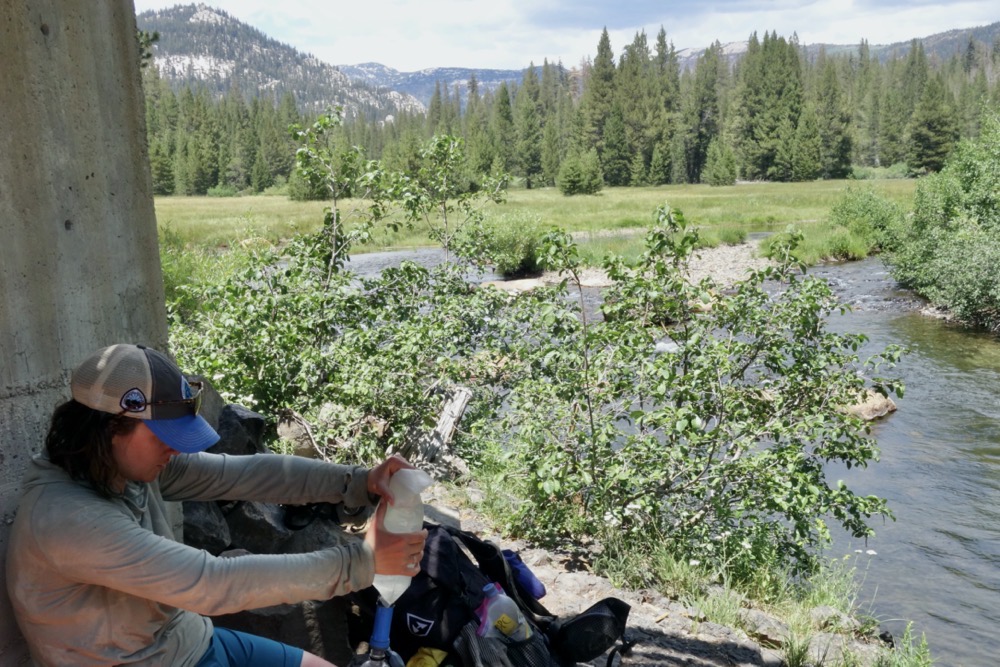
A single Quickdraw was the only filter that my partner, SpiceRack, and I carried on a 23-day mashup of the Sierra High Route (SHR) and Southern Sierra High Route (SoSHR). We carried some Aquamira dregs as backup, but were otherwise fully committed to getting our squeeze on. Between the two of us, we filtered a few gallons of water every day. Our alpine water sources were generally clean and clear, but glacial silt was occasionally a factor.
While we tried to keep our filter flowing strong by avoiding murky sources, we rarely backflushed or performed any of the recommended maintenance. I was lazy with my Squeeze on the PCT, and I was equally as lazy with the Quickdraw on this trip, to our detriment. We used the filter with the included Quickdraw reservoir, our 70oz Platy soft bottles, and el classico Smartwater bottles.
Platypus Quickdraw Features
Wide-mouth reservoir: Included with the ‘System’, the Quickdraw reservoir boasts a wide mouth that makes filling it at stationary water sources actually possible. This, combined with a grip loop at the collar, makes filling it both easier and more secure at any water source versus the equivalent standard mouth soft bottles.
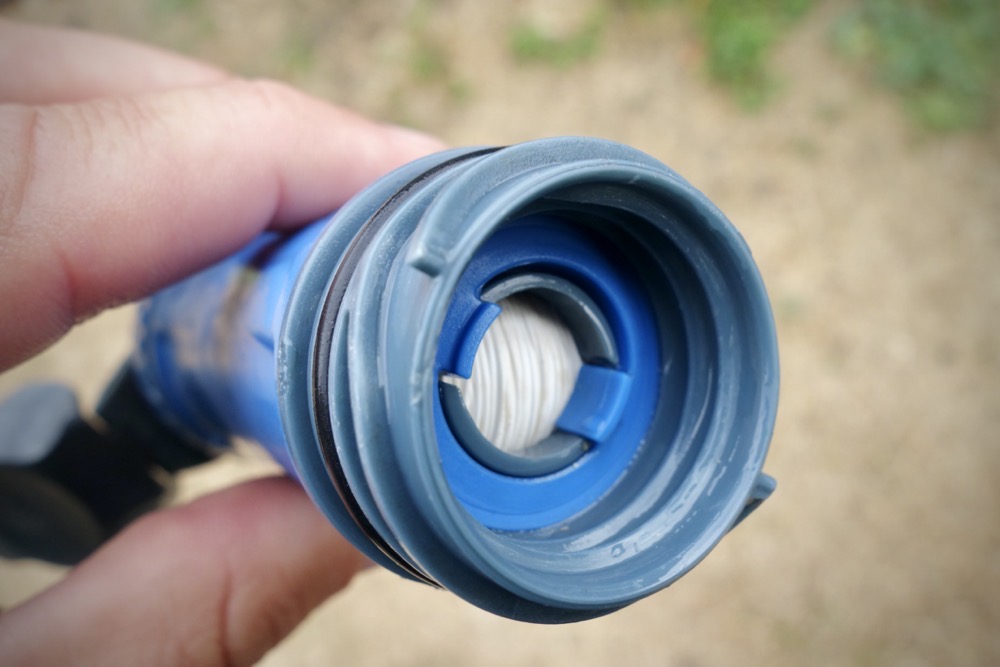
Dual threads: The input side of the Quickdraw has both inner and outer threads, making bottle compatibility extremely flexible. The inner threads work with the standard bottle thread pattern, which enables secure coupling with Smartwater-like bottles and larger flexible bottles. The outer threads are unique to the Quickdraw and mate with the widemouth Quickdraw reservoir. Whatever your preferred dirty water collection vessel may be, it will probably work with the Quickdraw.
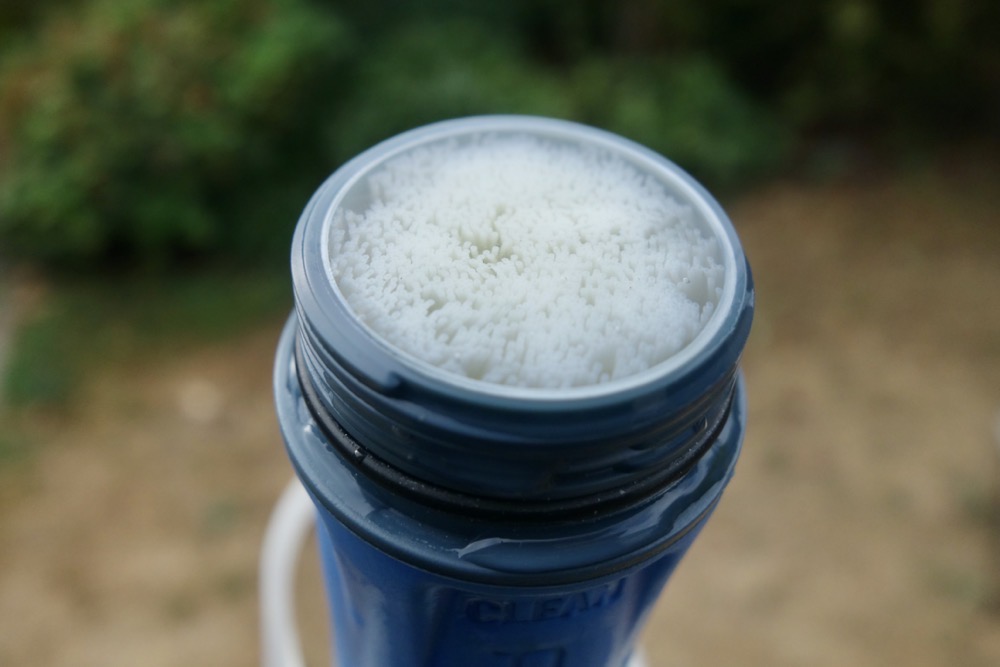
Filter integrity check: Hollow fiber filter technology has become the standard in the North American backcountry for its low weight and compact design. However, a major drawback is that these filters can be damaged if frozen or dropped. This is not a problem during the height of summer, but it is potentially significant during shoulder seasons or at high altitudes. Worse yet, there is usually no way of knowing if the filter function has been compromised. At best, (for responsible people) a maybe-frozen filter means shelling out ~$40 for a new filter. At worst, a maybe-frozen filter turns into weeks of horrendous diarrhea and then shelling out $40 for a new filter.
Platypus has developed a solution to this conundrum. A few simple steps are all it takes to do a filter integrity test. Remove the clean-side cap. Put half a liter of water in the reservoir and squeeze some through to wet out the fibers. Next, flip the filter up and squeeze air through. A steady stream of bubbles indicates a compromised filter, in which case it should be trashed.
Multi-cleaning: There are two ways to clean the filter — no accessories needed — which is required to maintain anything close to an acceptable flow rate. The easiest, yet least effective, is the slosh method. Put a quarter liter of water in the dirty reservoir and shake it all up for 30 seconds. This splashing dislodges some of the grit built up on the exposed filter fibers. In practice, I found this easy enough to do regularly, but not useful in noticeably restoring flow rate.
The more effective option is to backflush the filter by holding a bottle of clean water to the filter output and giving it a good squeeze. This pushes clean water backwards through the Quickdraw, washing detritus back the way it came. Platypus recommends backflushing a quarter liter for every six liters filtered at a minimum.
Two caps: A screw cap on the input and flip cap on the output allow hikers to completely seal the Quickdraw after each use — no drips, no dirt. While I scoffed at first, this unsexy feature is actually super useful when the temperature dips near freezing. Sleeping with the filter in your sleeping bag or hiking with it in a jacket pocket is sometimes the only option to ensure that the filter does not freeze. With robust caps at both ends, one can sleep with confidence that the filter won’t leak.
1,000 Liters: The Quickdraw is rated to 1,000 liters of filtered water. That’s way less than the Sawyer Squeeze’s 1,000,000 liters, but still enough for a long thru-hike or two. Does the Quickdraw explode after exceeding that threshold? My guess is no, though I expect that the flow rate will be unbearably slow. Kudos if you make it that far.
How’d It Do?
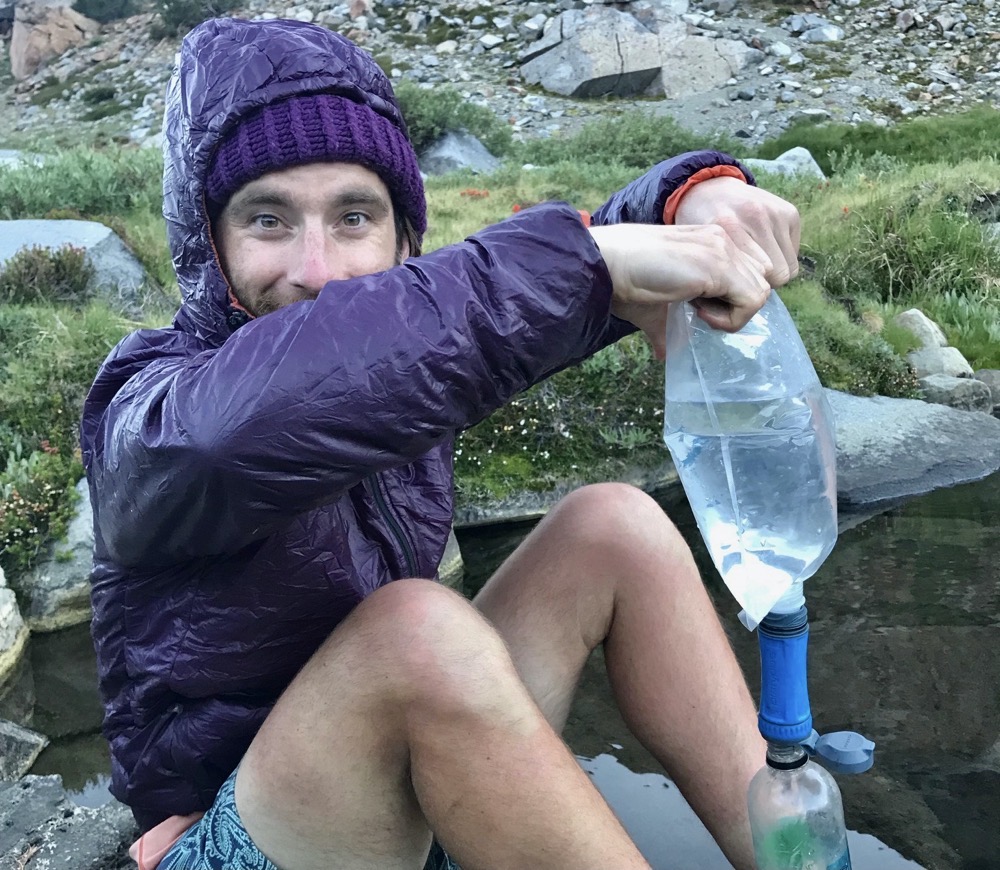
I approached the SHR with (probably unreasonably) high hopes for the Quickdraw. When it came to features, I was pleasantly surprised. However, talking about flow rate, I was a little disappointed. Things started well, with ridiculously fast flow and easy squeezing for the first few days, but even with regular shakes-to-clean, the flow rate dropped significantly. By the third week, SpiceRack and I were chronically under-hydrated because filtering enough water for the both of us was a time-consuming and dreaded chore. My tired hands brought me back to the good old days on the PCT.
Granted, part of the issue was our fault for not backflushing enough and only bringing one filter for two people. However, I believe that our treatment of our filter is representative of how the majority of hikers will treat their own. In the end, I don’t think that the Quickdraw’s flow rate was significantly better or worse than that of the Sawyer Squeeze. I expected it to be better, but wasn’t surprised to find out that there is nothing revolutionary about the Quickdraw’s flow rate.
Cool features
Squeeze-type filters have been around for many years now, and Platypus listened carefully to the hiking community in order to make thoughtful improvements to a simple device. The integrity check is arguably the most significant, but the other small tweaks make using the Quickdraw better every single day.
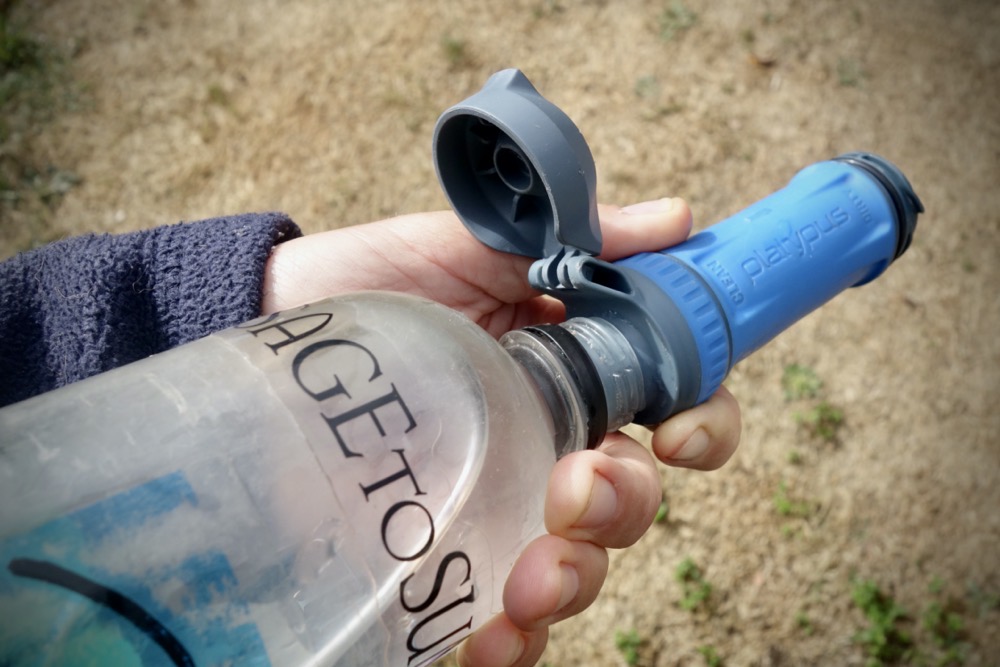
The two caps keep the filter leak-free when not in use and also prevent dirt from fouling the threads or clean water output. Plus, the flip-cap on the output improves on a hack that hikers have utilized for years, screwing the sportcap from a SmartWater bottle onto a Squeeze. That flip cap also enables tool-free backflushing. No need to bring an awkward accessory along (Let’s be real. No one carries the syringe for backflushing the Squeeze).
The Quickdraw reservoir is a huge upgrade over the leak-prone mylar pouches included with Sawyer products. It feels durable and made to last, with a little stretch. The wide mouth also makes it easy to fill even in flat water. My one wish is that it becomes available in a two-liter version. (UPDATE: There is now a two-liter and three-liter version. Yay!)
The Elephant in the Room: Quickdraw vs. Squeeze
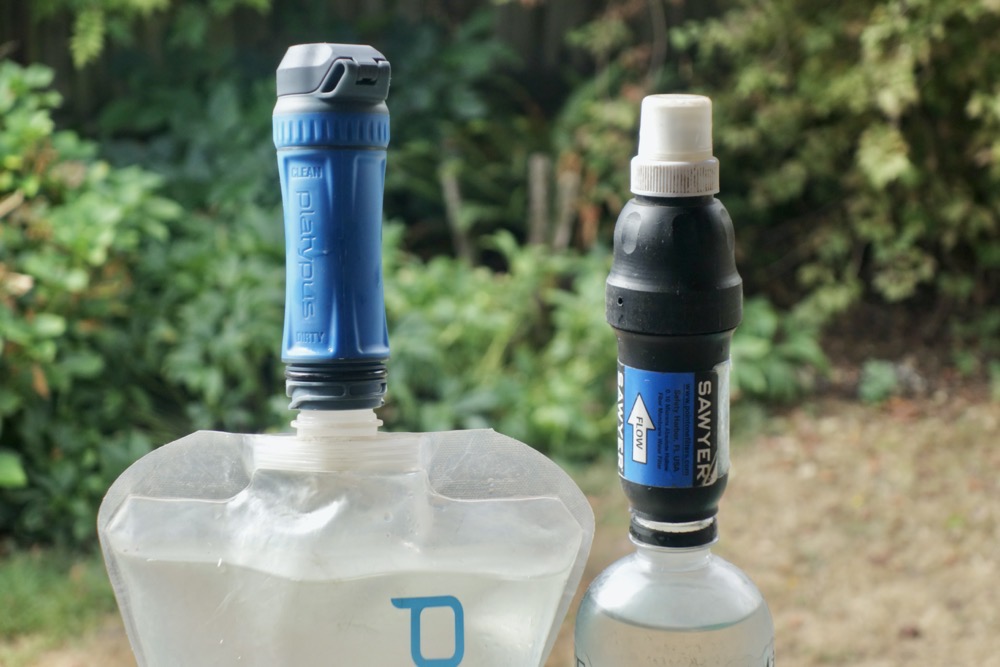
With the introduction of the Quickdraw, the obvious question is how it compares with the Sawyer Squeeze. In short, I prefer the Quickdraw to the Squeeze. Painting with broad brush strokes, the carefully executed features, such as the integrity check and wide mouth reservoir, give it the edge.
That being said, the two filters are closely matched. I’m not thrilled by the flow rate of either, which is honestly the area where I hoped the Quickdraw would distinguish itself the most. The Squeeze arguably has the better internal filter element as well. Sawyer promises removal of 99.99999% of all bacteria and 99.9999% of all protozoa, whereas the Quickdraw only(lol) removes 99.9999% and 99.9%, respectively.
The Squeeze is also rated to 1,000,000 liters versus the Quickdraw’s 1,000. Do any of these numbers matter? Probably not, but Sawyer claims to have Squeeze’s still going strong after 11 years of regular use. I’ll still take the Quickdraw for backpacking, but I’ll be happy to have my Squeeze for the apocalypse.
Platypus Quickdraw Pros
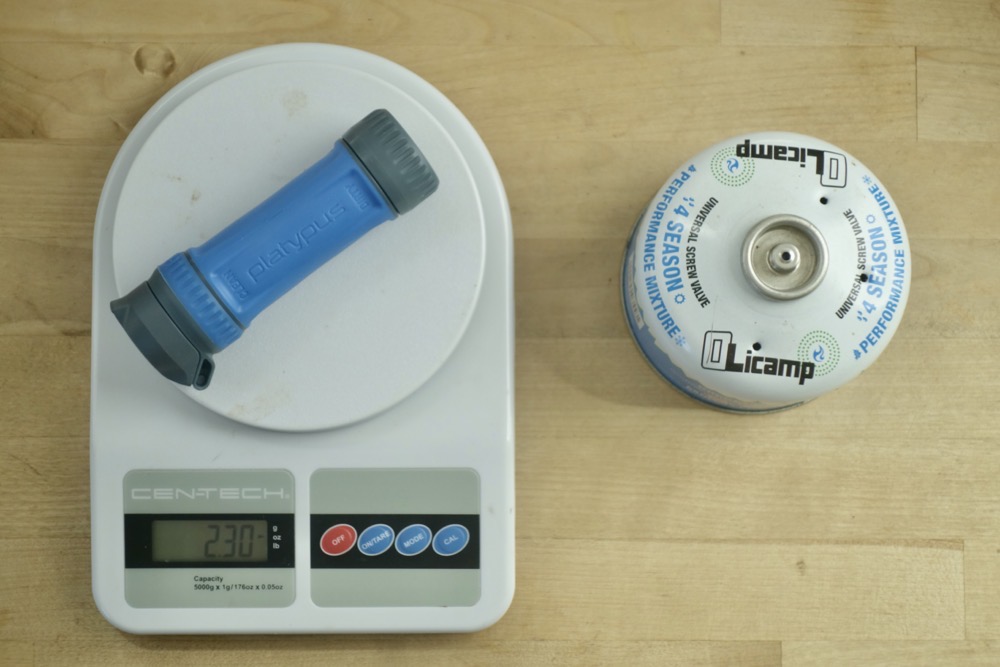
Lightweight: The number speaks for itself. Mine measured 2.3 ounces after using it (a little water still inside). It might not be the absolute lightest filter on the market, but I doubt the difference is anything you’ll notice. The Quickdraw weighs less than a Clif Bar and will filter all of your water for months. That’s awesome.
Durable reservoir: The Quickdraw reservoir has been a revelation for me after being frustrated by leaky squeeze pouches for years. It has its limits, I’m sure, but it feels like a significant upgrade. The wide mouth and grip loop are cool as well. And as Platypus puts it, “nobody else in the personal filter category offers a taste-free and durable reservoir.” Boom, shots fired.
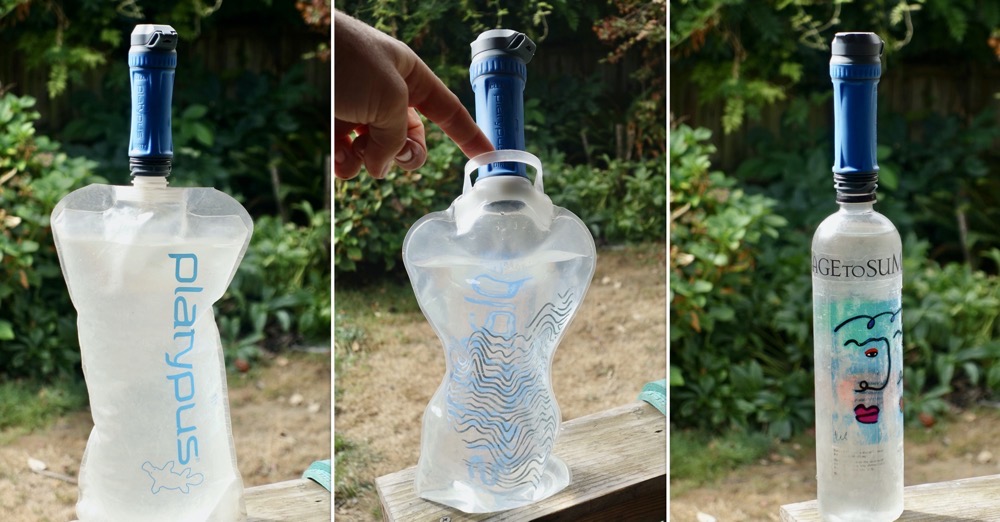
Versatile Compatibility: I love the included reservoir, but actually used the 70oz Platy soft bottle most frequently for filtering. The larger capacity prevented my lazy self from getting up to refill more than necessary. However, for flat water, I always used the Quickdraw reservoir for its wide mouth, which was easier to fill. The filter also screws onto standard water bottle threads, allowing you to drink directly from the bottle. It’s pretty sweet to be able to use just about any water container you want to.
Integrity check: Have an unexpectedly freezing night? Did you drop your filter off a cliff? Well, new to the world of hollow fiber filters, it’s easy to see if the Quickdraw is still keeping the nasty things out of your drinking water. With other filters, you need to guess or hope that nothing is broken. With the Quickdraw, you know, anywhere, anytime. Replace if busted and keep on chugging.
Easy maintenance: The “shake-to-clean” and “tool-free backflush” are both easy to perform. I used the shake method a bunch with minor success. Backflushing works better and can be done with just a water bottle and some clean water. Easy to do in the field and no syringe required.
Ready to cuddle: The fully-waterproof caps on the Quickdraw make keeping your filter warm at night easier than ever. I slept with the Quickdraw at the foot of my quilt every night just in case the temp dipped below freezing. It never leaked, and I never wondered if the filter had frozen.
Platypus Quickdraw Cons

Solo use: While it is certainly possible to use the Quickdraw to filter water for more than one person, the squeeze-type filters are better suited to solo use. The process is fairly labor-intensive, especially with a reduced flow rate, and it can take up to 20 minutes to filter two liters of water each for two people. With this said, the Quickdraw was not designed for group use. It’s light and small enough for each individual to carry their own anyway. For group filtering, I recommend a gravity system.
Not in-line compatible: One of the few things the Quickdraw can’t do is be used as an in-line filter with hydration bladders. That’s not a problem if you only drink out of bottles, but for hikers living the in-line life, you’ll need to look elsewhere. (UPDATE: This may have changed recently )
No virus protection: The Quickdraw filters out dirt, bacteria, and protozoa. That’s the same as most filters out there, and is good enough for the U.S. and Canada. However, for international travel, it might be worth considering water purification methods to add protection from viruses.
Shake-to-clean: This maintenance technique let me down. As lazy as I am, I of course took the easiest approach to keeping my filter clean and flowing strong. Why would I backflush using my hard-squeezed clean water, when I could just shake what I already had? I used this shake method at least once a day, but the flow rate still dropped dramatically by my second week in the backcountry. At this point, I switched to backflushing occasionally, which worked much better. I just wish that I had backflushed from the start to prevent the initial steep decline in performance. The shake-to-clean might be better than nothing, but it’s not good enough by itself for the long haul.
Flow Rate: I had exceptionally high hopes for the Quickdraw and feel like it let me down. The advertised 3L/min is accurate at first, but unsurprisingly, that quickly diminishes with use. By the end of the SHR, I was as frustrated with the Quickdraw as I ever was with my Sawyer Squeeze on the PCT. Sure, I could have done a better job keeping up with regular backflushing, but I honestly think that the average hiker will neglect maintenance to a similar degree. The Quickdraw promised a better flow rate than the Squeeze. In the end, it was about equal, which was disappointing.
Final Thoughts
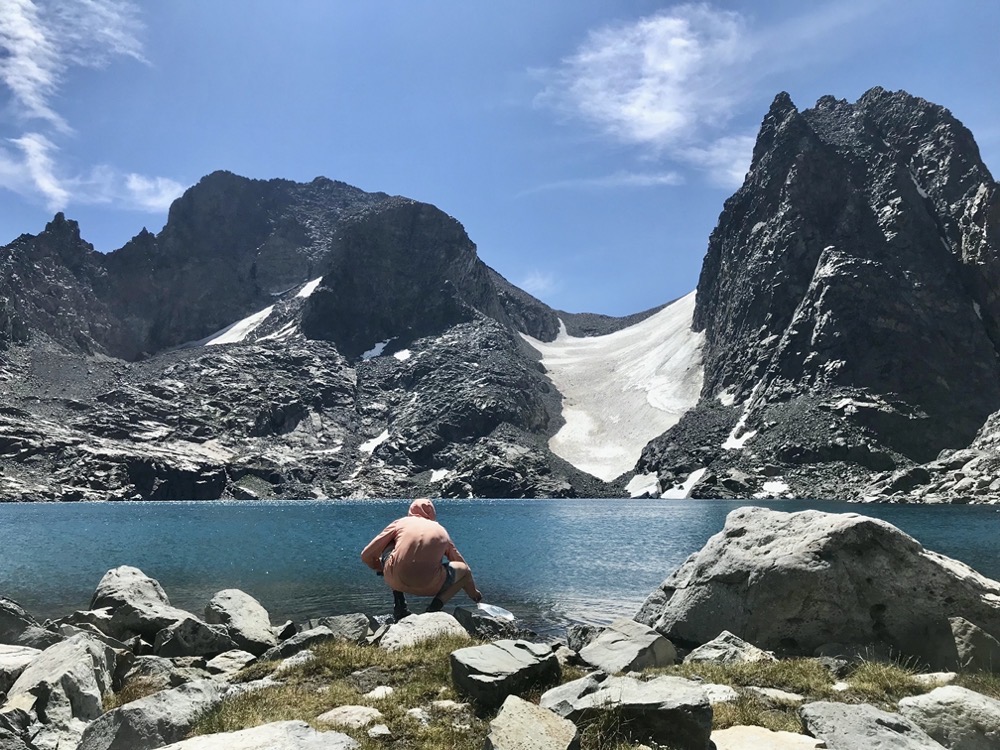
There is a lot to like about the Quickdraw. It does what it is supposed to do without weighing you down, and incorporates some novel features that truly raise the bar for squeeze-style filters. The integrity check especially has the power to do some significant good by preventing sickness and reducing waste. No need to risk using a broken filter or trashing a perfectly good one after a close encounter with freezing temps. The ability to pair with a wide-mouth reservoir while maintaining compatibility with standard threads is also a categorical improvement over other filters that work with either, but not both.
While I wasn’t impressed by the flow rate performance, it is at least as good as that of similar filters. With realistic expectations, this should be a non-factor. Regardless of filter choice, the most important determinant of flow rate is maintenance. Backflush regularly and often, and reap the rewards.
The Quickdraw will be my filter of choice on short trips in the future. Over days, rather than months, I will gladly squeeze my water in exchange for simplicity and a minimal weight penalty. On the other hand, when the urge to walk across the country squirms to the surface again, I think that I’ll still be looking for the perfect solution. For some, that’s gravity. For others, it’s chemicals. For those of you still looking for your main squeeze, the Quickdraw is worth a look.
Similar Water Filters
Sawyer Squeeze
MSRP: $36.95
Weight: 3 ounces
Filter Medium: Hollow fiber
Output: 1.7 liters per minute
Maintenance: Backflush
Katadyn Be Free
MSRP: $44.95
Weight: 2.3 ounces
Filter Medium: Hollow fiber
Output: 2 liters per minute
Maintenance: Swish in clean water
Affiliate Disclosure: In my ongoing quest to avoid living comfortably and working in an office, I have incorporated affiliate links on this website where appropriate. If you make a purchase through these links, I might earn a few bucks at no additional cost to you. That's pretty cool, huh? You'll be like a modern-day Robin Hood, taking money from "The Man" and giving it to this hungry dirtbag. Burritos for all!
 Hike For Days