
This review was originally published on TheTrek.co, and this backpack was donated for the purpose of review. If you have any quick questions for me about gear, please feel free to contact me. And if you want to dive deeper, or talk about other aspects of backpacking, I offer Thru-Hike Coaching. I’d love to contribute to your journey!
Spend some time on the long trails of North America, and one will inevitably start to recognize a name passed on the hushed whispers of the reverent. That name is Durston, and it has achieved an almost mythical status over the years for embodying a notoriously awesome and notoriously elusive product line of ultralight shelters and backpacks. They are rare to spot in the wilderness, and even harder to buy, but the internet is replete with gushing reviews that sprout FOMO in the souls of even the most equipped backpackers. Until this summer, I was one of them.
I’d never truly had the need nor patience to justify seeking a Durston shelter or backpack, but with the side pockets of my trusty AT backpack in duct-taped tatters and an opportunity to test the brand new Durston Kakwa 40, I jumped at the opportunity to saddle up with a backpack that appeared to offer it all. With lofty expectations, I prepared to be disappointed. Instead, I learned a lot about backpacks and to appreciate how the little things can elevate the good to great.
Durston Kakwa 40 At-a-Glance

MSRP: $250
Weight: 27.8 ounces (size M)
Available sizes: S, M, L (torso sizes: 14.5”-22”)
Volume: 40 liters internal, 15 liters external
Max. recommended load: 45 pounds
Pockets: 1 main compartment, 1 front mesh, 2 hip-belt pockets, 2 side pockets, 1 external zipper pocket, 2 shoulder pouches
Frame: Hollow aluminum inverted U
Material: Ultra 200
Intended Use
The 40-liter backpack is no stranger to the languid long trails and hardy high routes of the world, and the Kakwa 40 slots into this category with a confident assuredness of its place in a delightfully crowded market. Paired with a lightweight and pared-down kit, this thing is ready to go the distance on an epic thru-hike (or two), or to be schlepped over peaks and through canyons.
Depending on what else needs to fit inside, the modest volume can securely haul a spartan week’s worth of food, or enough for a luxurious weekend blowout. But that’s up to you. What isn’t is designer Dan Durston’s focus on function and durability, the hallmarks of the Kakwa 40. The materials, frame, stitching, straps, pockets, you name it, were chosen with the intention of riding the compromising line between weight and usefulness. What we get is a pack that weighs less than two pounds with an astonishingly high weight carrying capacity, not to mention carefully considered features and beaucoup pockets that help maximize time with pack on the back and feet on the dirt.
Circumstances of Review

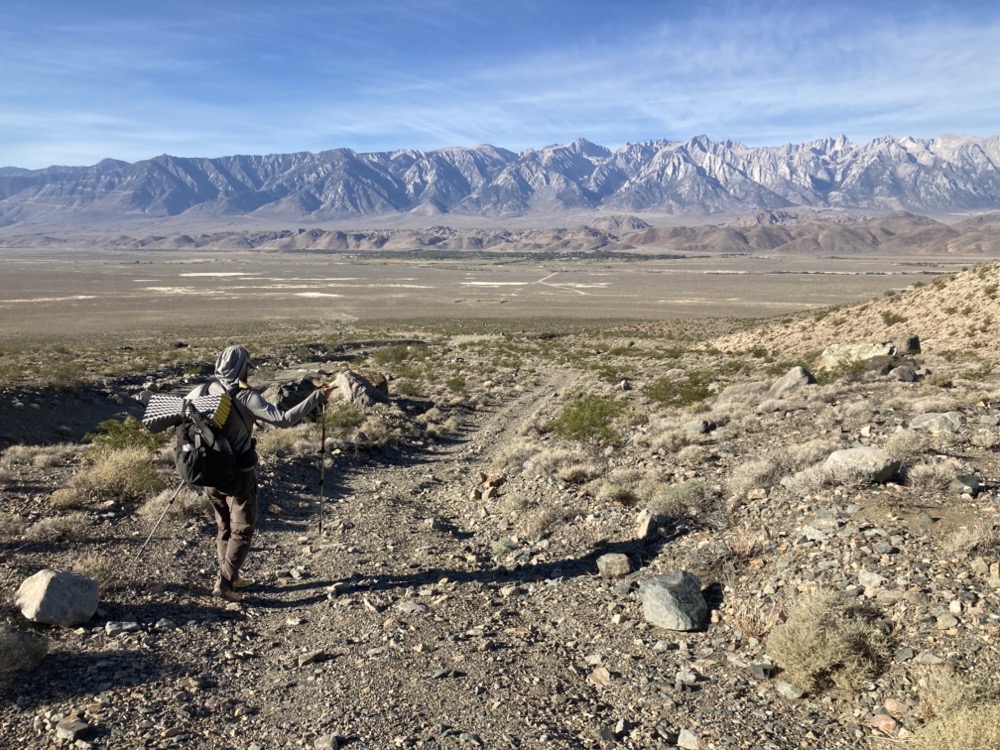
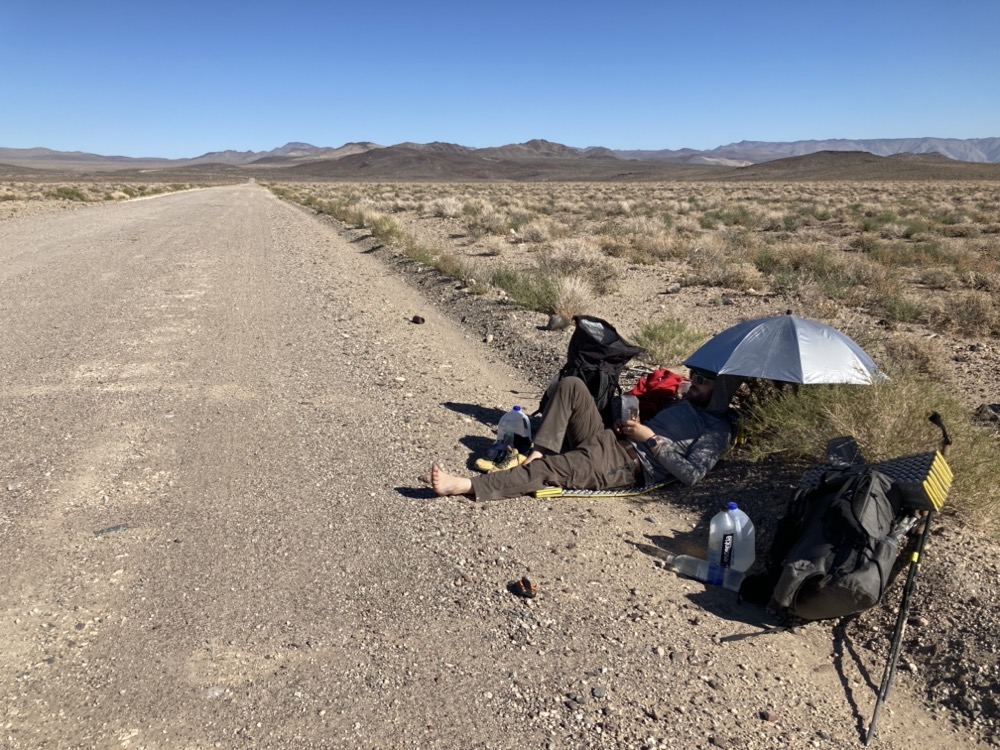
The Kakwa 40 came into my life after hiking 2900 miles through the Appalachians with a frameless backpack this spring. Compared with my thru-hike, my miles have reduced significantly, but I’ve still spent a fair bit of time with this pack in the hot and humid East, getting reacquainted with the world of internal frames. I’ve hiked with it at points along the AT from Maine to Virginia, including through some truly drenching weather in Shenandoah. On the flip side, a successful attempt of the 135-mile Lowest To Highest route (L2H), from Death Valley to Mount Whitney, provided the perfect opportunity to test this pack on a trip for which it seemed perfectly suited — a low baseweight roast over desert mountains where water loads varied from nonexistent to spine-crushing. All said, I’ve carried this pack on short day hikes with almost no weight as well as all-day sweat-fests that extended from pre-dawn to post-dusk with up to roughly 40lbs of mostly water.
Durston Kakwa 40 Features
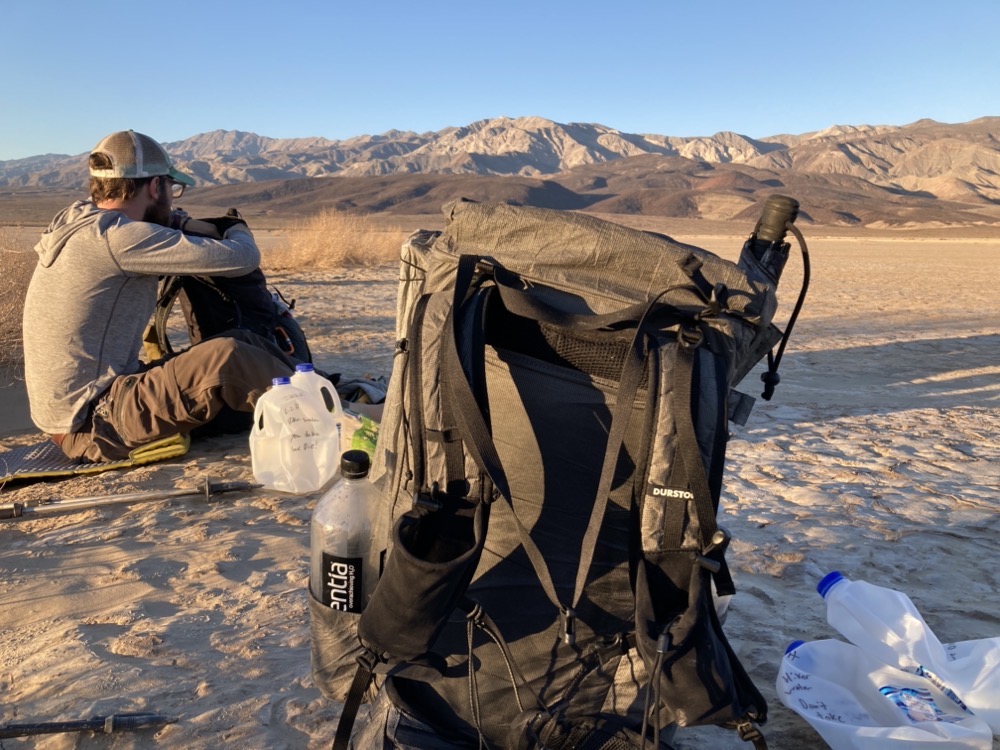
EPL 200 Ultra fabric: Colloquially known as Ultra 200, this 200-denier woven laminate is the next great thing in ultralight fabrics since Dyneema Composite Fabric (DCF/DCH) swept up the long trails of America in a wave of drab green, white, and black. This new stuff utilizes the same dyneema unicorn hairs that make DCF super strong for the weight, but weaves it with polyester rather than sandwiching it between layers of mylar. The result is a more puncture and abrasion-resistant fabric that is still extremely lightweight. A film laminated on the inside surface provides durable waterproofness, though that doesn’t necessarily mean that the Kakwa is waterproof. More on that later.
U frame: The frame of the Kakwa is made from a single piece of tubular aluminum, bent into a shape that kind of resembles an inverted U. It is actually much more complicated than that, but what’s important is that the horizontal crossbar provides another dimension of stiffness that is often lacking on ultralight backpacks. What does that mean? The Kakwa carries heavy loads more comfortably and resists barreling.
QuickPocket: A vertical zippered pocket integrated into the left side pocket offers secure storage for items that might be too large for the hip belt pockets. Think paper maps, gloves, beanie, snacks, or a large cell phone. The pocket is accessible while wearing the pack for someone with reasonable shoulder mobility.
Y top strap: A doubly adjustable, Y-shaped webbing strap uses a single clip to secure bulky items to the top of the Kakwa 40. This is helpful for hauling a bear canister, and can be used to attach all kinds of fun, bulky items such as a tent, foam sleeping pad, or, my personal favorite, a huge bag of potato chips.
Shoulder strap pockets: Each shoulder strap rocks a stretchy, cinch-top pocket. Yet another option for keeping essentials and snacks within reach.
Roll-top closure: Nothing special here. This is a classic, drybag-like closure method that keeps out water and dirt. It also allows the pack’s extension collar to expand or disappear depending on load volume, which keeps things tidy despite fluctuating food levels and/or gear choices.
Load lifters: Adjustable straps connect the top of each shoulder strap with the pack’s frame. Often absent in ultralight packs, these little wonders help transfer weight off of the shoulders when the load gets heavy, and can help dial in how snuggly the pack contacts one’s back.
Asymmetrical side pockets: The tall left pocket securely holds long items, while the angled opening of the right pocket makes access just an easy reach away. Each can handle two Smartwater bottles without issue, and elastic holds everything snug.
Dual-strap hip belt: A strap on the top and bottom of the hip belt helps the padding contour and cup around your hips, which is more comfortable and better at transferring heavy loads than a single-strap design. Don’t worry, it still uses a single buckle.
How’d it do?

I am now a huge fan of the Kakwa 40. As you’ll read, the features of this pack are fun to talk about, but the beauty of the Kakwa is less tangible. It just works. It holds a lot of stuff, has smart places to put all the stuff, and carries all that stuff comfortably. It was easy to adjust, and hauled more weight than a pack this light has any business carrying without the typical accompanying discomfort. With my frameless bag, a heavy load (~25lbs) eventually resulted in a shooting pain from my neck to the base of my shoulder blade. Not so with the Kakwa, which held up to 40 pounds for hours with just one sore shoulder to show for it.
And it might be a small thing, but the Kakwa just looks good. The frame maintained the shape of the pack no matter how poorly I loaded it, giving it clean lines and corners worthy of a gift-wrapping savant. ‘Looking good’ just edges out ‘safety’ as the number one priority while backpacking, and the Kakwa handled that for me without thought.
Highlight: Easy Comfort
The Kakwa hosts a bunch of cool individual features that make good talking points for gear nerds, but my favorite aspect of this pack is how easy it is to use comfortably. This is a result of several shrewd design choices, from the multi-axial U frame to the load lifters and dual-strap hip belt. Although I’ve refined a pretty good system for loading a backpack over the years, I’m unabashedly lazy when it comes to correcting my mistakes. I’d rather hike 30 miles with a point in my spine than unload and repack that jar of peanut butter in a better spot. Fortunately, the Kakwa smoothed out the results of my carelessness and never gave me reason to complain, even when it was loaded awkwardly with nine liters of water.
The frame did an excellent job of maintaining the structure of the pack, holding the back panel taut and flat. Not once did I need to punch down an overstuffed, barreling curve, as is the normal practice for vertical-stay only and frameless ultralight backpacks. And with a dump truck’s worth of weight, the load lifters and clever hip belt straps made it easy to fiddle with the fit to put the load where it needed to go. I rarely carry as much weight as I did with the Kakwa, but I am often less comfortable while wearing other backpacks, even ones that I love.
Weight Capacity

One of the defining features of the Kakwa is the load rating of up to 45 pounds. That is astounding for a pack that weighs less than two pounds and is more akin to that found on 70-liter, 7-pound behemoths. As expected for a pack with just a 40-liter volume, it was difficult to approach this weight limit while fitting everything inside the Kakwa, but horrendous water carries on the L2H helped me get close. With 9 liters of water on my back and a gallon jug in my hand, I crunched across the desert with close to 40 pounds on my back for several miles. That was the worst of it, but I frequently left each water source with 6+ liters of the good stuff. My feet ached, but the Kakwa never gave me any issues. It was easy to adjust as the load fluctuated to accommodate consumption of consumables.
Durability
Over roughly 200 rugged miles, the Kakwa has shown itself to be a durable pack within the scope of ultralight backpack construction. While the practical longevity of the relatively new Ultra 200 material is not known nearly as well as that of extensively tested DCF, if the claims of boosted abrasion and puncture resistance are to be believed, then it should have no issues withstanding the abuse of multiple long thru-hikes. We’ve seen that with DCF, and Ultra is supposed to be better, right?

From my experience, my Kakwa, aside from being dirty and sweat-stained, shows only one point of wear — where the frame ends terminate at the lumbar region. At those two points, the Ultra 200 has frayed even though the internal nylon fabric frame sleeves are in perfect nick. This was surprising to find after hiking just 50 miles, but the phenomenon hasn’t progressed in the past 150.*
Besides the material, there are a few more unsexy construction elements that promise to keep the Kakwa packing for a long time. Webbing attachment points are reinforced, the mesh front pocket is durably unstretchy, and all the elastic is totally enclosed to protect it from premature wear-out caused by infiltrating detritus. Furthermore, getting deep into the product description, the seam-type nomenclature is over my head, but it’s supposed to be the best. As someone who’s blown out seams on other backpacks, I appreciate this, uncool as it is.
*This issue has been resolved. In Mr. Durston’s own words, “we have seen this on a small % of packs in our first run (depending on the fit and body type). I have made some updates for our next batch to resolve this, including tougher Ultra 400 fabric in these spots, and redesigning how the frame ends so that now it ends a bit higher behind the hipbelt padding. That padding disperses the pressure to avoid pressure points on the tips. I am quite confident it is a 100% fix. If someone has this issue on the first run pack, we’re happy to warranty it.”
Pockets

Despite being a minimalist backpack at its core, the Kakwa comes with a ton of pockets to hold just about everything that one might need throughout a day on the trail. The two hip-belt pockets are notable for their ample storage and one-handed operation, and the two stretchy cinch pockets on the shoulder straps are a good place to put all kinds of useful things. While I missed the water and dust protection of my typical shoulder pockets, these two easily kept my phone, small camera, headlamp, chapstick, and a bar secure and within easy reach. They can also hold small bottles or soft bottles if shoulder water is your thing.
The side pockets, because they have sewn-in shape, are more secure and easier to use than oft-seen pleated pockets, and offer secure access to taller items such as water bottles, tent poles, or an umbrella. The front mesh pocket is a little smaller and less stretchy than I’m used to, but that just kept me more disciplined with my packing and faster to eat my bag of chips. It is still enough to stuff bulky essentials like a rain jacket, water filter, and poop kit.
Now to the unique QuickPocket. This is an interesting feature to which I failed to adapt. Between the hip belt and shoulder pockets, I found that I had plenty of space for my pocketable items, and so was at a loss for what to keep in this pocket. Sunscreen, my phone, toothbrush, a headlamp, they all temporarily called the QuickPocket home before being relocated to a more convenient location. In the end, it became a private suite for my wallet, which, you know what, is a pretty great use for it. The largest limitation was that this extra storage shares volume with the side pocket. With a big bottle and tent poles already taking up most of that space, there wasn’t much left for the odd item. Flat things like maps can sidestep this double-booking, but you can’t cram the side pocket and QuickPocket at the same time. I can see it being handy in the right circumstance (i.e. not hauling a butt-load of water), and for the negligible weight penalty, the added potential utility is probably worth it. I might just not be evolved enough yet to see why.
Bear Canister
Even the big bear canisters will fit in the Kakwa vertically, but they will gobble up a good chunk of the usable space in the 40-liter main pocket. Another option is to strap the can horizontally to the top of the pack using the Y top strap.
D’oh! Not Waterproof

My fault. I assumed that waterproof fabric implied a waterproof backpack. My mistake became apparent when I unloaded my pack after hiking for hours through a drenching torrent in Shenandoah National Park. All of my stuff was damp, and my quilt, which I packed at the bottom, was soaked. Hand warmers saved the day, and I learned an important lesson — always use a pack liner. The Ultra 200 might be waterproof, but the seams are not. Reasonable precipitation won’t be a problem for the Kakwa, but it is safe to assume that water always finds a way.
Durston Kakwa 40 Pros

Lightweight: The Kakwa weighs less than two pounds, and it’s not really close. With this many pockets, load lifters, and a frame this good, that’s outrageously lightweight.
Comfort: Of course, comfort is subjective, and everybody’s body will interface differently with the Kakwa. That said, this completely average dude thought the Kakwa was very comfortable, especially considering the massive loads that I sometimes hauled. No barreling, good hip belt, good shoulder straps.
Load capacity: I can’t say that the Kakwa is truly capable of carrying 45 pounds as claimed, but it undoubtedly comes closer to that number than any other pack I’ve used, weighing less than three pounds. That is awesome for ultralighters who might need to lug a massive resupply (Think Sierra, San Juans, or 100-mile Wilderness).
Ultra 200: This fabric is probably the future of ultralight backpack construction. With measured benefits over DCF, it promises high strength and durability at a low weight.
Durability: While I only have a couple hundred, not thousands, of miles on my Kakwa, I’ve drunk enough the Durston Kool-Aid to believe that it will survive many more months and years of abuse. The materials are top-notch notch and it feels well-built, more so than other ultralight backpacks that I’ve owned.
Clean lines: This pack looks good no matter how poorly I cram it with my stuff. Totally jabroni-proof.
No barreling: Not only does the U frame enable monster hauls, it also keeps an overstuffed Kakwa from forming into a cylinder that concentrates all back-contact to the spinal column. Happy back, happy hiker.
Price: Compared with the competition, the Kakwa is available for a shockingly fair price. I don’t get it.
Durston Kakwa 40 Cons
Not waterproof: This one is only a con if you expect it to be waterproof. Don’t be like me. Use a pack liner.
One color: Gray is inoffensive, but pretty boring. Does the world need more technohippies roaming through the woods with custom multicolored backpacks? No, but purple is an awesome color.
Final Thoughts
If you haven’t figured it out yet, I love my Kakwa 40 and could not be happier to have it for the remaining 2,000 miles of the Eastern Continental Trail this winter. Not only is it just a few ounces heavier than my 40-liter frameless backpack, but it also manages big loads with a comfort previously reserved for my 65-liter Osprey. My other lightweight packs (Gossamer Gear G4-20, Granite Gear Crown2 60, Arc’teryx Aerios 45, Hyperlite Southwest 2400) just can’t compete in this regard. In this way, it is well-suited to handle a wide variety of use cases. It’ll carry that huge resupply, yet won’t weigh you down unnecessarily on a quick weekend trip. While the 40-liter volume will potentially exclude hikers who are not hopelessly afflicted with ultralight madness, the 55-liter version will likely have a broader appeal. This will be the sweet spot for anyone transitioning to a lightweight setup.
So yeah, if you’re in the market for a lightweight backpack, I can think of no reason to omit the Kakwa from your list. Unfortunately, the always wise adage, try-before-you-buy, isn’t an option here, and there is no guarantee that the Kakwa will fit any other body as well as it fits mine. However, if one is truly in need of a new backpack, then the Kakwa deserves a spot near the top of the list.
Similar Lightweight Backpacks
Hyperlite Mountain Gear Unbound 40
MSRP: $370
Weight: 30.1 ounces
Capacity: 40 liters
Max. Load: 40 pounds
Material: Dyneema Composite Hybrid
Read my review of the HMG Unbound 40 here.
Zpacks Arc Haul Ultra 50L
MSRP: $399
Weight: 21.1 ounces
Capacity: 37 liters
Max. Load: 40 pounds
Material: Ultra 200 or 100
ULA-Equipment Ultra Circuit
MSRP: $380+
Weight: 34.7 ounces
Capacity: 39 liters
Max. Load: 35 pounds
Material: Ultra 200, 400
LiteAF Ultra 40L Curve
MSRP: $325+
Weight: 25-34 ounces
Capacity: 40 liters
Max. Load: 35 pounds
Material: Ultra 200
Six Moon Designs Swift X
MSRP: $270+
Weight: 34.8 ounces
Capacity: 38 liters
Max. Load: 35 pounds
Material: LiteSkin or X-Pac
Affiliate Disclosure: In my ongoing quest to avoid living comfortably and working in an office, I have incorporated affiliate links on this website where appropriate. If you make a purchase through these links, I might earn a few bucks at no additional cost to you. That's pretty cool, huh? You'll be like a modern-day Robin Hood, taking money from "The Man" and giving it to this hungry dirtbag. Burritos for all!
 Hike For Days