
This review was originally published on TheTrek.co, and these shoes were donated for the purpose of review. If you have any quick questions about gear, please feel free to contact me. And if you want to dive deeper, or talk about other aspects of backpacking, I offer Thru-Hike Coaching. I’d love to contribute to your journey!
UPDATE: Altra has discontinued the Mont Blanc BOA, leaving only the version with regular laces in their lineup. After using the laced Mont Blanc extensively, I like it more than the BOA version that is reviewed here. For my use, the BOA laces don’t provide a huge benefit, so I’d rather save money and weight by choosing the laced version. Both are comfortable, durable trail runners that I love for hiking and trail running.
After years of stack height fattening across the running shoe industry, the long trails of America are awash with towering stilts of neon EVA. They bounce their wearers over mountains, across countries, and between aisles of Little Debbie and potato chips in gas station convenience stores. Despite their polarizing aesthetic, maximally cushioned trail runners have become a dominant footwear category for ultra-lighters, hardy section hikers, and weekend warriors alike. It’s difficult to stand out in a market as ripe as this, yet that is exactly what the Mont Blanc BOA achieves.
Altra’s brand-new trail shoe is hard to miss. The dual-dial BOA lacing system immediately suggests that there is something suspicious going on, and other design tweaks promise to improve the user experience in more subtle ways. So how does this highly specialized shoe behave when asked to slow down to 2mph and lug the extra weight of a backpack? Is it the look of the future, or destined to disintegrate brilliantly like a shooting star?
It is inevitable to compare the Mont Blanc with the established and well-loved Olympus, Altra’s cushiest trail shoe. In additon o the questions above, I aimed to characterize the differences between the two. On paper, they seem like natural rivals, so I embarked on my review period to gain an understanding of what makes one better than the other, and for whom. The answers are pleasingly nuanced and difficult to explain. Just the way I like it. Now let me give it a shot.
Altra Mont Blanc BOA At-a-Glance
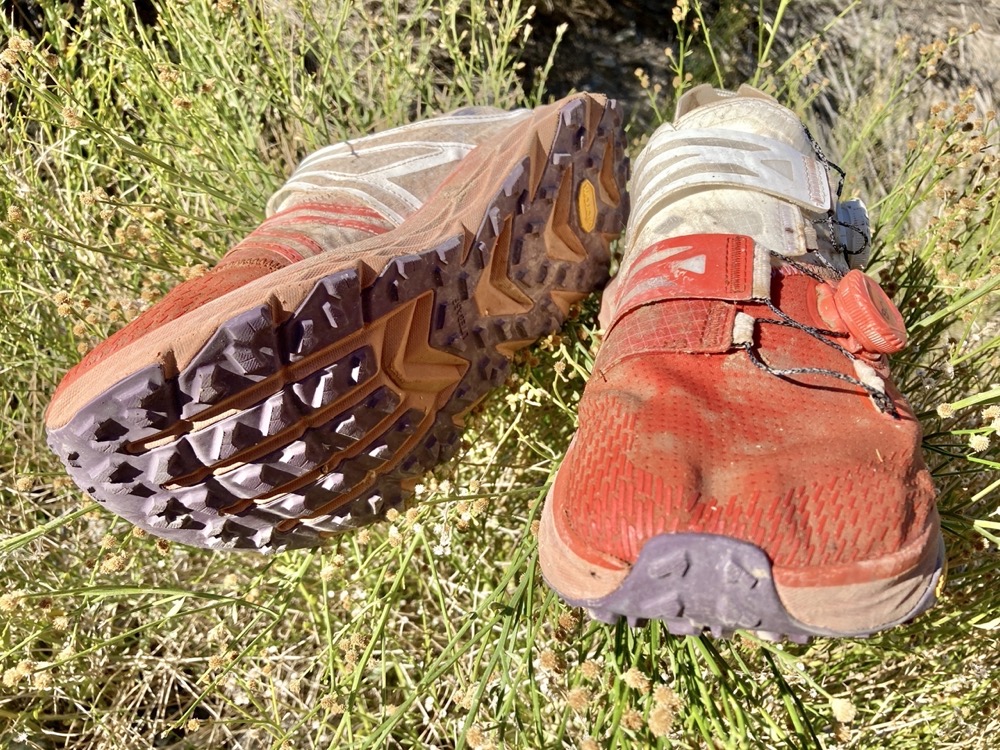
MSRP: $210
Shoe Type: Lightweight, highly cushioned trail runner
Laces: Dual-dial BOA
Stack Height: 30mm
Drop: 0mm
Weight: Men 11.2oz / Women 9.3oz
Intended Use
In the Mont Blanc BOA, Altra has created a shoe built for a very specific purpose, long runs on rugged trails. The name alone is a dead giveaway. It’s a nod to one of the premier mountain races, the epic 106-mile UTMB around the highest peak in Western Europe. It’s at the extreme limit of the sport that the importance of a lightweight and truly dialed fit becomes amplified. Feet take a beating, and even small reductions in stress add up over 20, 30, or 100+ miles. The Mont Blanc BOA aims to take runners far, fast, and comfortably, even if the effort is not being broadcast all over the world. This is achieved primarily by reducing weight and nailing the fit. Though the intensity is at a different level, backpackers covet many of the same features as runners when it comes to footwear: breathability, low-weight, quick-drying, comfort, good traction, and looking fly. So rejoice. Even we slow, turtle-people can benefit from those that live on the rapid edge of human endurance.
Circumstances of Review

Well, I didn’t pull these shoes from the box and immediately run a 100-mile trail race, I can promise you that. That may be what they’re designed for, but I have a lot of sanity to lose before I think that’s a good idea. Besides, this is a backpacking website. And backpack I did.
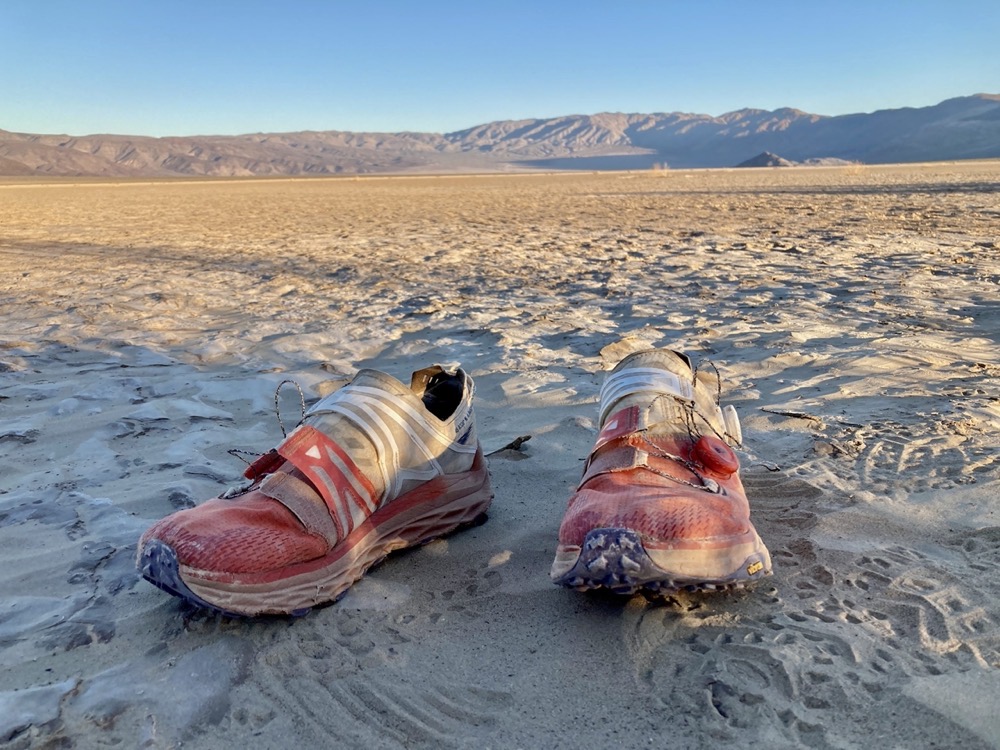
The majority of my miles with these shoes were covered during a hike of the Lowest To Highest (L2H) route in California. The 135 miles between Death Valley and Mount Whitney (or Tumanguya in native Shoshone) threw a lot my way, including oodles of rock, grit, and dust; road walks, steep off-trail scrambles, and everything in between, these shoes went through a shredder.
Furthermore, I’ve spent a bunch of time with the Mont Blanc along the AT, which couldn’t be a more different environment.The slick roots, leaves, and rocks have put the traction to the test. While going out of my way to step on the slipperiest surfaces isn’t my favorite thing to do, that’s what I’m here for.
UPDATE: Ultimately, I wore my pair of Altra Mont Blanc BOA for over 700 miles of backpacking. In addition to the L2H, they carried me between Springer Mountain in Georgia to Pensacola, Florida, and then for the final 400 miles of the Florida Trail as part of a larger hike of the Eastern Continental Trail (ECT). By the end, the tread was heavily worn, and the midsole was less cushioned, but the rest of the shoes were in great shape. No holes in the upper fabric whatsoever. And I never had trouble with the BOA laces, even after extensive exposure to mucky mud in the Florida swamps.
Altra Mont Blanc BOA Features
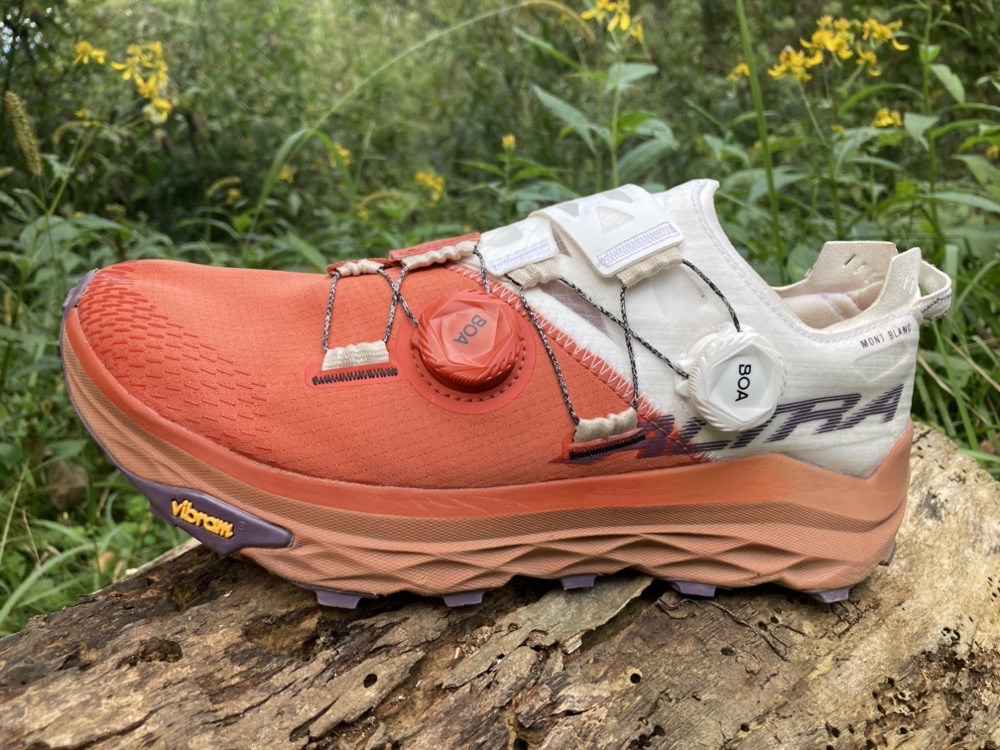
BOA Fit System: This is perhaps the standout feature of this shoe. It’s certainly the one that strangers will notice. Officially dubbed the PerformFit Wrap, this system replaces shoe laces with two adjustable dials on each foot. One tightens the zone at the top of the foot, the other snugs up the forefoot. It’s quick and easy to use, even during a run, which allows for micro-adjustments on the fly as the terrain dictates.
High Cushion: The Mont Blanc elevates your hiking with 30mm of cushy midsole foam to dampen the impact of each step and protect from trail irregularities. Speaking relatively, that’s a lot of cushion, and slots the Mont Blanc between Altra’s cushiest Olympus (33mm) and the Timps (29mm). The Altra EGO Max is a different foam from what’s used on the Olympus, and it’s the latest and greatest.
Vibram Litebase outsole: Altra once again enlists the masters of grip, Vibram, to help keep users of the Mont Blanc stuck to even the slippery things. The Mont Blanc is the Altra’s first shoe to use the Litebase formula, which reduces weight versus other Vibram outsoles.
Lightweight: The BOA lace system comes with a noticeable weight penalty (+1.3oz) when compared with the regular-lacing Mont Blanc. That said, aided by other weight-saving design choices, these shoes still weigh less than the Olympus. Not by much, but that’s an achievement considering the BOA dials.
Standard Footshape: Altra is known for their anatomically inspired Footshape design, which is defined by a wide toe box that allows the foot to splay naturally. While leaving that sacred pillar in place, Altra’s “Standard” fit is slightly narrower than the “Original” fit found on the Lone Peaks and Olympus models.
Zero drop: A wide toe box combined with a zero heel-toe drop is what makes Altra, Altra. Many other brands incorporate a positive “drop”, where the heel sits on more cushion than the toes, usually between 5-15mm. But in a pair of Altras, one’s heel and toes will rest, run, and hike on a level surface. This purportedly promotes a more natural foot strike than the alternative. Altra doesn’t officially call it zero drop anymore, but everyone else still does.
How’d They Do?
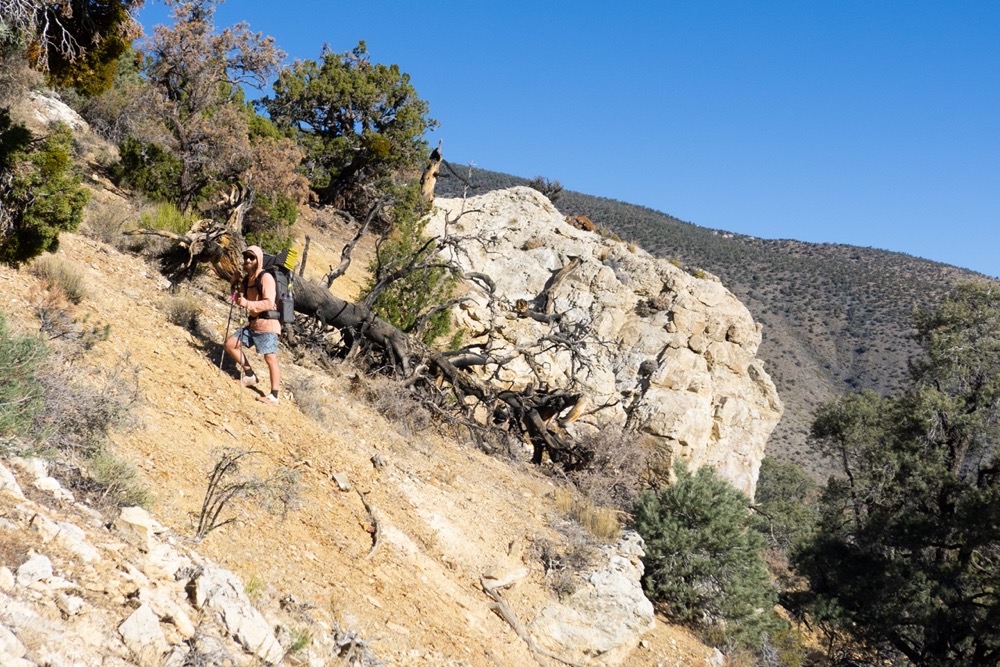
Although I wasn’t sold on the look of the shoes, I was stoked to put my Mont Blanc BOAs through their paces and learn a few things in the process. The L2H gave me the perfect opportunity to beat them up and see how effective they were at protecting my feet from getting beat up themselves. For starters, I worked the BOA system hard, trying to really see if I could find it beneficial in meaningful ways. That ensured constant fiddling and hiking with each shoe at a different level of snugness. This was surprisingly not too annoying, and the rest was easy. All I had to do was walk.
Overall, I feel like the Mont Blanc is exactly the shoe that it is designed to be. It’s lightweight, comfortable, easy to adjust, and ready for rugged trail. The BOA system is a cool feature that some will covet, but there is a lot more to this shoe that arguably matters more to the average hiker.
BOA
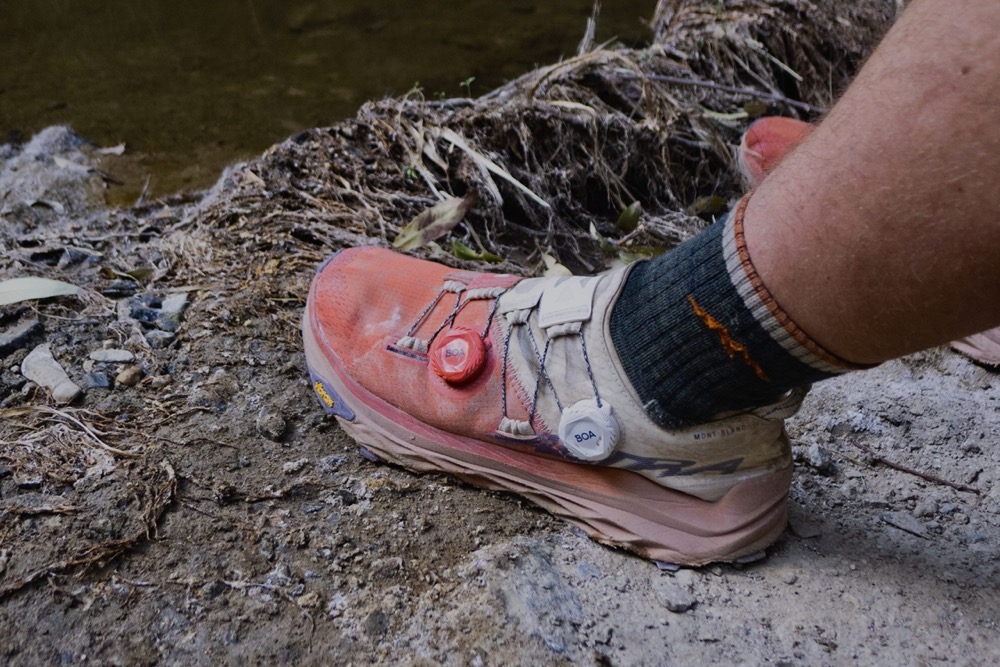
BOA adjustment systems have been around for some time, from bike helmets to ski boots. In this application, their main sell is convenience and comfort. Spin the dial, and it twists up the lace, tightening the shoe. Pop it out, and all tension is released. It’s faster than tying a knot, and the system self-equalizes to reduce uncomfortable pinch points.
All that’s great for a ski boot, but the true benefit to the Mont Blanc is in how it’s implemented — the dual dial adjustability. By adding two BOA dials to each foot, Altra allows the user to separate the snugness of the fit into two different zones.
And adjustments are quick and easy, so that one can adapt to changing terrain with just a few clicks. Cruising on some smooth belvedere? Lock in the heel by tightening the upper dial to prevent lift, but leave the forefoot loose for comfort. If the trail starts slanting or requires more lateral stability, then spin the front dial to reduce side-to-side slop. This is possible to some extent with traditionally laced shoes, but changes require time. Not so with the BOA.
My Life With BOA
This worked great for me in practice. Operation was smooth and simple. However, I was constantly asking myself if the extra adjustability was really making my hiking experience better. On trail runs, I loved to fiddle with the dials, changing how the shoe hugged my feet based on the terrain, just as Altra intended. But when I was hiking on trails, roads, or even steep scree, a desire to adjust my shoes only entered my mind because I wanted to fiddle with these awesome new shoes. Call me old-fashioned, but I’ve never thought that shoelaces needed fixing or improving.
In a foot-to-foot test, I discovered that I generally wear my shoes pretty loose. On my right foot, I laced up an Olympus like usual. On the left, I attempted to mimic that fit using the BOA dials. Turns out, my right foot lacing was roughly equivalent to a barely tightened top dial and a completely unlocked forefoot dial. Does the ability to make really fine adjustments matter when all I want is as loose a shoe as possible? The dual-dial BOA brings with it real benefits in both comfort and convenience. I’m just not sure if those matter enough to me to justify the added $30 expense. For hiking, at least. If running, the BOA makes a lot more sense.
Comfort
Sole protection from jabby things and hard surfaces is exceptional, as expected for a shoe with a 30mm stack height. I covered a lot of rugged surfaces with the Mont Blanc, including talus and granite boulders, and not once did I feel a point or wayward root make it through the cushion. And when I was afflicted with the end-of-day stumpiness that inevitably strikes during long road walks, it ripened later for me than my brother, who was wearing Lone Peak’s (25mm). While this isn’t a perfect apples-to-apples comparison, the opposite result would have raised some questions.
Also living up to expectations was the adjustable comfort, courtesy of the BOA dials. I’m easy when it comes to tying laces, but hikers who prefer a specific level of snugness, or one that changes throughout the day, will be able to fine-tune it quickly and easily. It’s also cool to be able to over-tighten one zone of the foot without creating pinch-points elsewhere.
The scenario where the Mont Blanc faltered was when I was in camp, using them without socks. The heel yoke is not your typical padded fabric. Instead, it’s a thin, synthetic suede-like material, and rubbed raw my delicate achilles skin. I slapped on some leukotape, which solved the problem. Easy enough, right? Yes, but it is a requirement that the Mont Blanc be paired with socks that are ankle-length or taller. If you hadn’t guessed already, these are not Birkenstocks.
Durability
I wish that I could say the Mont Blanc is good for 700+ miles, citing first-hand experience, but I’m not there yet. For a shoe that costs this much, I would hope for 500, at least. Although I’m still getting there, my pair of shoes has so far given me no reason to believe that it won’t eclipse that total. Altra midsoles have survived over 700 miles for me in the past, and I’m confident that the Vibram rubber is durable enough to go that distance, especially if the majority of hiking is done on soft tread. The upper material looks dirty and gross now (white was an interesting choice), but it repelled nicks and jabs from sharp desert rocks and shrubs like a hiker to hygiene. All of this stuff is expected, and the Mont Blanc does not fall short of the status quo.
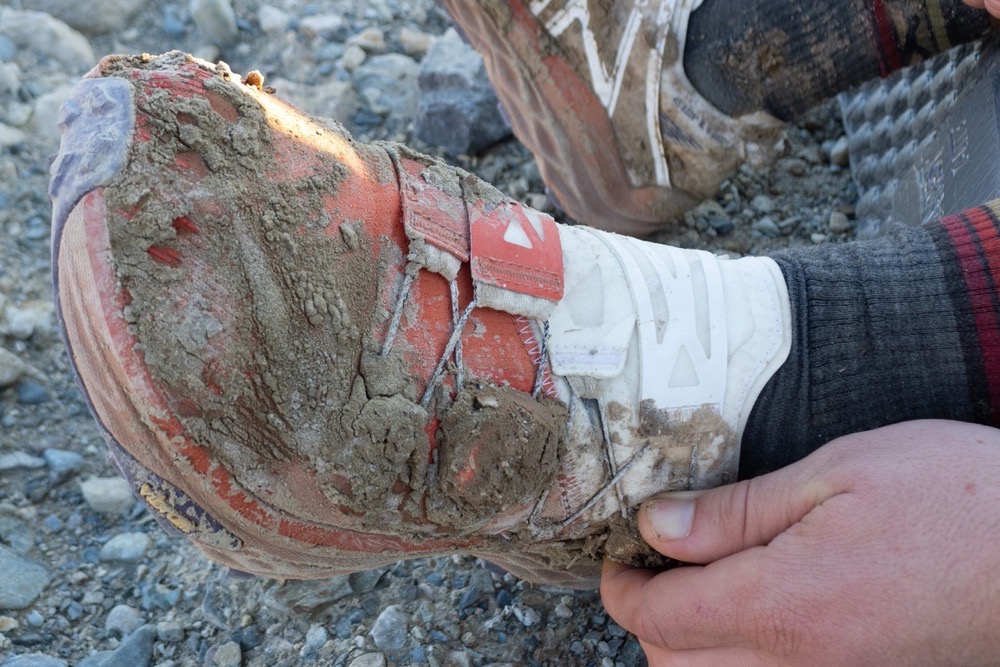
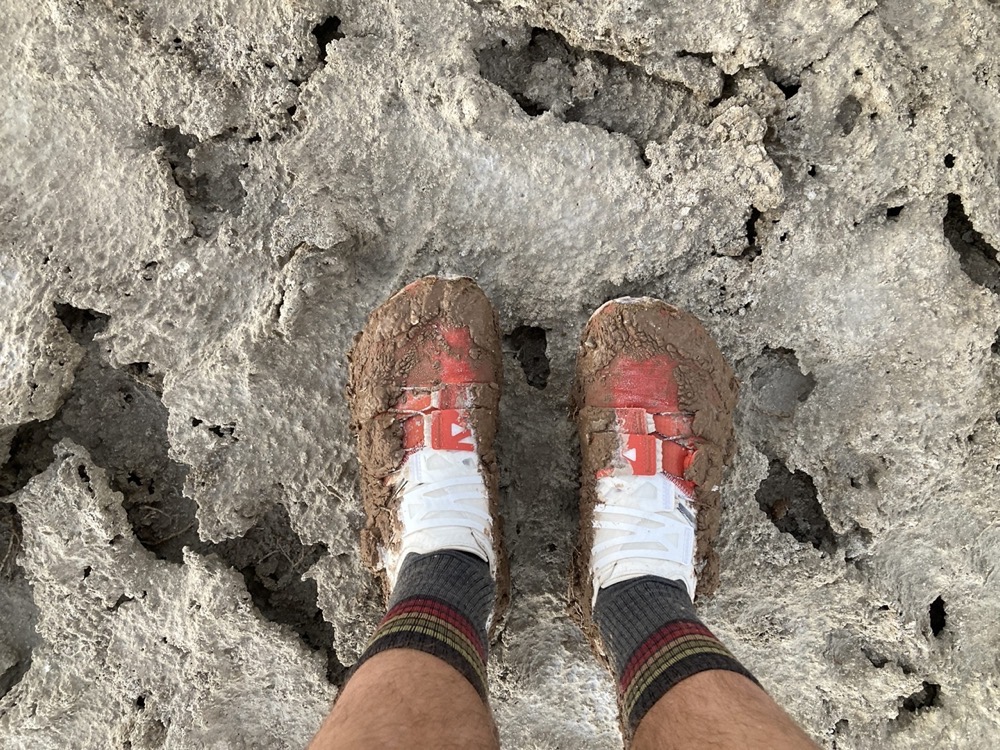
If there is a question about durability, then it relates to the untested BOA lace system. My dials got majorly gunked up with sticky mud in Death Valley, yet still worked well, which gives me confidence for a long future together. The thin cord also survived unscathed, but I’ve seen similar cord laces degrade and fuzz to the point where they are difficult to adjust. All good so far, though there are many more miles to come before I can give them a full, nine thumbs up.
UPDATE: As stated above, I eventually hiked more than 700 miles in this pair of shoes. The tread was worn, and the midsole had lost much of its cushioning, but they exceeded my expectations in every way. No holes, and the BOA laces worked well until I unceremoniously tossed them in the garbage can at the southern terminus of the Florida Trail.
Aesthetic
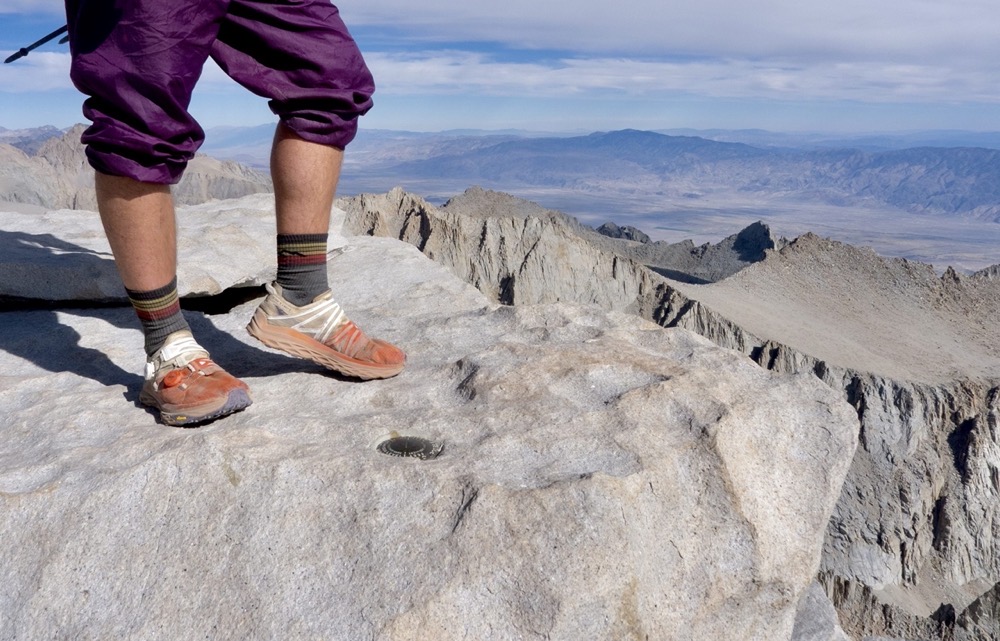
These shoes look weird. Some people are stoked about that, others, not so much. In the former category, a cyclist called me out for having sweet shoes and gave me a verbal thumbs-up. In the latter, my partner calls them my “nurse shoes,” which is not a compliment. My brother was more neutral, likening them to something a European footballer might wear; aka high fashion, and not necessarily good or bad. Finally, airport security ran my right shoe, and right shoe only, through the x-ray machine. They wanted a second look, but didn’t tell me what they thought. For my part, I hated the style, and now I hate it less, but looks won’t stop me from enjoying the ride.
Mont Blanc versus Olympus
Simply put, Altra’s Mont Blanc and Olympus are similar shoes with enough differences to matter. Which of these great trail runners is better will depend mostly on personal preference, and fit is probably the most important consideration. Here’s what you need to know about that and the other differences:
Big Differences
Fit: The Mont Blanc “Standard” fit is narrower than the Olympus “Original” fit (also shared by the Lone Peak). If the wider Altra models have felt sloppy on your foot, then the Standard fit might be the way to go. My low-volume feet are better suited to this style, although I don’t mind a little extra wiggle room unless I’m running rather than hiking.
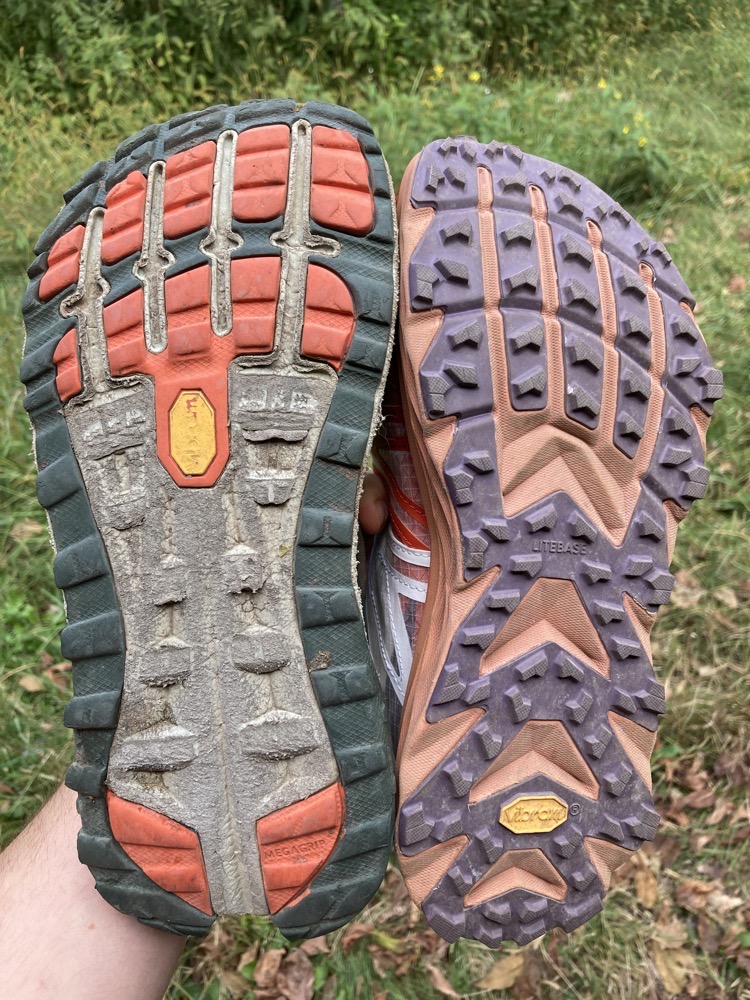
Tread pattern: The outsole rubber on the Mont Blanc is evenly distributed across the bottom of the shoe, which is great. Grip all over the place. The Olympus, on the other hand, sports a bald patch in the middle from arch to heel, which has caused me to slip more than once.
BOA: This is pretty obvious. BOA dials on the Mont Blanc and standard (boooooring) laces on the Olympus.
Small Differences
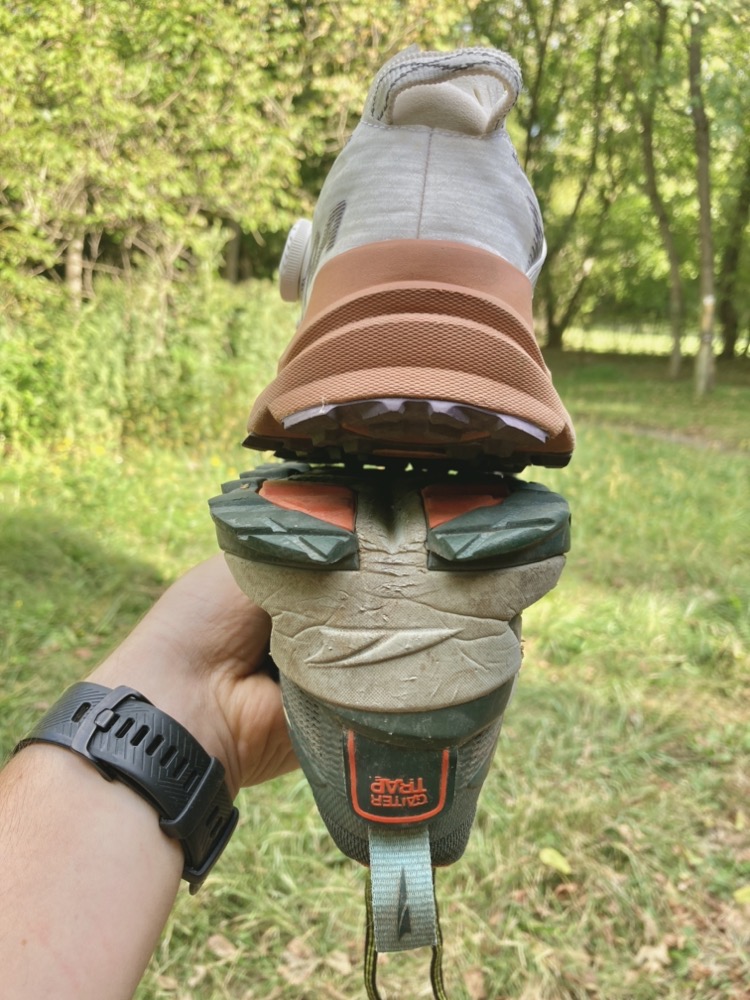
Stack height: The Olympus boasts 3mm of extra foam in the midsole than the Mont Blanc (33 vs. 30). That’s a small difference, but the cushiest is still the cushiest, if only by the thickness of the cookie part of an Oreo.
Footprint width: Not only is the fit of the Mont Blanc narrower than that of the Olympus, but the shoe dimensions are narrower as well. This makes them look and feel more nimble when precise foot placement is important. Oddly enough, despite being nearly as tall yet obviously skinnier, I feel the Mont Blanc is a more stable shoe, as in ‘not as tippy.’ It remained surprisingly poised on off-trail, odd-angle terrain.
Weight: Even with the heavy BOA lace-things, the Mont Blanc weighs over an ounce less than the Olympus (11.2 vs 12.3). How much does that matter? Eh, but it’s even more pronounced on the normal shoelace version of the Mont Blanc (9.9 ounce).
Altra Mont Blanc BOA Pros
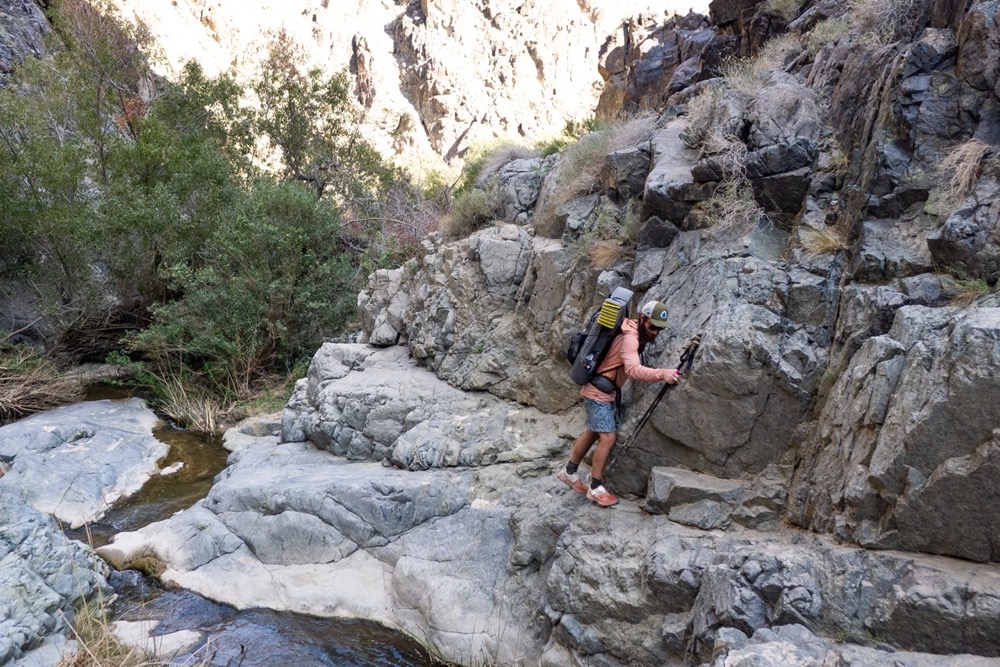
BOA: This fancy lace system really is pretty cool, and it works exactly as promised. Spinning the dials is without a doubt easier than tying shoelaces, and splitting the adjustment into two zones can really improve fit. That said I don’t think that it’s revolutionary for a thru-hiking application. The quick, localized adjustment capability is most useful for faster forms of locomotion.
Grip: The Vibram Litebase outsole grips much better than Altra’s own MaxTrac rubber, and is my favorite feature of this shoe. What’s more, the tacky and durable material is distributed across the entire sole, unlike that of the Olympus, which is missing a lot of rubber in the arch and heel. The Litebase is thinner than the Vibram Megagrip used on the Olympus, so I can only hope that it holds up as well.
Cushion: The tall midsole puts a thick barrier between the foot and the ground. This disconnect can feel unnerving at first, but I am fully on board with the benefits. If you’re pounding long days under a heavy pack (not me, I’m ultralight, bro), then the extra cushion absolutely reduces foot fatigue. It also protects the foot from pointy things like rocks and gnarly roots. I experienced zero zingers through the Mont Blanc.
Weight: For a shoe this stacked, the Mont Blanc BOA is remarkably lightweight. The BOA laces add 1.3oz over the laced Mont Blanc, but this fancy shoe still weighs less than the Olympus (12.3oz). Chalk it up to lighter materials and a narrower footprint.
Altra Mont Blanc BOA Cons
Price: Yowza! You gotta really want those BOA fiddles to justify adding a $30 premium onto an already expensive shoe (regular Mont Blanc, $180). That’s the cost of brand collaborations (BOA, Vibram).
One colorway: Love it or hate it, there’s just one color option for the Mont Blanc BOA. I’m a fan of choice, and honestly, that large patch of white doesn’t do it for me. The BOA dials already look funky, and the white pushes these shoes to another weird level.
No gaiter trap: I’ve never used gaiters, but I know that a lot of y’all do. The BOA version of the Mont Blanc does not include the classic velcro patch on the heel of the shoe, bucking a robust legacy of gaiter-friendly Altra trail shoes. What gives? Word on the street, the BOA system is incompatible. Why? I don’t know, but I trust that Altra did their best.
Final Thoughts
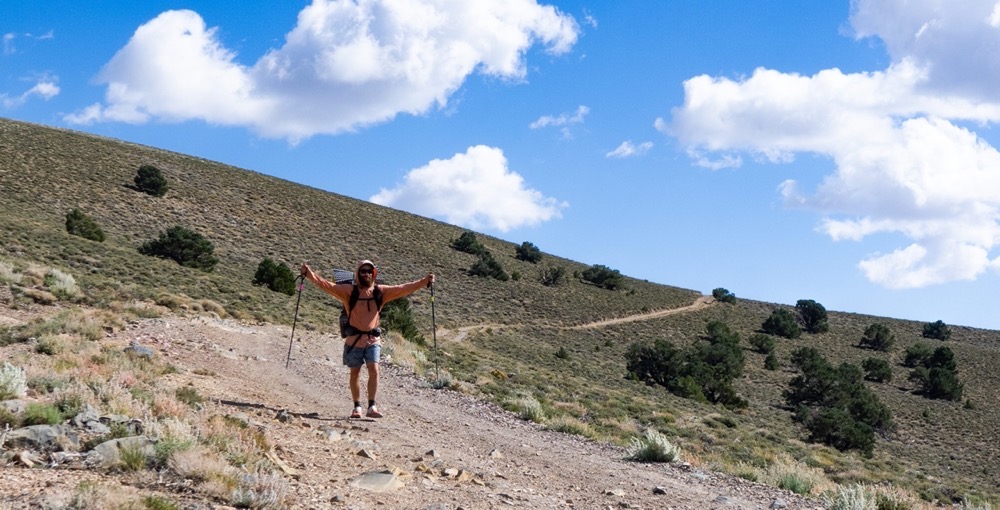
There is a lot to like about the Mont Blanc BOA. The comfort and traction are highlights, and the shoe is remarkably stable for having so much cushion. Notably, it feels more nimble than the Olympus, which is exactly what Altra was going for. It’s worth pointing out that most of those slick features are available on the cheaper version of the shoe.
I liked the BOA lacing system, I really did. It was easy and fast to use, but more importantly, it opened up the unique capability of dual-zone adjustability. I get why this is relevant for trail runners, but I’m not convinced that it improved my hiking experience meaningfully. I messed around with micro-adjustments during the day because I could, not because I needed to.
So here I sit, in a Walmart parking lot, failing miserably to buy Taylor Swift concert tickets and writing about shoes. In other words, I’m living the dream. As I prepare to drop an embarrassing chunk of my savings on an “experience,” I’m starting to think that maybe my next pair of Mont Blancs will be the cheaper version. They still offer everything I love about the shoe, just without the really awesome new technology that I don’t need. And I’m not worried if this pair of mine with the BOA fiddles lasts so long that I forget how to tie laces. I’ve learned how to do that more than once, and I can learn again.
Similar Trail Runners
Altra Mont Blanc (normal laces)
MSRP: $180
Stack Height: 30mm
Drop: 0mm
Altra Olympus 5
MSRP: $180
Stack Height: 33mm
Drop: 0mm
Hoka One One Speedgoat 5
MSRP: $155
Stack Height: 33mm heel, 29mm toe
Drop: 4mm
Altra Lone Peak 6
MSRP: $140
Stack Height: 25mm
Drop: 0mm
Topo Athletic Terraventure 3
MSRP: $130
Stack Height: 25mm heel, 22mm toe
Drop: 3mm
Affiliate Disclosure: In my ongoing quest to avoid living comfortably and working in an office, I have incorporated affiliate links on this website where appropriate. If you make a purchase through these links, I might earn a few bucks at no additional cost to you. That's pretty cool, huh? You'll be like a modern-day Robin Hood, taking money from "The Man" and giving it to this hungry dirtbag. Burritos for all!
 Hike For Days