
This review was originally published on TheTrek.co, and this tent was donated for the purpose of review. If you have any quick questions for me about gear, please feel free to contact me. And if you want to dive deeper, or talk about other aspects of backpacking, I offer Thru-Hike Coaching. I’d love to contribute to your journey!
UPDATE: The Offset Duo has been discontinued and replaced by the Pivot Duo, which appears to be really similar, but better. All links will take you there.
Hold onto your butts, the next big thing from Zpacks is here. Fresh off their spring release of the refreshed Duplex Pro, this ubiquitous UL brand is lobbing another new DCF shelter our way. This one is called the Offset Duo, and it looks familiar and weird at the same time.
Like a stretched-out Duplex, with the Offset Duo, the good people at Zpacks break the head-to-toe symmetry that has until now remained consistent across the last decade of shelter offerings. You might find yourself asking, why change now? While the classic Duplex has been one of the highest-rated and most popular shelters on the long trails of America for as long as anyone can remember, it has its downsides.
Keeping all the latest improvements of the Duplex Pro, Zpacks stretched some dimensions, morphing their decades-long symmetry away from the head-to-toe symmetry that has until now remained consistent across the last decade of shelter offerings.
Zpacks Offset Duo At-a-Glance
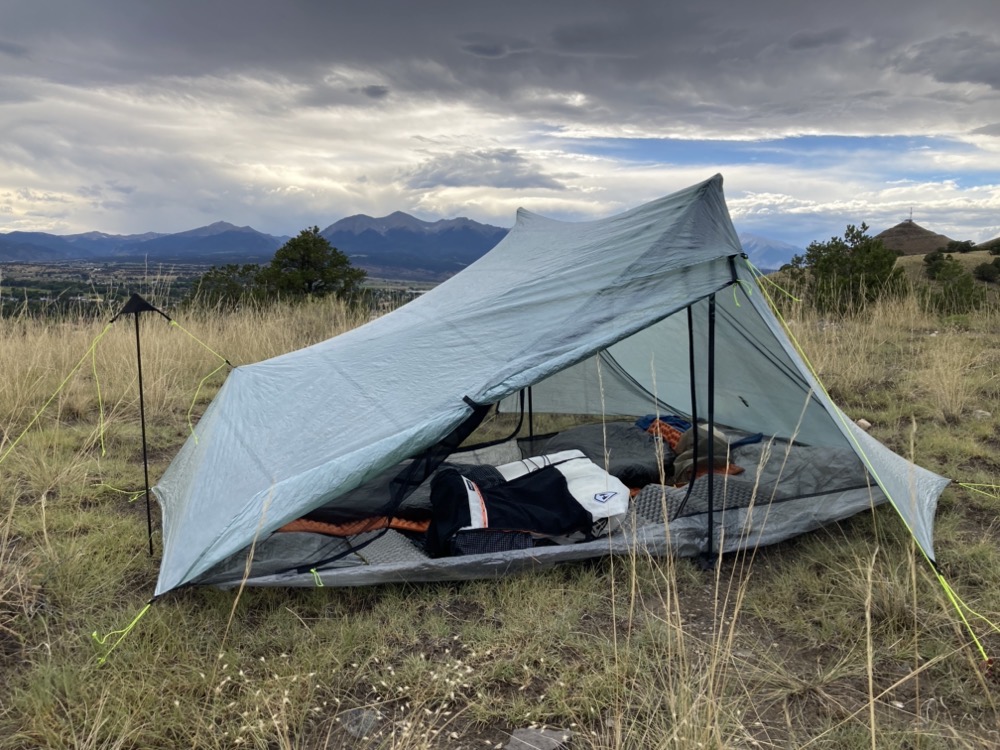
MSRP: $769-$799
Shelter Type: Non-freestanding, trekking pole shelter
Weight*: 19.7-21.7 ounces, depending on material choice, not including 32” pole (Mine weighs 23.4 ounces with included third pole)
Stakes Required: Yes, 7-8, depending on conditions
Materials: Dyneema Composite Fabric (DCF)
Capacity: 2 people + gear
Number of Doors: Two
Floor Dimensions: 94” long x 50” head / 44” foot
Peak Height: 48”
Packed Size: 6” x 12”
Bug Protection: Oh yeah
Country of Origin: USA
*not including stakes: Ultralight titanium stakes from Zpacks (0.2 ounces, $2.25 each)
Intended Use
The Offset Duo is designed to fit within a very familiar niche — ultralight taken to the extreme. Weight is the enemy, and always has been to the folks at Zpacks, and the Offset Duo limits heft by utilizing the strong and light Dyneema Composite Fabric (DCF) throughout. This is the fabric that thru-hikers dream of. There is no shortage of DCF shelters designed to go far and to last during a summer on the longest trails, but that doesn’t mean there’s no room for improvement. This new shelter is the latest attempt to smooth out some of the liveability issues that hikers have needed to deal with when cutting ounces at all cost. Promising to be roomier in all the important places, the Offset Duo’s shifted pole design improves headroom and clears space in front of the door while keeping weight down.
Circumstances of Review
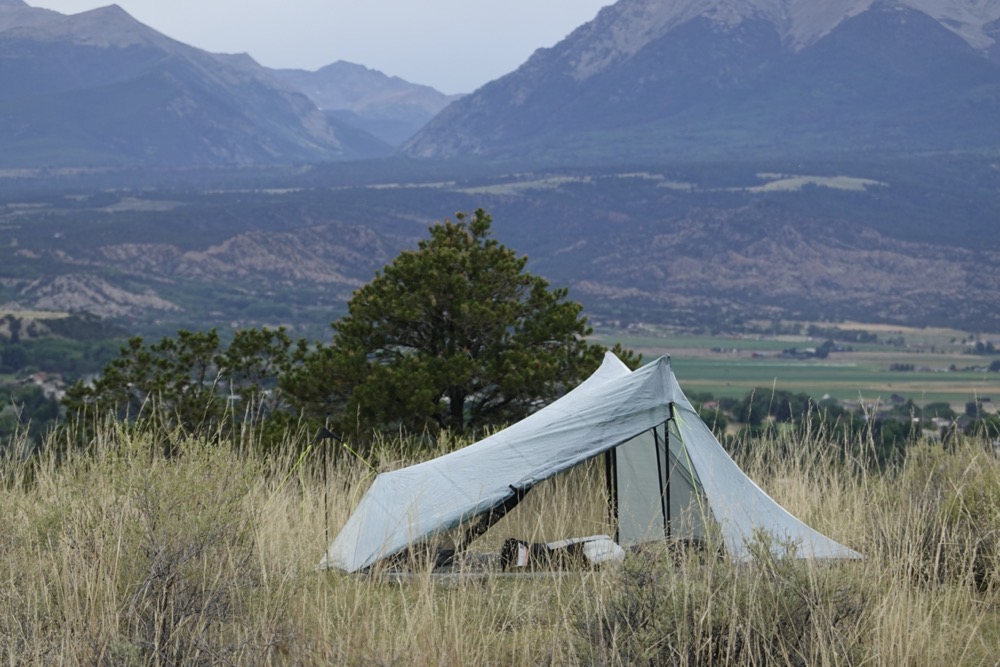
My Offset Duo is still new to me, making this very much a ‘first-impressions’ kind of review. I’ve read the instructions and made several attempts to set it up perfectly, with varying results. Even with extensive experience using the Duplex, my eye has had trouble adjusting to the new proportions of the Offset Duo, so I’ve found it difficult to judge the quality of my work. More time and experience are necessary before I can solidify my opinion of this tent.

Update 8/25/24: I was lucky to call the Offset Duo my home during a thru-hike of the John Muir Trail (JMT) in 2024. On this trip, I shared this tent with my mom while hiking for 20 days from Yosemite to Mount Whitney along the crest of the High Sierra. It was a dream hike, and the Offset Duo did not let us down. We both agreed that it was spacious enough for two, more so than the classic Duplex. The interior space was noticeably adequate, and the improved L zippers worked great. In short, I liked this tent more than I thought I would. It’s not perfect, but it might be my favorite 2-person trekking pole shelter. Too bad it’s been discontinued! However, I imagine that the new Pivot Duo is even better.
Zpacks Offset Duo Features
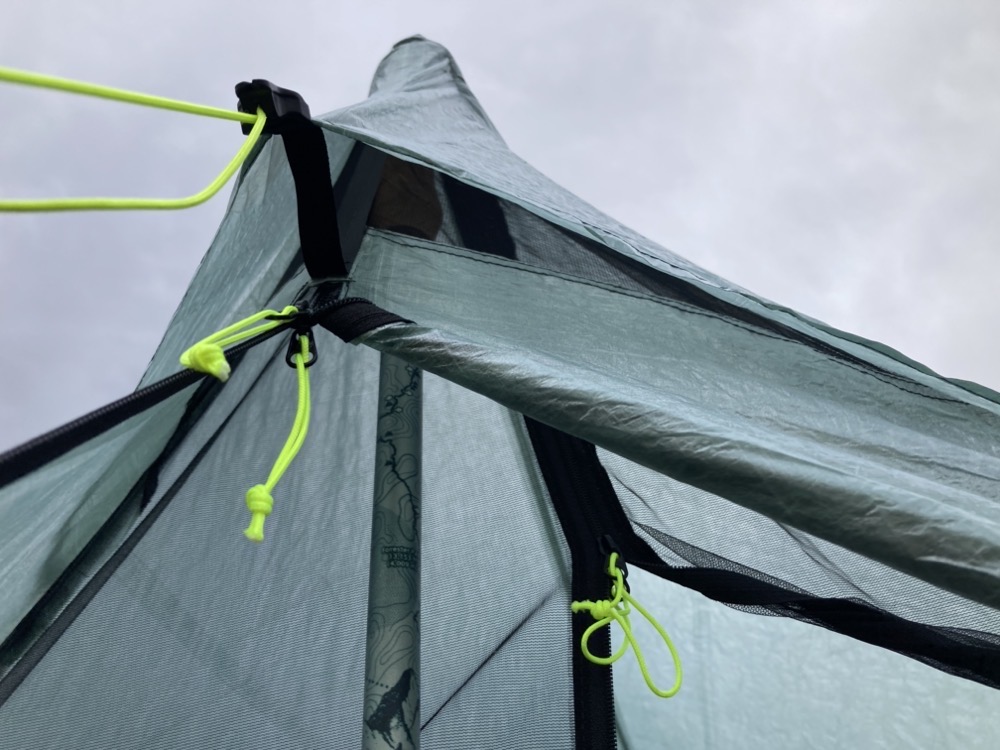
Offset peak: Remember the good old days of contorting around the trekking pole that sprouted smack dab in the middle of your tent’s door every time you needed to pee? Yeah, well those days are kind of over. Now, do you remember those good old days of your tent canopy encroaching on your face space while you were lying down? Those days are kind of over too. By shifting the pole placement of the Offset Duo toward the head of the tent, Zpacks moves that pesky pillar out of the doorway while creating a steeper angle above the head, and thus more face space.
Better mesh door shape: Gone are the rainbow doors of the Duplex, and in are the L doors of the Offset Duo. These are not only large and easier to use, but the hanging mesh fabric does a good job of keeping the bugs out, even during those precious seconds that it takes to zip up behind you. This door design also keeps the mesh and zippers out of the dirt, which was a nitpick of the Duplex.
Pole flaps: Attached to the edges of the floor, these flaps of fabric interface with pole tips to keep the bathtub anchored and spread. No more billowing tent floor, and this nifty addition also allows for one-handed operation of the much-improved L doors.
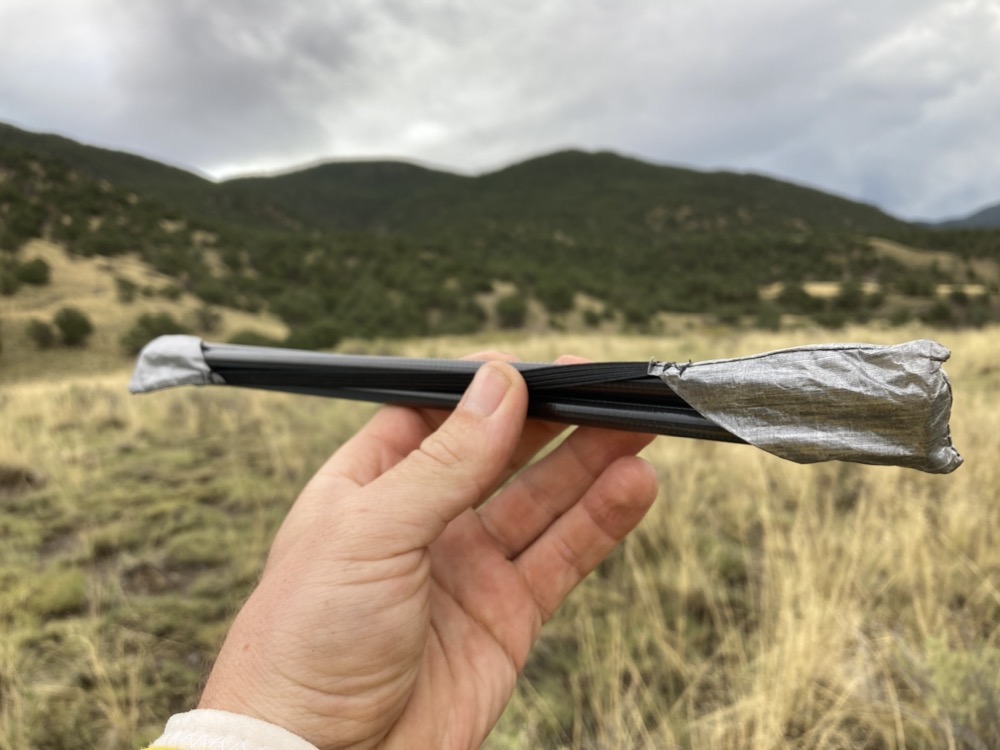
Third pole: A byproduct of steepening the tent canopy at the head is that the foot canopy is now shallow. Anyone who has ever suffered from a wet footbox on a steamy night knows that it is important to reduce contact between one’s sleeping bag and tent wall, and the geometry of the Offset Duo works against that interest. To mitigate this issue, Zpacks added placement for a third pole. Included is a 32” carbon fiber pole that helps to increase the internal volume of the tent around the feet. When sharing the tent, a third trekking pole can take the place of this dedicated one, cutting one ounce from the overall weight.
Bathtub floor: The floor of the Offset Duo is constructed with burly DCF that rises six inches from the ground to form a waterproof tub that protects from splashes and mist. This is classic Zpacks, but the tapered dimensions are new. 50 inches wide at the head and 44 inches at the feet, it accommodates wide, tapered sleeping pads for some extra elbow room.
Zipper vestibule: Water-resistant zippers replace the old-style toggle closure. No doubt about it, this design is more weather-resistant, though it comes with a weight penalty.
Vents: Peak vents located where the trekking poles hold the canopy aloft provide an avenue for moisture to escape, even when those zippers are zipped tight. Single-wall shelters are notorious for collecting interior condensation, and these vents are an attempt to mitigate this issue.
Offset Duo versus Duplex
I have used the original Duplex a lot (150+ nights?), and I love that thing. For this reason, I’m naturally skeptical of the Offset Duo. Do we really need another ~20oz DCF shelter? However, in my short time with the Offset Duo, I’ve come to appreciate the benefits that it brings to the backcountry versus my beloved Duplex. They are both good shelters, if not great, so why would you choose one over the other?

Extra room?
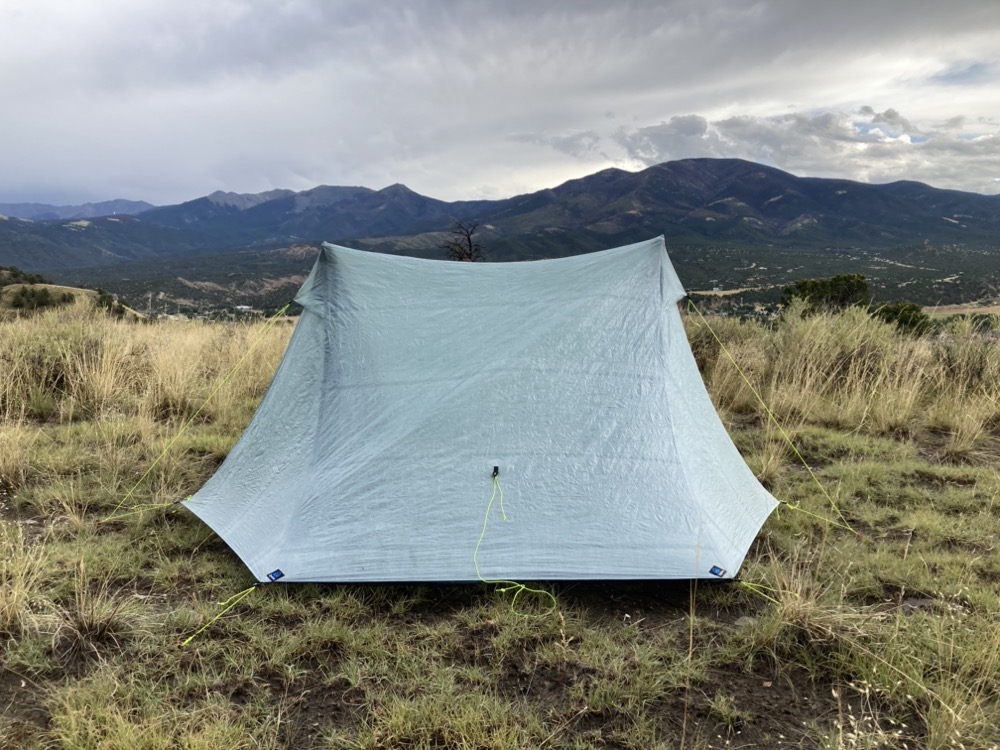
The Offset Duo definitely feels roomier than the Duplex. Not only is there more airspace at the head end of the tent, but it is also wider. A Duplex for one hiker is a mansion, but put two in there, and elbow room can get scarce quickly. I have significantly less experience in the Offset Duo, but it feels significantly bigger. That goes for the foot end too. I’m not a fan of needing the third pole, but it does create a ton of space at the feet.
Clear doors?
Besides the extra headroom, the altered door design is the next biggest difference between these two shelters. The Duplex pitches with the poles smack dab in the center of the doorway, which requires some acrobatics to enter/exit gracefully. The poles of the Offset Duo are, uhhh, offset. This keeps them out of the way of the doorway completely, and thus, it is easier to avoid them. The result isn’t perfect, however. The poles are still necessarily located at the tallest part of the opening, which is precisely where you don’t want them, but the issue has been mitigated to a certain extent. It’s an improvement for sure.
Mesh door design?
The rainbow doors of the Duplex are not its strongest feature. When opened, the mesh is prone to falling into the dirt, and more often than not, my pitch creates a lot of tension across the opening, which can make zipping it closed a pain. For the Offset Duo, Zpacks adopts an L-shaped door design, taking advantage of the larger wall that is unencumbered by the offset pole. And it’s awesome. It’s large, the mesh stays out of the dirt (and keeps bugs out better) when unzipped, and it can truly be opened/closed one-handed (!).
Ease of setup?
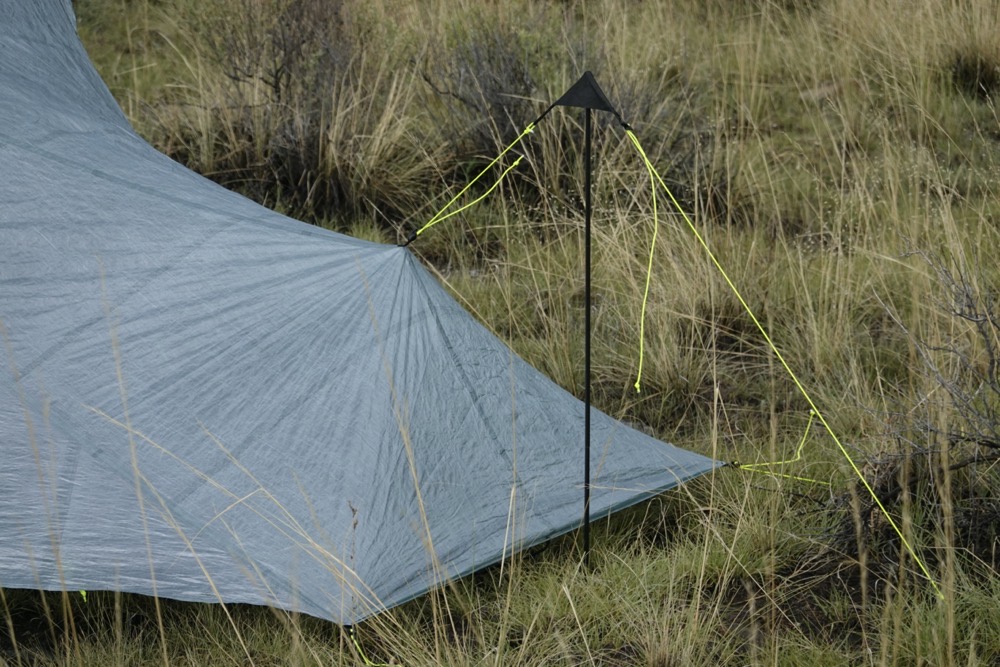
Ultimately, the process for setting up the Duplex and Offset Duo is pretty similar. Neither is easy, and both take some getting used to in order to learn the subtle tricks for getting the tension just right. I’m still learning the Duplex after all these years, so I’m not too optimistic about mastering the Offset Duo anytime soon, but it works anyway despite my minor incompetence. And even though the two tents are more similar than different, the third pole of the Offset Duo does demand one more task of the tired hiker. Staking out the panel guylines of the Duplex is extra credit, only needed on super windy nights. Staking out the foot-end canopy of the Offset Duo via the third pole is a requirement.
Dimensions?
The overall floor area of the Offset Duo is slightly larger than that of the Duplex (31sqft vs. 28 sqft), but that’s only part of the picture. The Duplex is a true rectangle, measuring 90”x45”. The Offset Duo utilizes a tapered floor plan, 50” wide at the head and 44” at the feet. Not only does this mean more shoulder room, but now two wide sleeping pads can fit side-by-side as long as they’re of the tapered variety. The Offset Duo is also four inches longer, although with the lower-angle canopy, it is unclear whether or not this extra length is truly usable.
Ease of Use
In the grand scheme of things, the Offset Duo is about as easy to use as many two-person, non-freestanding shelters. A good pitch requires skilled balancing of guyline tension and solid stake placement. In tight areas, or on super hard/soft ground, this can be a tough ask.
Initially, the asymmetric design and third pole freaked me out, but setting it up is procedurally the same as pitching a Duplex. The extra step needed to stake out the 32” pole is trivial, and no different from anchoring the panel guyline of the Duplex, something I did frequently in a bid to increase headroom and reduce wind flap.
One thing that I’m not sold on is the zippered closure system of the vestibules. I never had a problem with the old-style toggle closure of other Zpacks shelters so the zippers feel unnecessary to me. They add weight and a potential failure point while being a little less forgiving of a sloppy pitch. They also probably improve storm-worthiness and reduce wind-flappiness, but as I said, I think the old system worked great without zippers. However, with the recent introduction of the Duplex Pro, it looks like the old ways are under threat. There must be a good reason for this, right?
Zpacks Offset Duo Pros

Roomy: This tent is roomy in all the right places. The total area is nothing exceptional, but the internal volume is shifted to favor headspace in the living area.
L doors: These doors totally rule. So easy to use and a major improvement over the Duplex’s rainbow doors.
Ventilation: I don’t have enough experience with this tent to say whether the peak vents noticeably reduce interior condensation, but judging by Kelly’s experience with the Duplex Zip, they should do the job.
Pole placement: The poles are still kind of in the way, but less so than they are with most trekking pole shelters. The single, larger doors on each side are easier to maneuver than the Duplex doors.
Lightweight: I’m not sure how they did it, but the Offset Duo splits the weight difference between the original Duplex and Duplex Zip despite the increased roominess. Add on one ounce if you’re carrying the included 32” pole, and don’t forget to bring at least seven stakes, but all combined, we’re still looking at a seriously lightweight shelter.
Protective: DCF is waterproof when new, and the Offset Duo doesn’t hold back on coverage. All zippered up, the canopy and bathtub floor should keep out most moisture. When utilizing all the guylines, it should be pretty solid in wind too.
Sustainability: Detailed on their sustainability page, Zpacks is making real efforts to reduce their impact on the environment. The bio-based DCF is the sexiest talking point, but smart packaging and domestic production also do their part to reduce the damage wrought by each transaction.
Zpacks Offset Duo Cons

Fiddly: Ahhhh, the perennial con of all trekking pole shelters. Compared with a freestanding tent, all that stake placement and guyline tensioning is hard to perfect, and each pitch will be different. Requiring seven stakes, three poles, and a few workarounds to set up, the Offset Duo is certifiably fiddly.
Learning curve: I haven’t spent a lot of time with the Offset Duo, but based on my experience with the Duplex, I am certain that I’ll never fully get the hang of the perfect pitch. To this day, I’m flummoxed by the relationship between vestibule doors and guyline tension. If I pitch with the doors open, then they are almost impossible to close. With them closed, the whole tent gets baggy when I open them. Call me inept, but I’ve thought about this a lot and still don’t have an answer. This reality is no different with the Offset Duo.
Zippers: The aforementioned issues of the previous con are exacerbated by the zippered vestibules, in my opinion. This more secure closure style is probably awesome in ways that my stubborn brain can’t appreciate, but I’d rather save the weight and hassle by sticking with the toggle closure of old.
Price: Yowza, $769 is a lot of cookie dough. In general, I think that DCF shelters are priced fairly, even though they’re incredibly expensive. However, I can make the uninformed argument that the Offset Duo is overpriced. It is essentially a rearranged Duplex Zip, so why does it cost $70 more? That 32” pole can’t account for all of it.
Final Thoughts
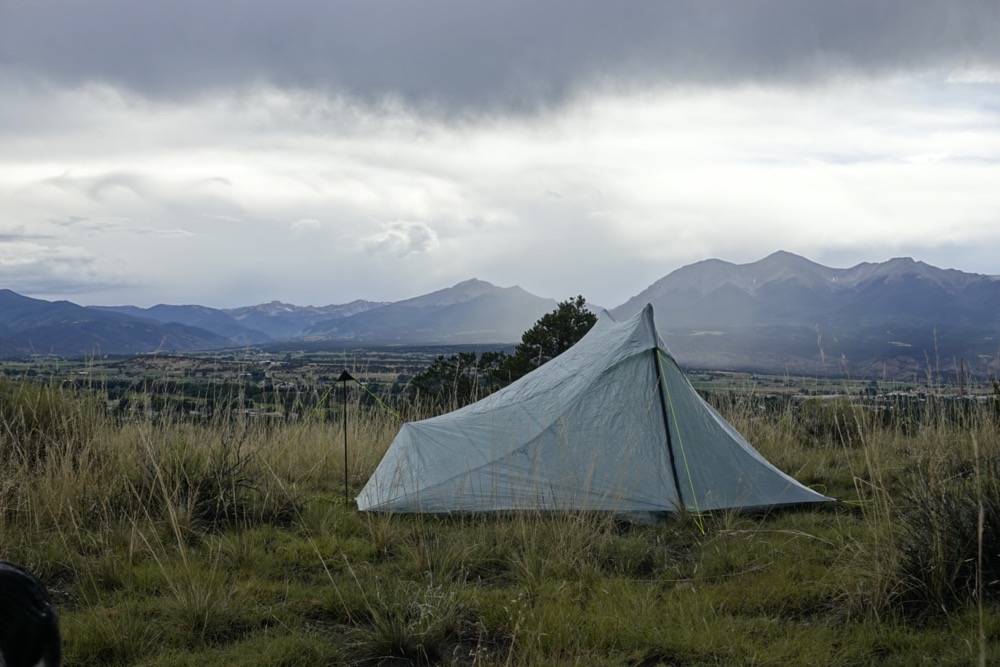
I’m into the Offset Duo. I think that we have a long and fruitful partnership ahead of us. Without needing to, Zpacks has taken a chance in tweaking the most classic of UL tents in a bid to improve the minor issues that many of us have been muttering about under our breath for a long time. The Duplex is great, and I don’t think that the Offset Duo replaces it, but it does offer a solid alternative.
For taller hikers or those who use wide sleeping pads, the extra room will be a selling point, but this dimensional optimization is beneficial to everyone. The improved L doors are an additional bonus and are probably my favorite upgrade. If weight and price supersede all else, then the classic Duplex will reign supreme. However, the Offset Duo is worth consideration by everyone in the market for a DCF shelter.
Similar Ultralight Shelters
Zpacks Duplex Pro
MSRP: $799
Weight: 19.5 ounces
Material: DCF
Hyperlite Mountain Gear Unbound 2P
MSRP: $699
Weight: 22 ounces
Material: DCF
Durston X-Mid Pro 2
MSRP: $679
Weight: 20 ounces
Material: DCF
Tarptent Dipole 2 Li
MSRP: $799-899
Weight: 26.7 ounces
Material: DCF
REI Co-op Flash Air 2 Tent
MSRP: $429
Weight: 40 ounces
Material: Nylon
Affiliate Disclosure: In my ongoing quest to avoid living comfortably and working in an office, I have incorporated affiliate links on this website where appropriate. If you make a purchase through these links, I might earn a few bucks at no additional cost to you. That's pretty cool, huh? You'll be like a modern-day Robin Hood, taking money from "The Man" and giving it to this hungry dirtbag. Burritos for all!
 Hike For Days