
This review was originally published on TheTrek.co, and this tent was donated for the purpose of review. If you have any quick questions for me about gear, please feel free to contact me. And if you want to dive deeper, or talk about other aspects of backpacking, I offer Thru-Hike Coaching. I’d love to contribute to your journey!
The Free Zip is the latest freestanding tent to emerge from the Florida swamplands, historic home of Zpacks, the great purveyors of all things ultralight. Like a mutant hybrid conceived in the shadowy ooze where alligators and pythons tangle, this tent combines the lightweight minimalism of trekking pole shelters with the traditional domed support of dedicated tent poles. Yet with a combination of simple design and Dyneema Composite Fabric (DCF), the Free Zip promises to be both more user-friendly and versatile than either.
I’ve enjoyed the benefits of a freestanding shelter during my extensive use of the discontinued Free Duo, and all of those are still present with the Free Zip. On the Sierra High Route, I appreciated the pitch-anywhere flexibility, mostly because it provided the freedom to set up camp wherever and on whatever surface we wanted. It also saved our butts big time when a storm caught us in a talus field where it would have been impossible to pitch a trekking pole shelter. On the Eastern Continental Trail, the Free Duo worked great on both wooden tent platforms in Canada, church porches in Alabama, and broken asphalt in the Florida Keys.
So with the release of the Free Zip, I was optimistic that Zpacks had refined one of my favorite tents into an even more bombass sequel. What I found is that, like pizza, it’s hard to improve on greatness. The Free Zip is that same sweet tent at its core, despite changing the toppings. And while I prefer the mushrooms of the old pie rather than the Free Zip’s disturbingly warm pineapple, we’re still talking about a great tent. And if you’re one of those lunatics who like pineapple pizza, then eat up. If you have no idea what I’m talking about, read on to get to the bottom of this ridiculous pizza talk.
Zpacks Free Zip 3P At-a-Glance

MSRP: $999.00
Shelter Type: Freestanding, single-wall
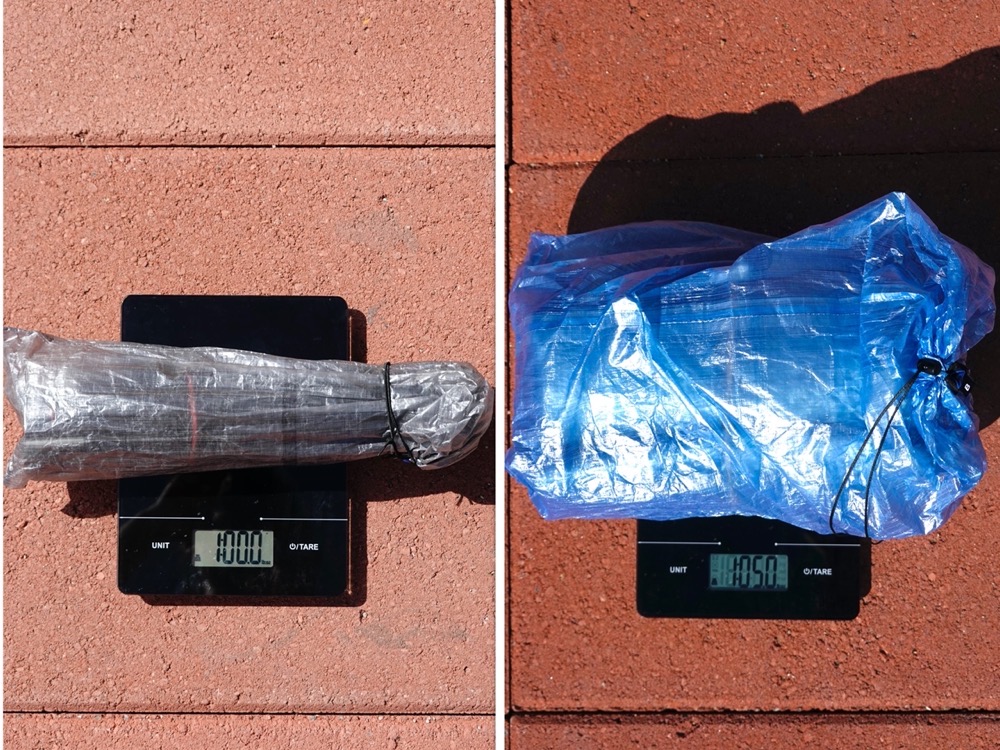
Weight*: 36.2 ounces (20.5oz tent, 15.7oz poles)
Stakes Required: No, but you probably want at least two
Materials: DCF tent, carbon fiber poles
Capacity: Three regular-width sleeping pads
Number of Doors: Two
Floor Dimensions: 60” wide, 86” long
Peak Height: 43 inches
Country of Origin: USA
*not including stakes: Ultralight titanium stakes from Zpacks (0.2 ounces, $2.50 each)
Intended Use
The Free Zip family of tents is designed to be the lightest freestanding tents that anyone would want to use. We’ll dig into the differences between freestanding and non-freestanding shelters later, but in short, these are go-anywhere, ultralight tents built to withstand the unpredictable rigors of a three-season thru-hike. With dedicated pole structures, they weigh almost double that of the lightest non-freestanding shelters, but with this extra heft comes a raft of benefits, such as a spacious interior and relative sturdiness. And unlike their trekking pole shelter cousins, both 2- and 3-person versions can pitch almost anywhere large enough to squeeze the corresponding number of sleeping pads. For this reason, they offer more versatility for those routes with challenging campsite selection. The short, 12-inch pole sections are also compatible with the wild and mysterious world of bikepacking.
The Free Zip 3P that I tested is wide enough to fit three regular-width sleeping pads (20”) side by side, or makes a spacious abode for two.
Circumstances of Review

I was specifically interested in the 3-person Free Zip 3P for trips with two people + dog. And I’ve spent enough nights throwing and dodging elbows in a 2-person tent to appreciate the extra space. We tested this tent with and without the noble hound during trips to Wyoming, Colorado’s Sangre de Cristo range, and along the CDT in the Gila Wilderness of New Mexico. Most of the nights were cold and wet, providing many a dreary chance to test condensation control and fart ventilation. This was also ample opportunity to compare it to my beloved Free Duo, which has almost been used to death and represents the bulk of my experience with this specific type of tent (DCF, freestanding, single-wall).
Zpacks Free Zip 3P Features
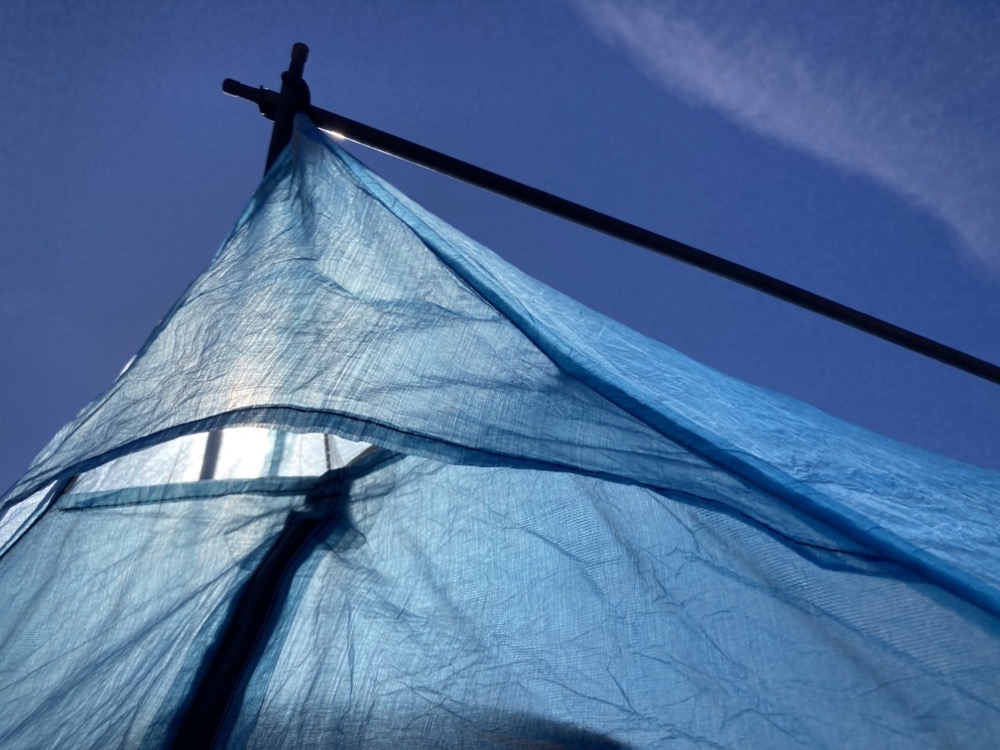
Freestanding: Relative to other Zpacks tents, this is the defining feature of the Free Zip — it sets up using the four included foldable poles, and can pretty much stand on its own, without stakes. I say ‘pretty much’ because you’ll still need to stake out the two vestibules if you want to use them, and a couple more stakes are recommended to help the Free Zip stick to the ground. Still, it pitches in places that trekking pole shelters can’t.
DCF: Short for Dyneema Composite Fabric, DCF is a defining feature of all Zpacks shelters. And for good reason. It combines many of the characteristics that one might covet in a tent, including low weight, high strength, waterproofness, easy repair, and no sag. Although it’s not perfect and costs a premium, there are a lot of reasons to love this wonder laminate. Also, it’s PFAS-free by design. Check out this article for an in-depth explanation of the benefits and drawbacks of DCF.
Single-wall: The DCF canopy is sewn directly to the interior mesh walls, eliminating swaths of material relative to more traditional double-wall tents. This is a great weight-saving feature and increases the proportion of livable space relative to overall volume.
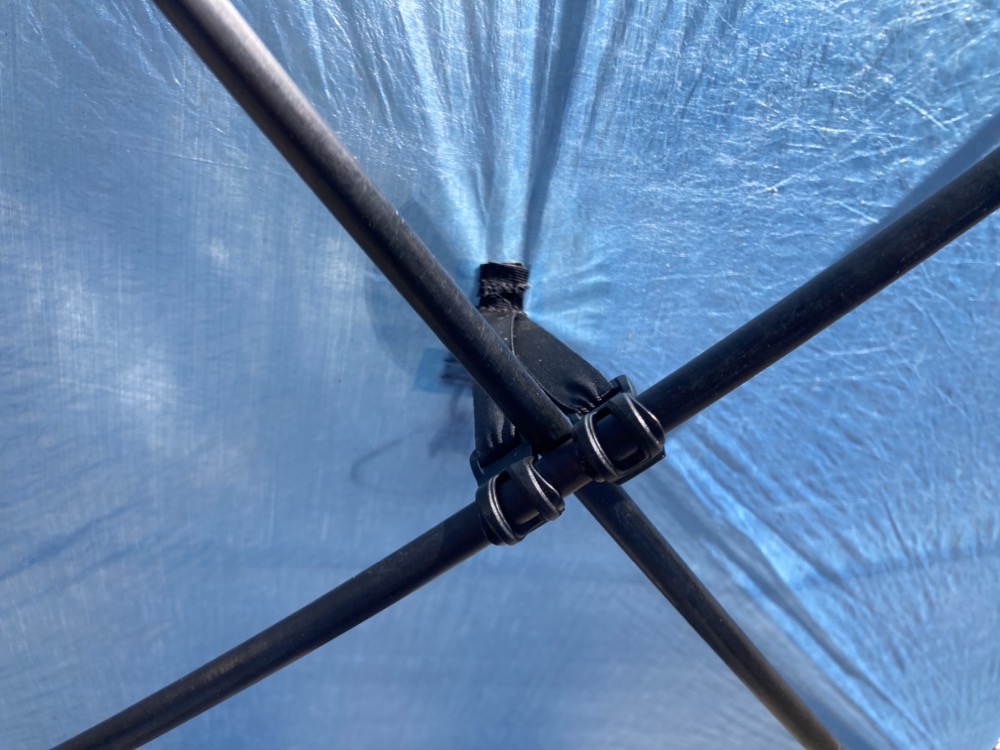
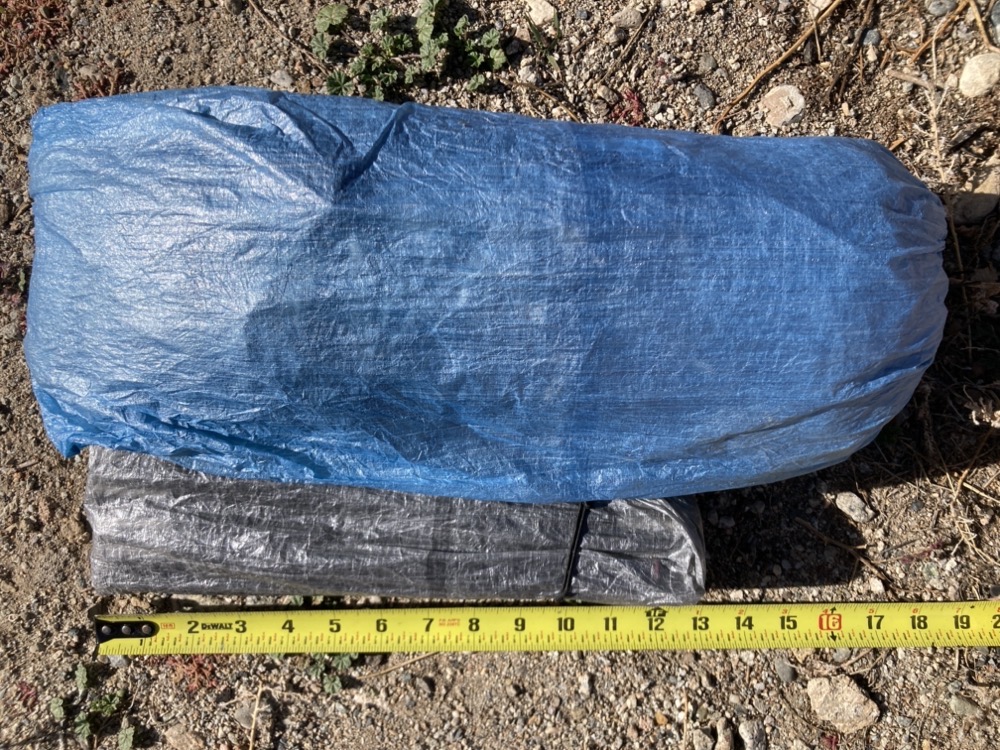
Carbon X Poles: Four straight poles hold the DCF canopy taught as crisscrossing pairs above the head and foot of the tent. The tips insert into grommets at the corners and peak, and plastic clips suspend the canopy along their length. Folded for carrying, the poles shrink to a compact 12 inches long, allowing them to fit horizontally in most backpacks.
Two doors: A zippered rainbow door in the interior mesh adorns both sides of this tent. Each of these is protected by a vestibule extension of the DCF canopy. Each vestibule is divided in two by a waterproof zipper. Each vestibule half (storm door) can be furled to improve views, access, and ventilation as desired.
Symmetric: The Free Zip is geometrically symmetric head-to-foot and side-to-side. One small quirk regarding how the vestibule doors are staked out is asymmetric, however. More on that later.
Vents: A vent at each of the two door peaks allows some airflow while maintaining protection from bugs and rain.
Bathtub floor: The floor of the Free Zip is made from a burlier 1.0 oz/sqyd version of the canopy DCF, with 5-inch walls around the perimeter, which help repel vigorous spashes and campsite flooding. Per Zpacks, a separate groundsheet is not required.
Freestanding vs. Non-Freestanding
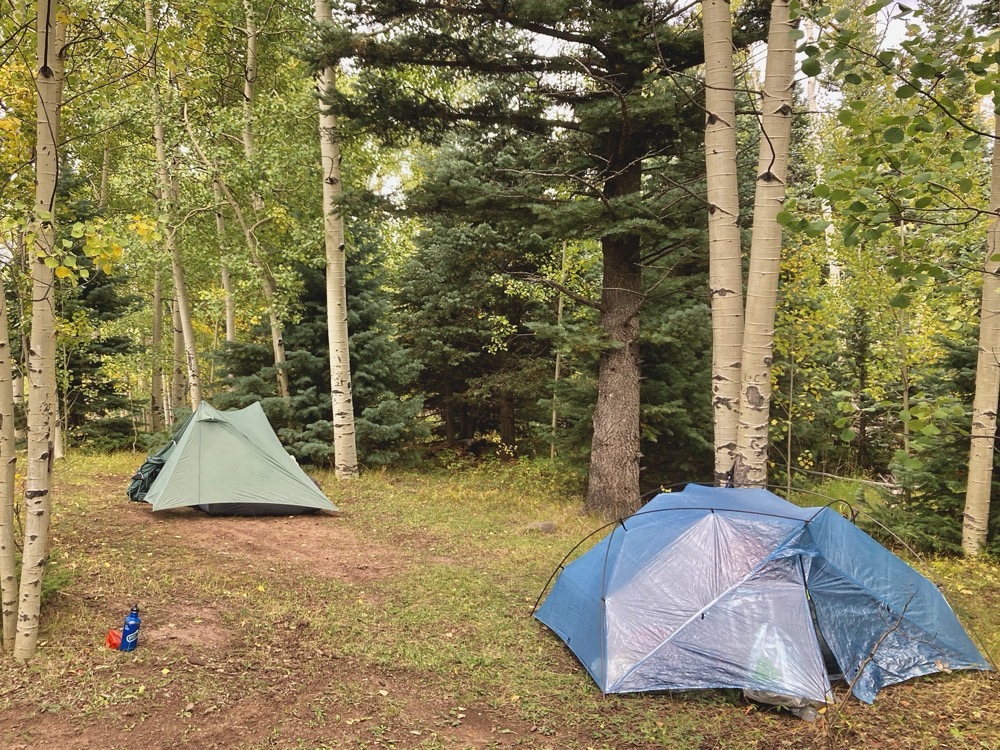
From the DCF, rainbow doors, vestibule design, single-walls, and bathtub floor, the Free Zip has a lot in common with every other Zpacks tent. Where it diverges is in its support structure, with stability compliments of those four carbon poles rather than two trekking poles. The associated benefits include:
- Easier, more consistent setup regardless of the terrain. For example, the Free Zip’s setup is virtually identical whether it’s on soft dirt or bedrock.
- Fewer stakes are required for a taught pitch. The Free Zip needs at least two stakes, while a similar trekking-pole shelter likely needs at least six.
- Fewer required guylines equals a smaller footprint to better nestle into compact campsites.
- Improved wind performance due to the more consistent canopy tension.
- Spacious domed interior, which provides more shoulder and foot room.
- On the flip side, the major downside of freestanding tents is the extra weight and bulk of the dedicated poles. The Free Zip poles alone weigh nearly 16 ounces, just 5 ounces less than the entirety of the similarly sized Triplex Tent.
Ease of Use
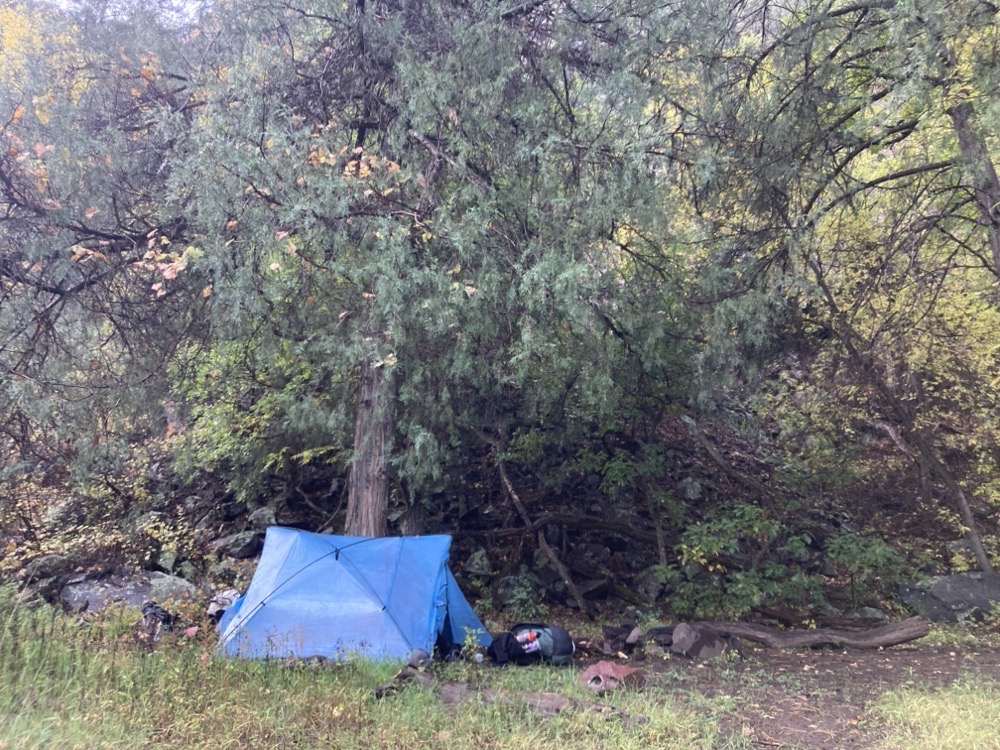
The Free Zip is almost the most user-friendly tent that I’ve used. For now, that crown remains with its predecessor, my worn-out Free Duo. No doubt, it largely mimics that design, and thus benefits from the same melding of old-school freestanding structure and modern materials. It is quick and easy to set up regardless of terrain, boasts a spacious interior, and has a confidence-inspiring structure. It also enlists single-wall simplicity, robust DCF, and tremendously low weight for its class. Ultimately, the Free Zip is uniquely suited to handling both bad weather and challenging campsite selection, and so makes a strong case for being included on trips featuring these obstacles. It’s also just an all-around good tent, capable and lightweight enough for just about any 3-season adventure.
Nitpicks
However, I’m not sold on a couple of the updates, mainly related to the addition of zippers on the vestibule doors (pineapple). Compared with the og toggle closure that Zpacks uses on many of their tents (mushrooms), I’ve found that the Free Zip zippers decrease versatility while adding weight and complexity. Sure, continuous zippers are better for weatherization than a single toggle, but I’m not convinced this benefit is worth it. My main gripe with this system is losing the ability to furl both halves when the vestibule is staked out. The staking loop is permanently sewn to one side, requiring the hiker to stake/unstake it every time it is closed/opened. For example, if you set up camp with the vestibule fully open, then you’ll need to add a stake if it starts raining in the middle of the night and you want to close the storm doors. Or if you have one side open for ventilation, there is no way other than spinning the entire tent to counteract a shifting wind. While this is a small nitpick, it’s a functional step backwards, and I prefer the old way.
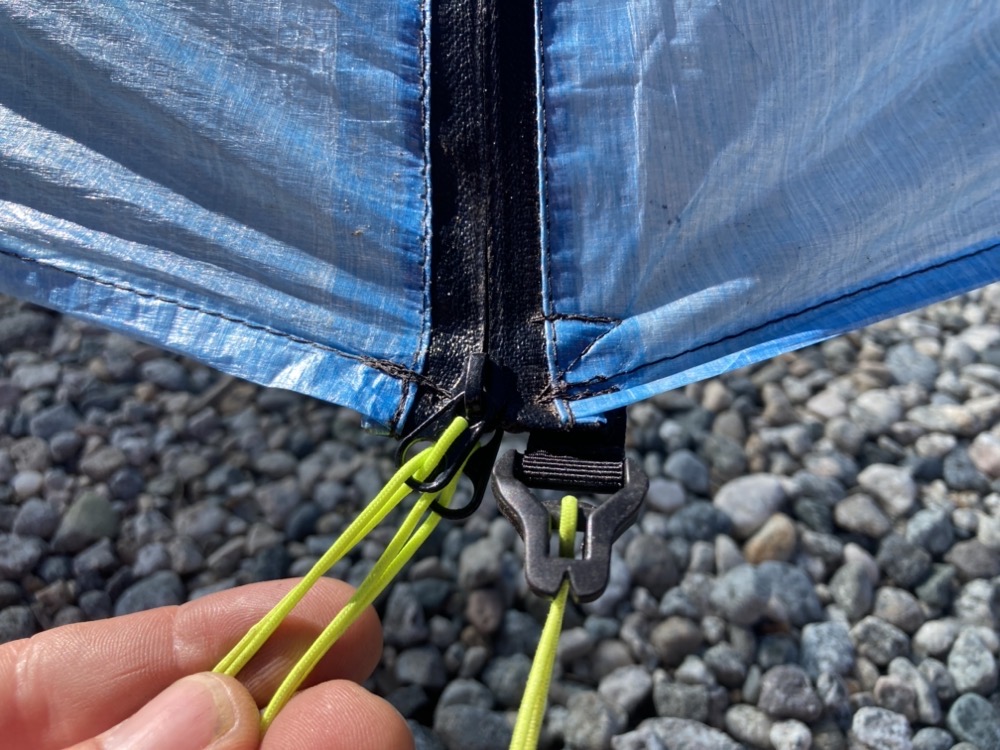
Also of note, compared with Zpacks’ trekking pole shelters, the Free Zip vestibules feel tiny, a notion confirmed by the floor plans included on the product pages. Who knows what geometric constraints account for this shrinkage (I’m guessing the shorter peak height is to blame), but the Free Zip vestibules are minute. My shoes and backpack were still mostly protected from rain, but it was a squeeze to cover the essentials. And for a tent that might house three adult humans, some of their gear might get left out.
Finally, I wish the poles had longer folded sections. Admittedly, the 12-inch folded length is nice if you want to pack them inside a backpack or lash them to bike handlebars, but I do neither of those things. Rather, I carry poles vertically in a side pocket, where a tall, slender profile is preferred. And all those extra short sections increase setup time and introduce more joints, which are heavier and the most likely points of failure. Like the other small issues, these quirky poles aren’t a dealbreaker, but they are on my wish-list for future updates.
Go big and go home: 3-person vs. 2-person
I’ve spent a lot of nights sharing a two-person shelter. Sometimes with one other person, and sometimes with a person and a dog. I don’t think that anyone will be surprised to hear that elbow room was a little tight in those circumstances.
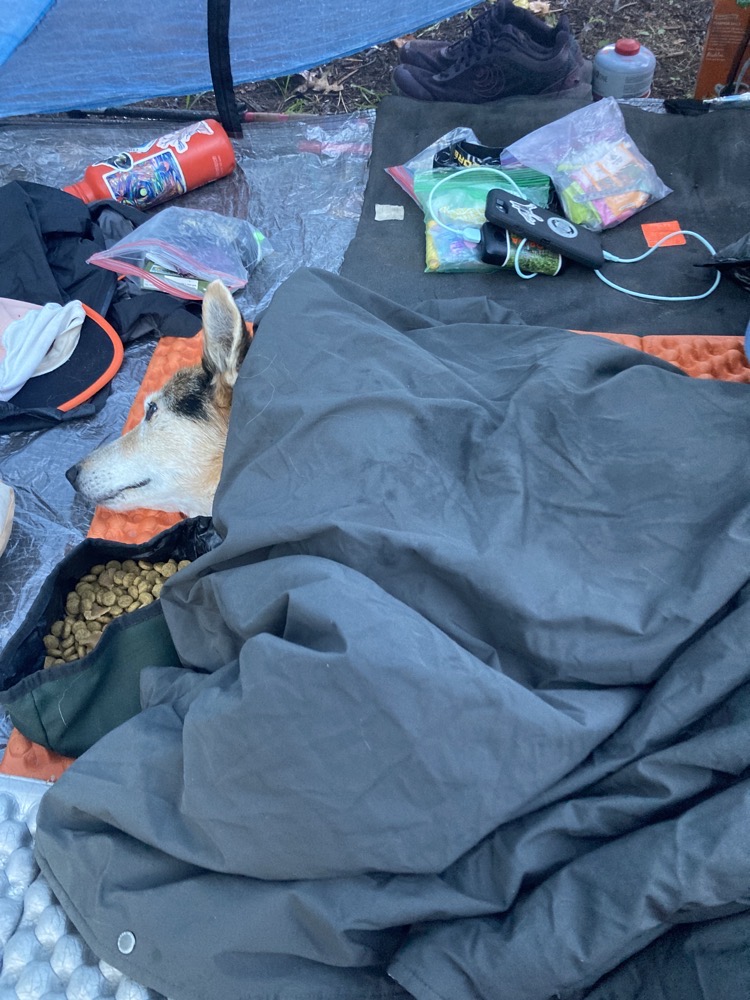
Does it mean I’m an old grump because I caved and chose the 3-person version Free Zip instead of the 2-person equivalent? What ultralight credibility do I have left if I’m willing to add a whopping 4.6 ounces to my baseweight merely in the name of comfort? Well, call me old Heavy-Weight Grumpalumpagus because it’s worth it. Now, I’m not saying that I’ll never share a 2-person tent again, but with a partner and a dog, the extra 16-inch width over the 2-person Free Zip makes all the difference. At 60 inches wide, it’ll still be a tight fit for three stinky humans, but it’s palatial for 2+ residents. It’s a roomy tent, especially considering the reasonable weight, and there is plenty of floor and airspace to spread out. For pairs planning a longer trip, or both using wide sleeping pads, it’s worth considering sizing up to a 3-person tent. For trios, it’s gonna be tight, and get ready to draw straws for who gets the middle spot.
Zpacks Free Zip 3P Pros
Spacious: The domed interior is voluminous relative to the simpler geometry of trekking pole shelters. The 2-person and 3-person versions will still be tight for two and three people, respectively, but there is noticeably more shoulder room.

Lightweight: For a freestanding tent, the Free Zip is exceptionally light. Thank the single-wall design and DCF for that. The poles and tent body can also be divided between two partners.
Compact poles: I would prefer longer pole sections, but the 12-inch folded length is nice for bikepackers and some hikers.
Easy setup: Less reliance on solid stake placement equals easier setup and more versatility, and is one of the defining benefits of the freestanding design. Granted, you probably at least want to anchor the vestibules somehow, but gone are the worries of ground-pokeability that dog trekking pole tents.
Taught pitch: Piggybacking on the last point, the four poles ensure a taught, stormworthy pitch every time. No need to endlessly circle the tent, adjusting guyline tension, to eliminate sagging walls.
No groundsheet: Groundsheets are stupid. There, I said it. I love that Zpacks makes the floor of this tent durable enough to last for thousands of miles.
Zpacks Free Zip 3P Cons
Heavy: The Free Zip might be lightweight for a freestanding tent, but it’s significantly heavier than a similar trekking pole shelter. For many, this will be a dealbreaker, especially if you don’t covet the associated benefits.
Small vestibules: They’re big enough to fit a small backpack and shoes, but they’re still weeny. I also dislike the staking system, which leaves one storm door ‘permanently’ closed.
Tight for three: As a 2+ person tent, the Free Zip 3P is awesome, but it’ll be tight for three people. No surprises there, but I have to say it.
Price: Well, at least it’s not $1,000, right? I can’t believe that I’m saying this, but in the world of tents these days, the Free Zip is priced fairly — it’s just a lot. DCF is always expensive, and the carbon fiber poles account for the $100-200 extra compared to the trekking pole Triplex. It’s also made in the USA. Worth it? That’s up to you.
Pole quality: Several of my pole joint metal inserts were loose, sometimes disappearing into the carbon, which required me to fish them out. This was easily repaired at home with adhesive, but it was annoying and potentially dangerous in the field. Maybe I’m unlucky, but this highlights why it’s imperative to check your gear before every trip.
Final Thoughts

Despite my minor complaints, Zpacks has something special in the Free Zip. It’s largely the same as the tent it replaces, one of my favorites, combining the strengths of both freestanding and trekking pole shelters. The dedicated poles ensure a stormworthy pitch just about anywhere, and by applying their DCF know-how to the freestanding category, the good folks at Zpacks minimize weight while increasing simplicity and strength relative to more traditional fabrics. Typical freestanding tents miss these benefits, and trekking pole shelters have a steeper learning curve and are less versatile.
While the Free Zip is undoubtedly heavier than the lightest trekking pole tents currently available, it is ready to serve a different purpose. If you’re looking for the lightest shelter available, then the extra weight is impossible to ignore, but for those who appreciate the go-anywhere and robust pitch of a freestanding tent, it’ll be hard to beat. That being said, the premium DCF price is a major obstacle that might convince all but the most committed ultralighters to consider cheaper options.
While I won’t carry the Free Zip on every future backpacking trip, it will go places that my trekking pole shelters can’t, enabling me to sleep in more places that I love. And that’s what it’s all about. Depending on the weather, terrain, and personnel, I’ll happily schlep the extra poles, confident that this tent will keep me and my favorite companions safe and comfortable in the most beautiful places, in all but the worst conditions.
Similar Freestanding Shelters
Hyperlite Mountain Gear Crosspeak 2
MSRP: $950
Weight: 34 ounces
Material: DCF
Type: Freestanding, single-wall
Big Agnes Copper Spur UL2
MSRP: $550
Weight: 42 ounces
Material: Nylon
Type: Freestanding, double-wall
Durston X-Dome 2
MSRP: $500
Weight: 44 ounces
Material: Polyester
Type: Freestanding, double-wall
Tarptent Arcdome 2 Ultra
MSRP: $629
Weight: 53 ounces
Material: UltraTNT
Type: Freestanding, single-wall, 4-season
Tarptent Double Rainbow Li
MSRP: $799-$879
Weight: 27 ounces
Material: DCF
Type: Freestanding (with additional trekking poles), single-wall
NEMO Hornet Elite OSMO 2P
MSRP: $660
Weight: 27 ounces
Material: OSMO polyester-ripstop nylon
Type: Semi-freestanding, double-wall
Affiliate Disclosure: In my ongoing quest to avoid living comfortably and working in an office, I have incorporated affiliate links on this website where appropriate. If you make a purchase through these links, I might earn a few bucks at no additional cost to you. That's pretty cool, huh? You'll be like a modern-day Robin Hood, taking money from "The Man" and giving it to this hungry dirtbag. Burritos for all!
 Hike For Days