
This review was originally published on TheTrek.co, and these shoes were donated for the purpose of review. If you have any quick questions about gear, please feel free to contact me. And if you want to dive deeper, or talk about other aspects of backpacking, I offer Thru-Hike Coaching. I’d love to contribute to your journey!
Anyone plugged into the thru-hiking or lightweight backpacking scene has encountered Brooks Cascadias. They’ve either worn a pair of these trail runners themselves or followed the distinctive tread pattern for miles at a time. Before this review, the last time I hiked in these shoes was in 2015 when five pairs of Cascadia 9’s carried me NOBO on the PCT. At that time, it felt like 1,000% (at least) of thru-hikers were wearing Cascadia’s, so whenever I encountered a confusing junction, all I had to do was look at the dirt. There were always Cascadia tracks to show me the way, and it worked every single time.
The market for quality trail runners is more robust five years later, and I’ve found myself distracted by the exciting array of colorful kicks. Meanwhile, Brooks has been improving their flagship model to keep it a top contender in the footwear genre it helped pioneer. I had the pleasure of reviewing the latest iteration, the Cascadia 15s, and was impressed by the improvements that Brooks has made while my head was turned, and also found that they felt familiar. Five years later, with another thru-hike under my hip belt, I’m sure that I’ve changed, too. At our core, the Cascadias and I are close to our 2015 versions, yet we are undeniably different. I like to think that most of the changes have been for the better.
Brooks Cascadia 15 At-a-Glance
MSRP: $130
Style: Lightweight trail running shoe
Intended Purpose: Trail running, hiking
Stack Height: 23mm forefoot / 31mm heel
Drop: 8mm
Weight: 11oz (men’s size 9)
Circumstances of Review
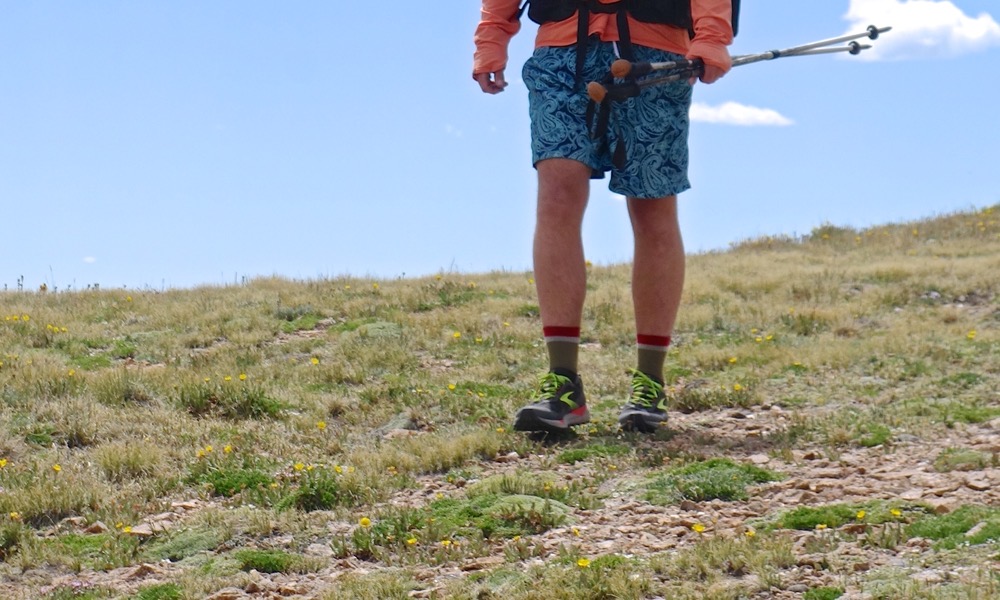
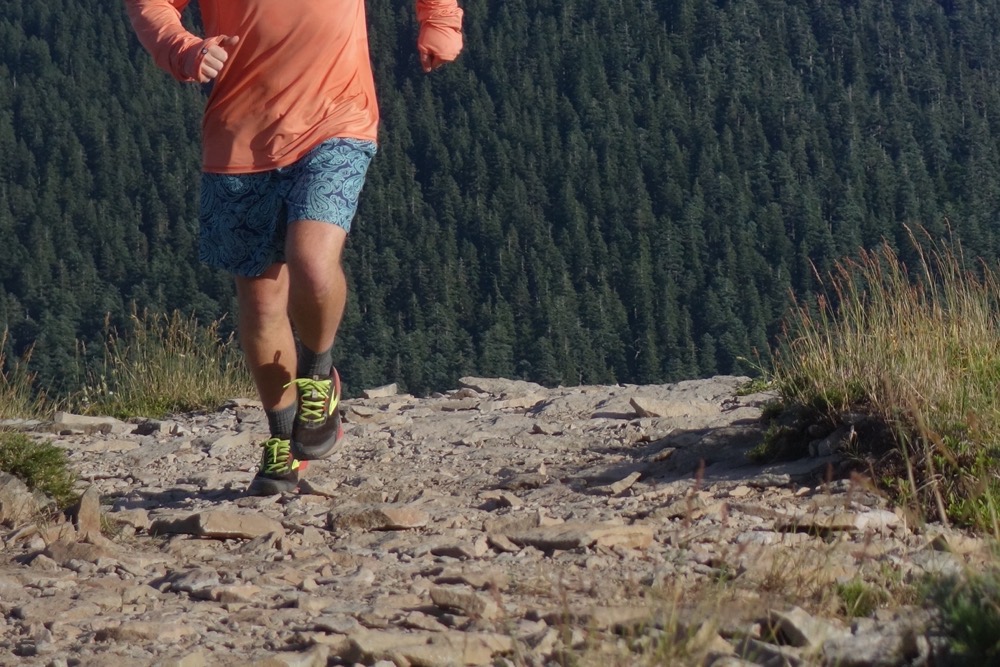
I tested my Cascadia 15s on a wide variety of terrain in Oregon and Colorado. While COVID shut down my most ambitious backpacking targets, I managed to log roughly 150 miles with a 50-50 split between running and hiking. Sand, gravel, grass, dirt, duff, mud, pavement, pointy rocks, rounded rocks; these shoes have seen it all. Short visits to the PCT and CDT gave me insight into how these shoes will fare in a thru-hike setting. While I would still like to put the durability to the test with some more pack-on miles, the Cascadia 15s have shown me what they’re all about.
In the interest of disclosure, my tastes in trail runners have shifted since the PCT to the wide toe box and zero-drop of Altra Lone Peaks. As I expected, it took some getting used to the traditional fit and 8mm drop of the Cascadia 15s.
Features
New Mesh Upper: The big update for this model manifests itself in the new upper. Specifically, monoloop mesh working in tandem with added mudguard slots is supposed to improve breathability and drainage over previous models. I went out of my way to test these claims, jumping in every puddle or creek I could find, and was pleasantly impressed by the dry-out time. Performance differences between models and brands might only be marginal, but I know good breathability when I feel it. These Cascadia 15s breathe as well as any of them. Upper durability is always a huge question mark when it comes to thru-hiking footwear, and with only 150 miles on my pair, the jury is still out.
Gaiter Traps: I think gaiters are stupid and unnecessary, but I might just be a stubborn outlier. If you do like gaiters, you’ll be happy to hear that these shoes have a hook loop at the toe of the laces and a Velcro pad on each heel.
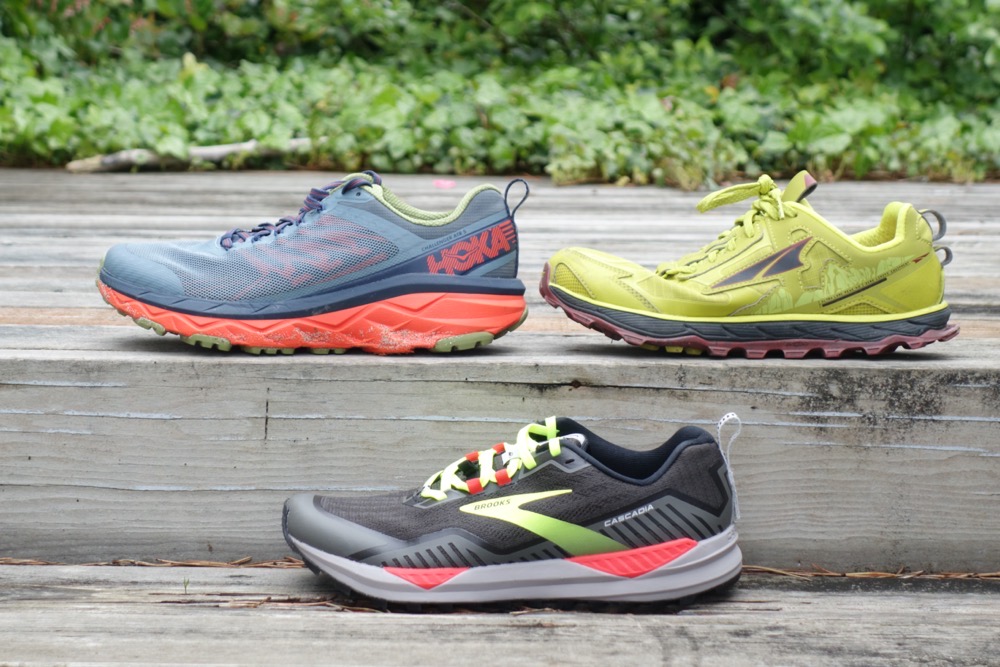
Trail Tack Outsole: The TrailTack rubber outsole is the same as that found on the previous model. Between the lug pattern and whatever proprietary rubber blend Brooks is using these days, the Cascadias have great grip. I noticed some slip on a permanently damp wooden bridge and slimy rocks, but other notoriously slippery things (roots, wet rocks, steep gravel, etc.) seemed not as slippery as I remembered. For comparison, I think Altra’s outsoles are barely passable regarding durability and grip, and that Adidas sets the gold standard with their Continental rubber.
Pivot Post Stability: Ever wonder if those two colorful triangles on Cascadia midsoles do anything besides look cool? Yeah, me too. Turns out they are the Pivot Post System, which is designed to add stability on uneven terrain.
Protection: A Ballistic Rock Shield combined with the familiar Brooks BioMoGo DNA cushion prevents those pointy rocks and roots from bruising your soles. Whether you are trail running or backpacking, this is important. I carried a pack over miles of pointy basalt on the PCT rather mindlessly and didn’t bottom out once despite my lack of care. The cushion of the BioMoGo (I could say that all day) is noticeably firmer than that of the Altras I am used to.
Durability
Here’s the thing, unless one is section or thru-hiking, it is ridiculously hard to wear out a pair of shoes to the point that they are no longer usable. I’m not saying that it can’t be done, just that I’ve never had the patience to see it through unless I’m thru-hiking. As a result, my closet boasts a pile of mostly-used-up shoes that I probably won’t use again and will never throw away. Does that sound familiar?
When it comes to using trail runners for backpacking, I’m satisfied if I can get 500 miles per pair. 650 miles? Thrilled. 900 miles? I’ll talk about those shoes longer than anyone is willing listen. On the PCT in 2015, I coaxed one pair of Cascadia 9’s to 650 miles, though most were retired at around 500 miles, sporting huge holes at the toe crease and worn-out midsoles. Last year on the CDT, 650 miles was the turning point for my Altra Lone Peak 3.5’s. The uppers and outsoles still had life, but the midsoles degraded quickly from there. A pair of Adidas Free Hikers carried me 900 miles before I chucked the smelly things into a Yellowstone dumpster. There were small holes in the upper, and again, the cushion was too compressed to be comfortable.
What I’m trying to illustrate here is that trail runners get abused beyond what they were designed to handle, no matter what. As backpackers, we become familiar with the absolute limit of our footwear, and for the most part, I’m not disappointed. 500 miles with a heavy backpack? You better believe that’s outside the scope of what trail runners were designed to handle. 500 miles is a long way!
As far as the Cascadia 15s are concerned, I have no doubt that they have what it takes to carry a hiker at least 500 miles. Sure, there might be a hole or two in the mesh (largely dependent on terrain), and the lugs will be worn, but they’ll make it. With 150 miles on my pair, the uppers look great with no signs of wear, even at the notorious toe crease, and the outsole is just a millimeter smoother under the big toe and heel. The firm midsole has softened a little bit, but it is still stiffer than a pair of Lone Peaks out of the box, and thus, I expect them to resist packing out to the point of uselessness for longer.
Comfort
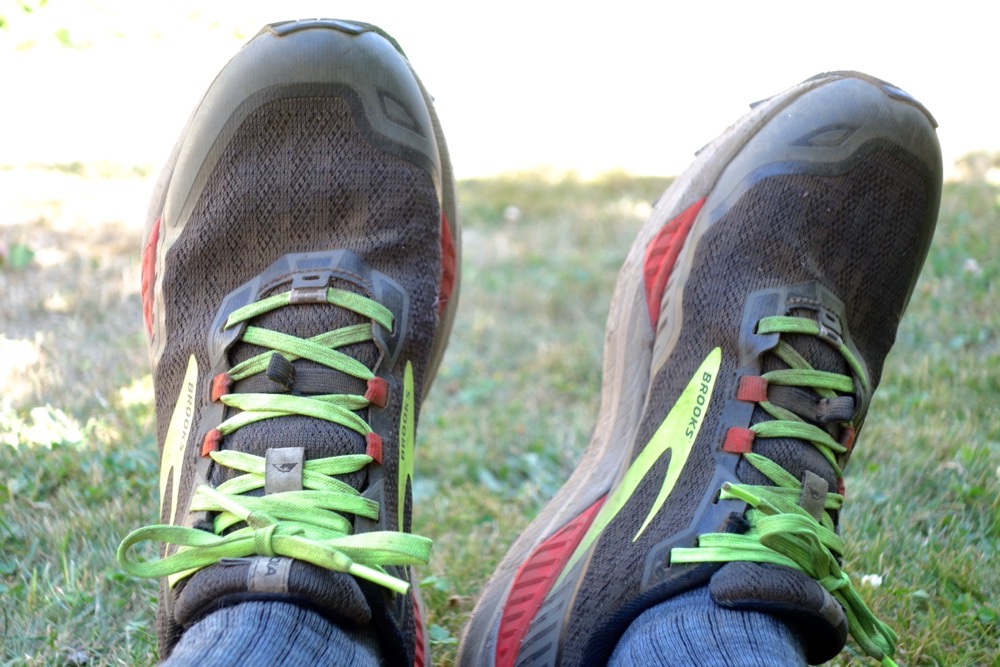
When it comes to shoes, comfort is largely a matter of personal preference, and I will always recommend that someone try before they buy. That being said, two things jumped out at me about the Cascadias on our first jog around the block: the traditional toe box and the firm midsole. Anyone familiar with Brooks or most running shoe brands won’t be surprised by the first. The narrow space across the toes (relative to Altra) provides benefits for trail running or off-trail scrambling, where precision foot placement is required or side-hilling is common. For backpacking on trails, whether it is for one night or five months, I value toe room over precision, but I did enjoy feeling nimble while running curvier trails.
The BioMoGo midsole felt significantly firmer than what I am used to with Altra’s. I expected this to change after a short break-in period, but the firmness remained. From a pure comfort perspective, I prefer a softer midsole, but foresee the slightly harsh Cascadia ride to benefit long-term durability and foot protection. I tested this firsthand on a punishing 30-mile overnight out of Cascade Locks. My feet were well protected from the rocky trail despite my best attempts to seek out the pointiest points. Even with 20+ miles hiked on day one and over 4,600 feet descent on day two, the soles of my feet still felt pretty darn good.
Brooks Cascadia 15 Pros
Traction: The grip of the Cascadia’s outsole is better than what I’m used to coming from Altra, no doubt about it. It might be the rubber, or it might be the lug pattern, but the result is a shoe you can trust to stay planted on all but the slipperiest of surfaces. Definitely adequate for trail and boulder hopping.
Stability: Even with the moderate stack height and fat heel, these Cascadias felt laterally stable and never tippy like I sometimes experience with Altra’s or Hoka’s. Is this thanks to the Pivot Post System? Beats me, but I’m not going to lose sleep over it.
Fit: My narrow feet felt locked in without needing to over-tighten the laces, which can create pressure points. My feet felt supported, and there was no slop. No hotspots either, even with my permanently sweaty socks.
Protection: The rock shield and BioMoGo did their job. Even after long days on rocky trail, my soles felt fine.
Brooks Cascadia 15 Cons
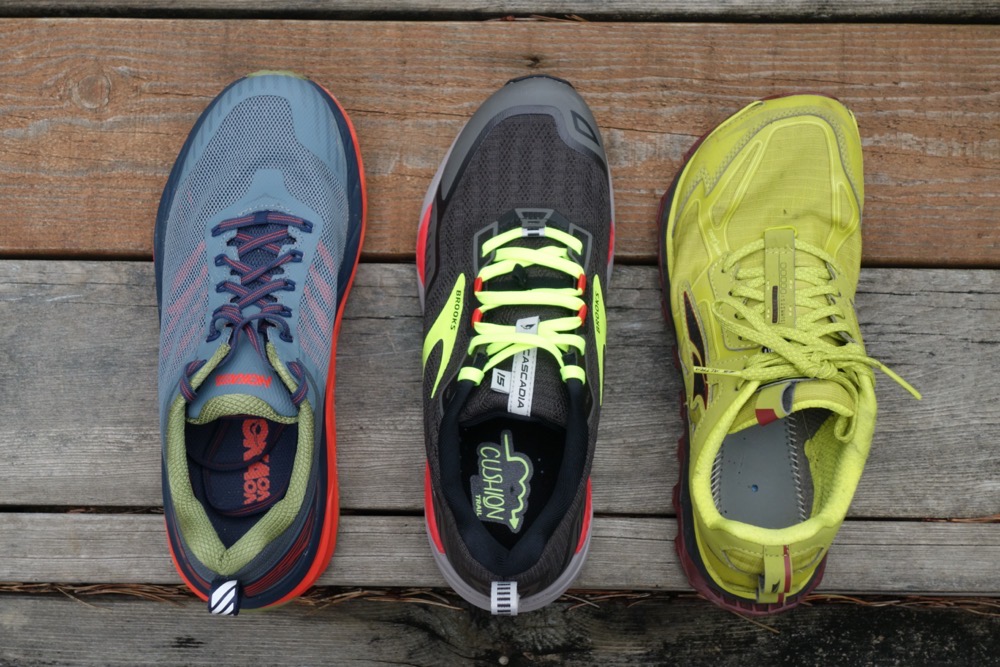
Firm midsole: While the stack height of the Cascadia’s is similar to that of Altra Lone Peak’s (23mm vs. 25mm), the cushioning felt stiffer, resulting in a harsher ride. This was not much of an issue while hiking, but I thought it was significant while running. As I said above, I prefer a softer ride (my knees would agree), but it is totally possible that the stiffer cushion will prove more durable over the long run.
Narrow toe box: My lone point of discomfort while using these shoes was a blister that formed on my right big toe where it got jammed against my, uh… second biggest toe. This validated my bias favoring wider Altras. Fellow Altra fans will feel restricted in the Cascadia’s, which may or may not be a deal breaker. For everyone else, the traditional fit of these shoes will feel unremarkable.
Chunky heel: I like zero-drop. Call me an Altra homer if you want, but I don’t like a high heel on my hiking shoes. The 8mm drop felt alright hiking uphill or running on the flat (reduced calf fatigue), but it annoyed me while hiking downhill. However, if you’re not on the zero-drop bandwagon, I doubt this will be an issue.
Final Thoughts
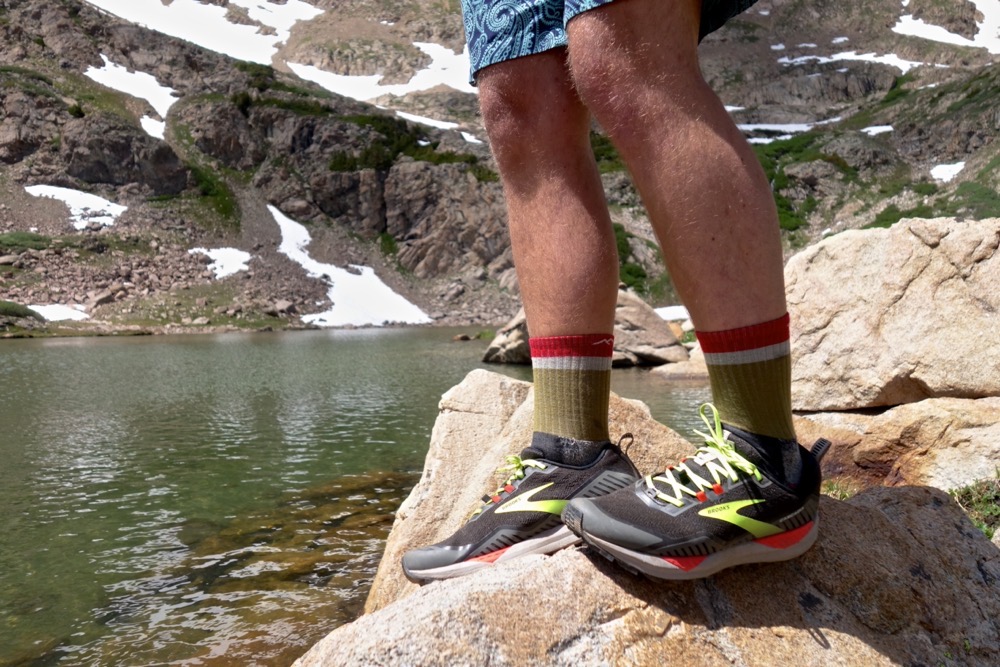
Brooks Cascadias have been a major player in trail running and lightweight backpacking footwear for as long as anyone can remember. While they might not be the lightest, most protective, or cheapest trail runner on the market in any given year, they remain a common sight in the backcountry nonetheless. Brooks has created a perennial favorite, and the Cascadia 15s stick with the successful formula. Updates to the upper promise increased breathability and durability over the outgoing model. The heart of the shoe (outsole, midsole, fit) remains the same and will be pleasantly familiar to anyone who knows the brand. The result is a stable, well-protected, breathable shoe with good traction that works well for trail running and backpacking.
I wish that I could provide more data regarding long-term durability, though I have seen no red flags at this point. I expect these to last as long as anyone can reasonably expect from a pair of trail runners. The 8mm drop and toe box are not my favorite, but they are in line with industry norms. Depending on personal preference, these will be exactly what a lot of folk are looking for. So try them out if you’re interested, and make sure to listen to your feet.
Similar Trail Runners
Altra Lone Peak
MSRP: $120
Stack Height: 25mm
Drop: 0mm
Read my review of the Altra Lone Peak here.
Hoka One One Speedgoat
MSRP: $145
Stack Height: 33mm heel, 29mm toe
Drop: 4mm
Topo Terraventure
MSRP: $145
Stack Height: 25mm heel, 22mm toe
Drop: 3mm
Salomon XA Pro 3D
MSRP: $130
Stack Height: 28mm heel, 17mm toe
Drop: 11mm
Affiliate Disclosure: In my ongoing quest to avoid living comfortably and working in an office, I have incorporated affiliate links on this website where appropriate. If you make a purchase through these links, I might earn a few bucks at no additional cost to you. That's pretty cool, huh? You'll be like a modern-day Robin Hood, taking money from "The Man" and giving it to this hungry dirtbag. Burritos for all!
 Hike For Days